
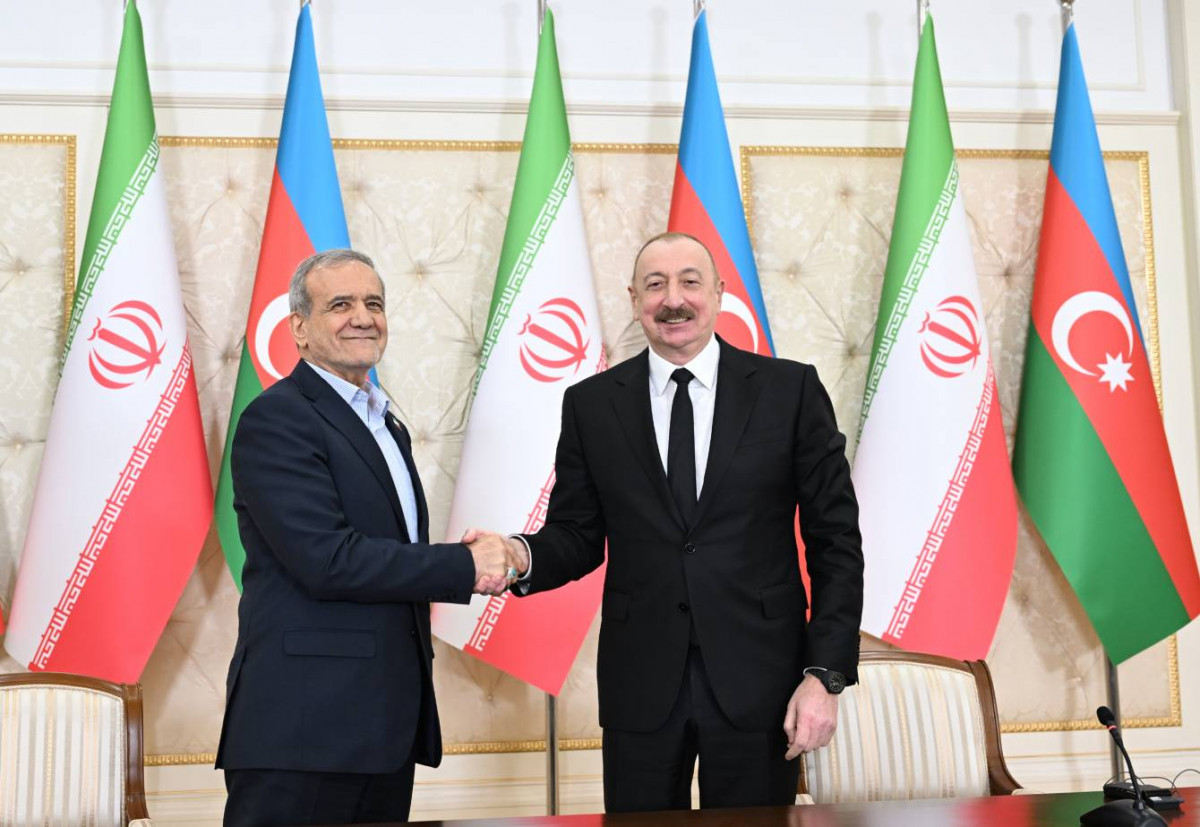
As Iran faces violent anti-governmental protests across major cities, officials across the border in Azerbaijan have refrained from commenting. Yet the unrest raises questions over whether Baku’s long-standing policy of non-interference would survive a potential collapse of the Islamic Republic.
Like Iran’s other near neighbours Armenia, Russia and Turkey, Azerbaijan has adopted a cautious stance, avoiding condemning Tehran’s violent suppression of dissent. This contrasts with the Western countries, whose diplomatic statements are filled with an anti-Iranian regime narrative, providing support to protesters.
Indeed, neighbours such as Azerbaijan and Turkey do not want to see further destabilisation of Iran or a long-term conflict with the involvement of the US on their doorstep. The Trump administration’s potential intervention or indirect involvement in the current crisis in Iran could turn the country into another “failed state” with unpredictable regional impact.
There are clear ideological disparities between Iran and Azerbaijan, namely Iran’s long-term attempts to export radical Shia ideology to secular Azerbaijan. Despite these efforts and diplomatic confrontations between 2020 and 2024, Baku and Tehran maintained a certain level of regional partnership in the energy, trade, and transportation fields while largely avoiding mutual interference in domestic affairs.
The two states remain bound by practical interests; they cooperate within the International North-South Corridor (INSTC) and Araz Corridor, and collaborate on the Khudafarin and Qiz Qalasi hydroelectric plants on the Araz River, as well as the Ordubad and Marazad hydropower stations. Moreover, in January-April 2025, Azerbaijan exported 11.4mn kilowatt-hours (kWh) of electricity to Iran, generating $324,000 in revenue.
Azerbaijan’s long-term balanced approach toward neighbouring states rules out its involvement in an anti-Iranian campaign, notwithstanding its strategic partnership with Israel and deepening engagement with the Trump administration. Instead, Baku prefers to observe and wait for visible repercussions of the protests. The impact of the current anti-regime protests will formulate Azerbaijan’s new foreign policy toward Iran.
For Baku, everything hinges on whether the protests fizzle out or fracture the Iranian state. If the protests fail to have a significant impact, Baku will continue to work with the government. However, if Iran becomes a “failed state” with persistent internal violence or civil war, Azerbaijan might pursue a different diplomatic course, taking into account the interests of ethnic Azerbaijanis inside Iran, as well as taking additional measures to secure its borders and national interests.
If Tehran fails to contain the ongoing unrest, the country risks sliding into a prolonged domestic standoff, potentially drawing in ethnic minority groups such as Azerbaijanis, Kurds, Baloch and others. Many of these communities could be directly or indirectly supported by external actors, particularly the US and Israel. For example, Kurdish and Baloch militia groups like PJAK and Jaish-al-Adl enjoy intensive support from international diasporas in the West to fight the Iranian Islamic government.
Although Baku has never pursued a separatist agenda among ethnic Azerbaijanis in northern Iran, President Ilham Aliyev has repeatedly raised the issue in his speeches, particularly during summits of Turkic states. His remarks were intended to signal to Tehran that restricting the Azerbaijani minority’s right to education in their native language and undermining their cultural heritage is unacceptable. At the same time, Baku has avoided actively playing the “ethnic card”, only making brief references to the matter during periods of heightened diplomatic tension with Iran between 2020 and 2024. However, a collapsing Iran might give Baku a reason to speak more forcefully on behalf of the ethnic Azerbaijanis across the border.
As a part of additional measures in light of potential security challenges, Azerbaijan may further foster military/defence partnerships with Turkey or Pakistan and seek additional alliances. Indeed, the current dramatic events in Iran contain high risks of greater destabilisation of the region, coupled with Tehran’s reliance on coercive force and conservative rural support.
In the event of persistent unrest, the ripple effects would extend far beyond Iran’s borders, reshaping the strategic landscape of the South Caucasus and the Middle East. The risks involve persistent instability along the borders with Iran, an increase in arms and drug trafficking, and the emergence of radical militant groups threatening critical regional infrastructure and border settlements. That would impose additional burdens on the Azerbaijani government, requiring intensified efforts to counter militant activity and curb illegal trafficking in order to mitigate long-term security challenges.