Categories
Azerbaijani Politics Iran in Caucasus and Beyond MENA in Turbulence South Caucasus Region

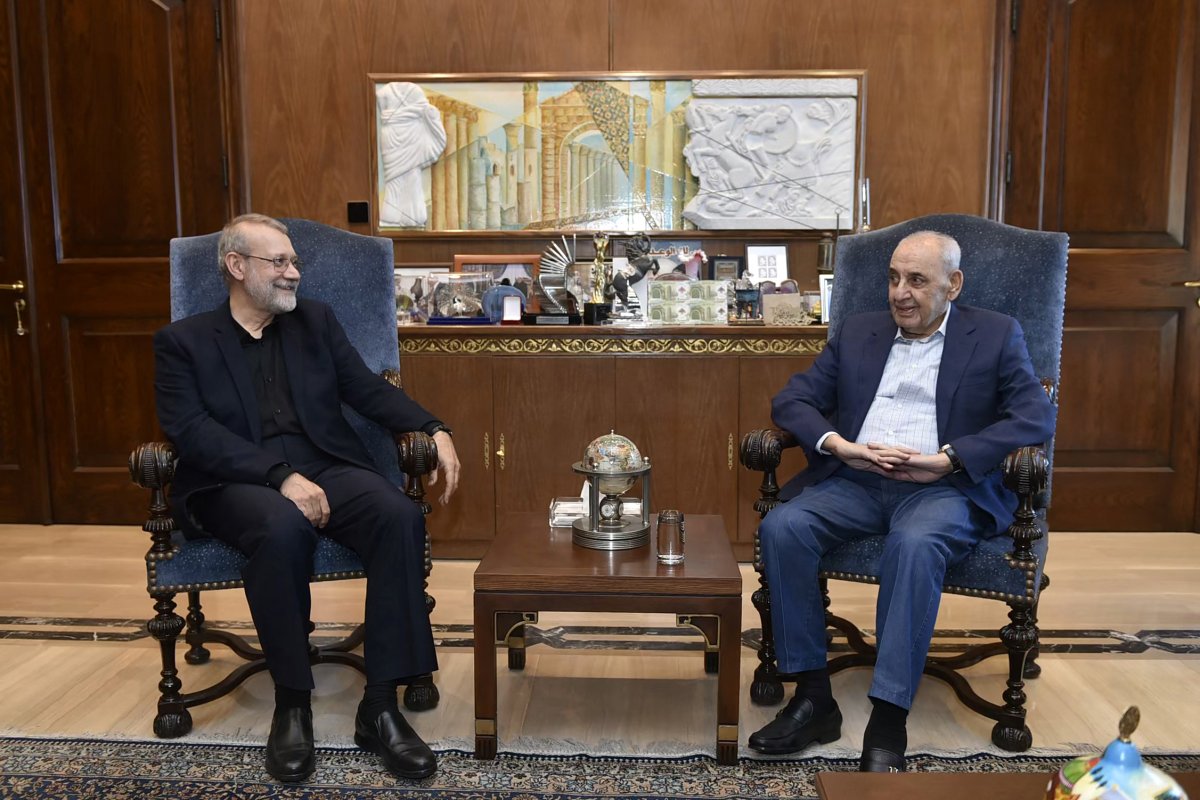
Israel War Erodes Iran’s Relations with Azerbaijan

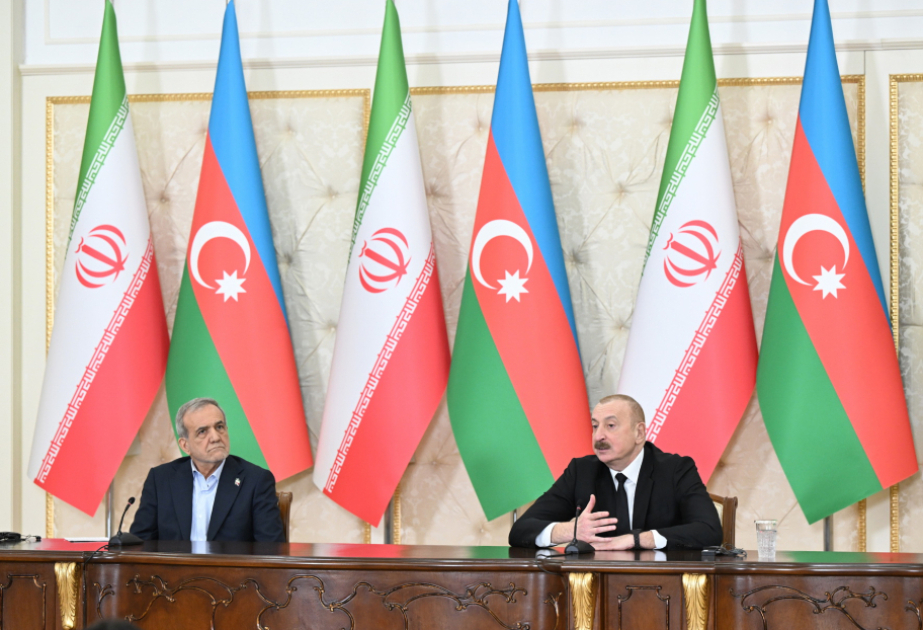
President Ilham Aliyev, President Masoud Pezeshkian hold phone talk
Iranian officials probe Israel’s alleged use of Azerbaijani airspace to hit Iranian targets

The 12-day Israel-Iran war revealed new vulnerabilities in the Islamic Republic and increased tensions between Iran and its neighbor, Azerbaijan.

In the aftermath of the strategic setback to Iranian nuclear and military facilities, Iran’s conservative political and security establishment began shifting focus toward perceived “close enemies” said to be complicit in the Israeli attacks. Among the primary targets of this narrative has been Iran’s northern neighbor, Azerbaijan, which Iranian state-run media and channels affiliated with the Islamic Revolutionary Guard Corps (IRGC) accused of providing “intelligence support to Israel” during the strikes on nuclear, military, and civilian sites.

Categories
MENA in Turbulence Oil / Natural Gas / Green Energy

The Gulf Showers Syria with Aid—in Return for Stability and Interests

The rapid fall of the Assad regime in Syria in December 2024 marked the culmination of dramatic changes to the geopolitical landscape of the Middle East. Following Assad’s escape to Russia, the rebel group Hayat Tahrir al-Sham (HTS) emerged as the decisive power broker in the new administration—aiming to stabilize Syria’s war-torn society, establish a unity government, and launch mass reconstruction to open a new, post-Assad era in the country’s history. To achieve these lofty goals, the new authorities aimed to build much stronger relations with Turkey—possibly transforming Ankara into its primary security partner—and the wealthy Gulf monarchies. Both the GCC states and Iran largely remained bystanders during HTS’s offensive against Assad—in large part because its lightning speed left little time for international action. After HTS routed Assad’s demoralized forces and seized power, Ankara thus became one of the primary actors in, and beneficiaries of, the new regional order.

In spite of Turkey’s pole position in Syria, the ambitious and energy-rich countries of the Gulf are also extremely important to the transitional Syrian government, given President Ahmed al-Sharaa’s attempts to gain international recognition and rebuild the ruined country. Indeed, al-Sharaa paid his first official foreign visit to Saudi Arabia in February 2025, followed by trips to the UAE, Qatar, Oman and Bahrain. While al-Sharaa’s Gulf tour highlighted Damascus’s new priorities, it also shed light on the critical role that Riyadh and the other Gulf monarchies will play in shaping Syria’s future.

Categories
Azerbaijani Politics Central Asia I China I Russia

Kazakhstan Aims to Modernize Military Through Multivector Diplomacy

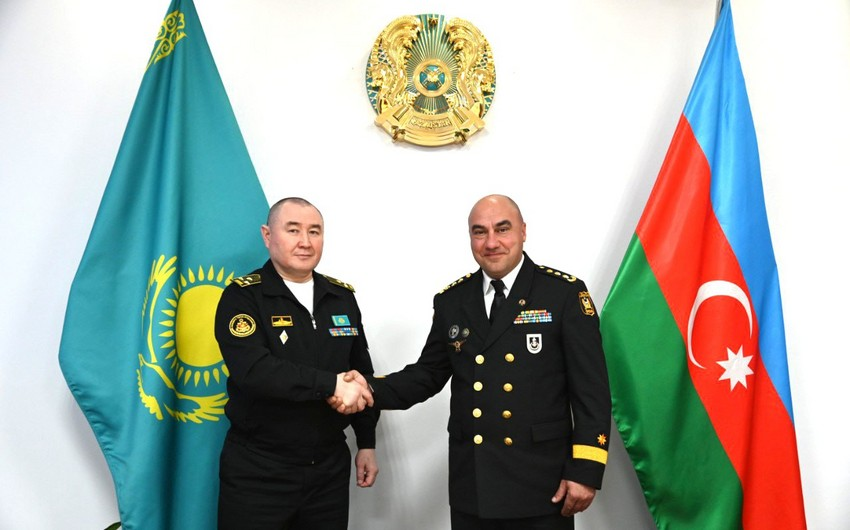
Azerbaijan, Kazakhstan to hold joint naval drills ‘Caspian Wind-2025’ in Aktau
Publication: Eurasia Daily Monitor Volume: 22 Issue:

Executive Summary:

  • In response to shifting regional dynamics primarily driven by Russia’s war against Ukraine, Kazakhstan is reshaping its security posture by reducing military dependence on Moscow and prioritizing self-reliance, regional partnerships, and defense modernization.
  • Astana is focusing on its role as a “middle power,” allowing Kazakhstan to exert greater regional and global influence through integration into multilateral organizations, expanded participation in international initiatives, and diversified defense imports.
  • Kazakhstan has pursued diverse international military collaborations, particularly through joint exercises, weapons co-production, and strategic coordination with Türkiye and Azerbaijan, enabling it to adopt a more independent defense strategy.

Kazakhstan has recently been making steps to improve its defense capabilities. In April 2025, the Kazakh Ministry of Defense confirmed that a legislative framework was established to regulate the Defense Industry Development Fund, which was created in December 2023 (Prime Minister of Kazakhstan, April 14; Inform.kz, April 16). The new defense fund aims to acquire and manufacture domestically crucial military hardware, such as artillery ammunition, weapons systems, and combat modules.

Categories
Azerbaijani Politics MENA in Turbulence Oil / Natural Gas / Green Energy South Caucasus Region

Azerbaijan’s Emerging Role in Post-Assad Syria

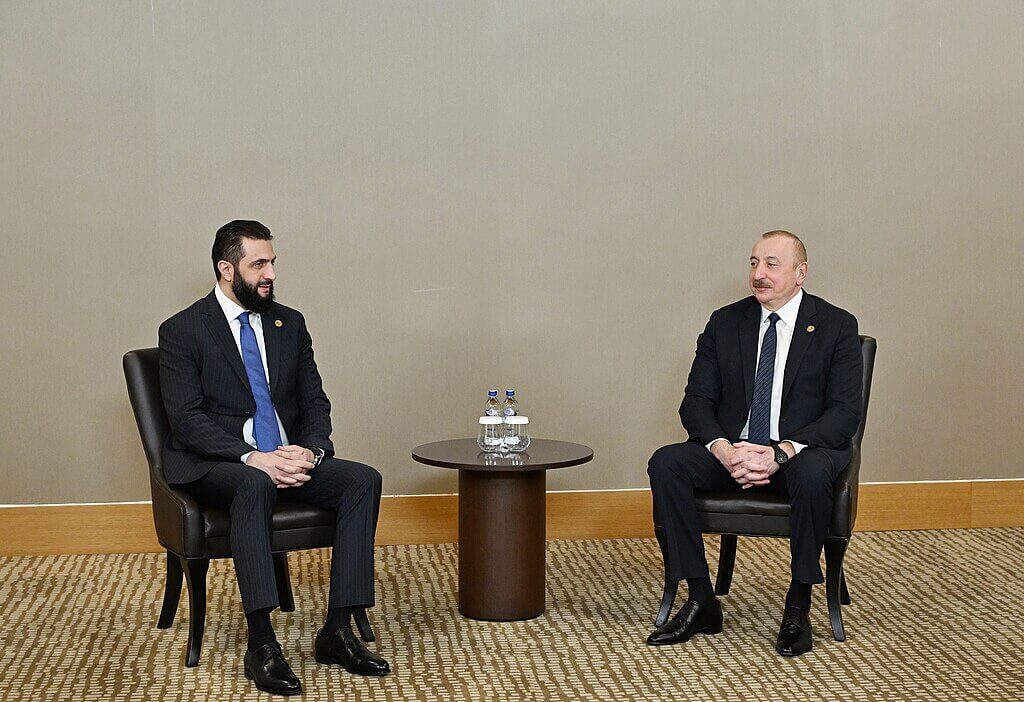
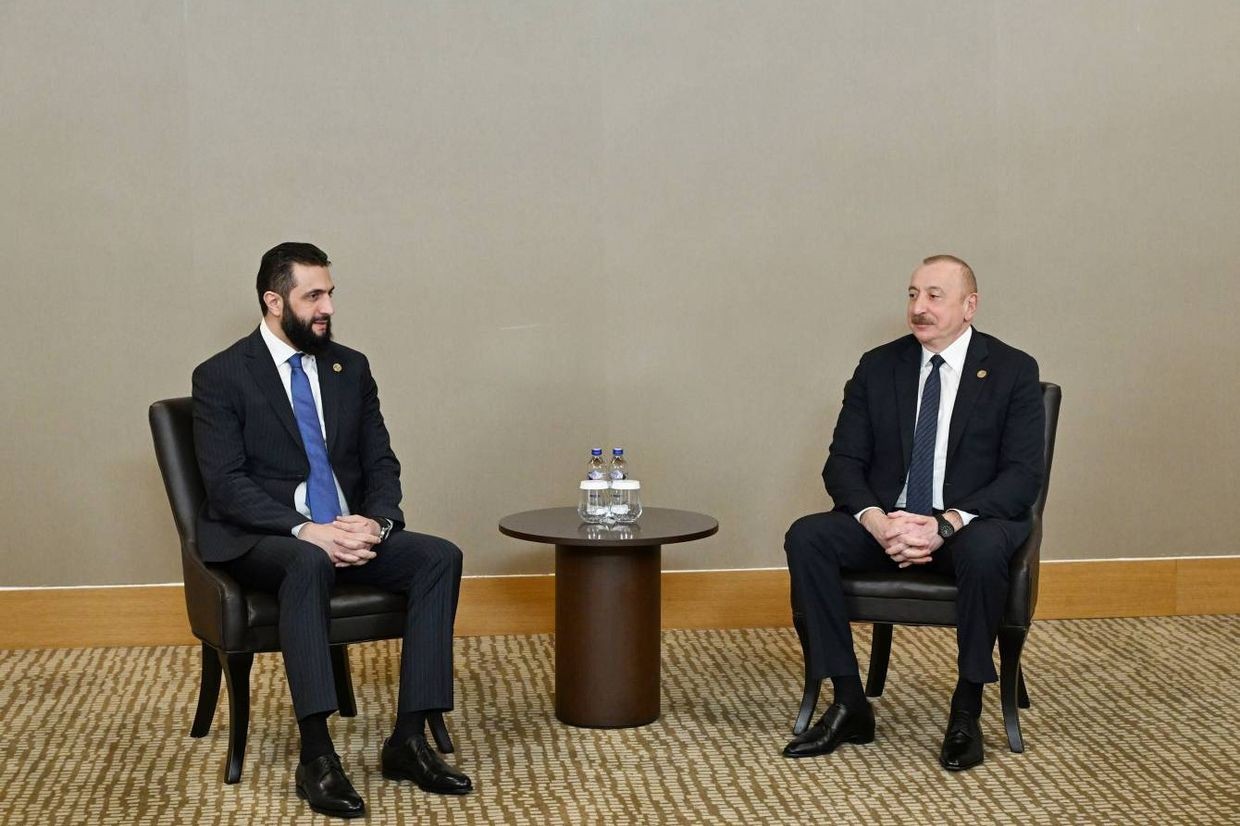
On May 4, an Azerbaijani delegation of state officials arrived in Damascus at the invitation of the interim Syrian government. Vice Prime Minister Samir Sharifov, who led the delegation, was received by Syria’s transitional President, Ahmad Al-Sharaa. The delegations discussed opportunities for collaboration in key areas, including the economy, energy, culture, and education. The visit followed a meeting between Al-Sharaa and Azerbaijan President Ilham Aliyev in Turkey at the Antalya Diplomacy Forum, where the two leaders explored the potential for closer ties.

Categories
Azerbaijani Politics Central Asia I China I Russia South Caucasus Region

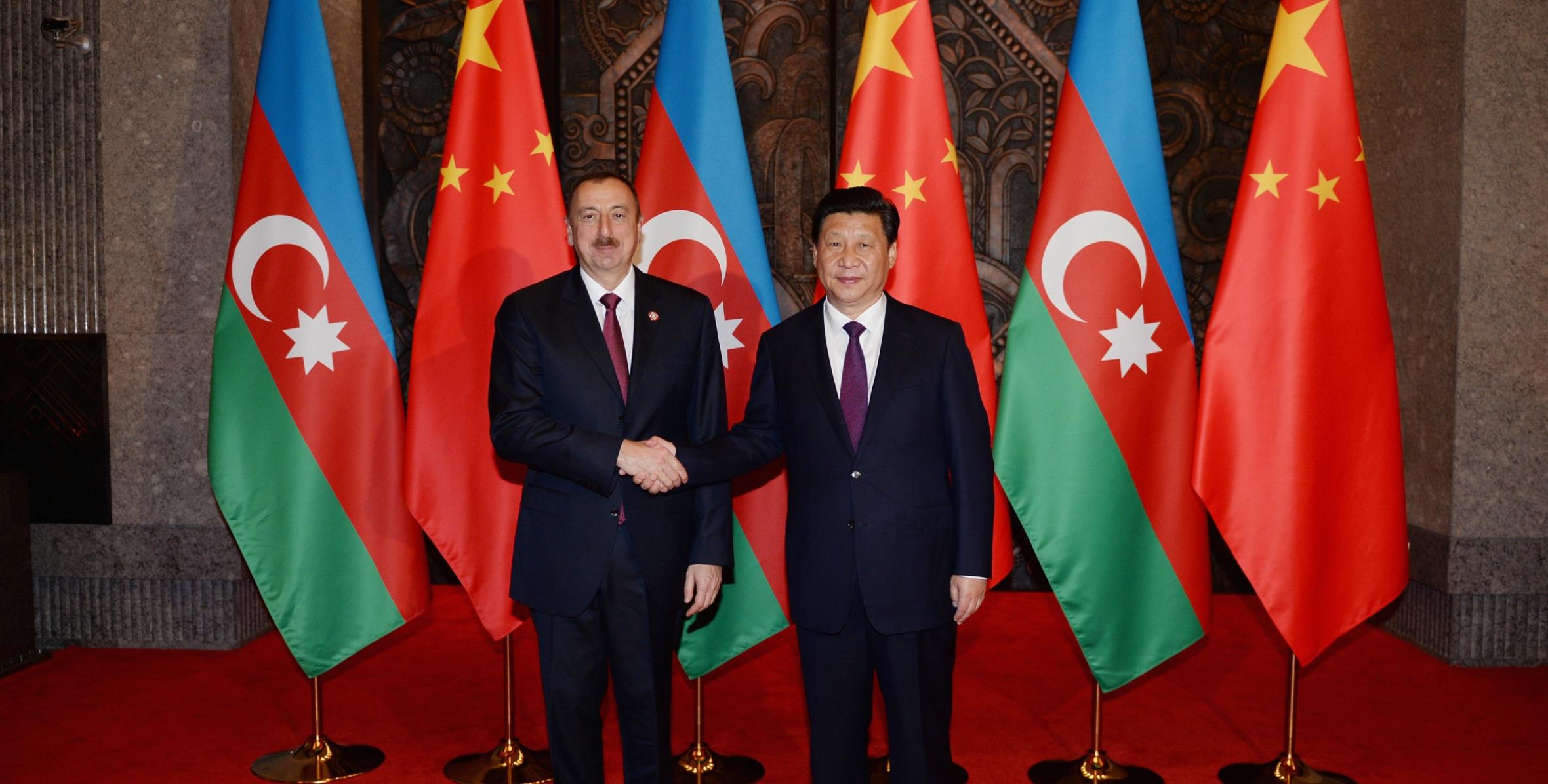
Azerbaijan and the People’s Republic of China Announce Comprehensive Strategic Partnership

Ilham Aliyev met with President of the People's Republic of China Xi  Jinping » Official web-site of President of Azerbaijan Republic

  • On April 22, Azerbaijani President Ilham Aliyev conducted a state visit to the People’s Republic of China (PRC) to strengthen Azerbaijan’s role as a transit hub between the PRC, Central Asia, and Europe and expand the Azerbaijan-PRC partnership to new spheres.
  • Azerbaijan–PRC cooperation has been based on Azerbaijan’s role as a transit hub but is evolving to include cooperation in energy and key industrial sectors, such as oil and gas, metallurgy, construction materials, pharmaceuticals, and food production.
  • Azerbaijan has devoted enormous resources to attracting PRC and Western use of the Middle Corridor, massively improving and modernizing its trade infrastructure, and optimizing cargo transportation.

On April 22, Azerbaijani President Ilham Aliyev conducted a state visit to the People’s Republic of China (PRC), meeting with President Xi Jinping to cement the bilateral partnership that began in 2024 (PRC State Council Information Office, April 24). During the visit, Aliyev and Xi signed an agreement to establish a Comprehensive Strategic Partnership between Azerbaijan and the PRC (China Brief, September 20, 2024; President of Azerbaijan, April 23). The visit came at a tense time for the PRC as an intensifying trade war with the United States motivates Beijing to seek alternative transit routes and destinations for exports. Azerbaijan’s role as a viable transit hub between the PRC, Central Asia, and Europe positions it to cultivate partnerships with nearly all regional states. Baku accordingly plays a role in both the PRC-led “One Belt One Road” (OBOR) initiative and the Middle Corridor, underscoring Azerbaijan’s growing of ties with the PRC and European Union (see EDM, April 30, 2019, October 28, 2024, February 19, April 23; Trend.az, April 24; see China Brief, June 21, 2024).

Categories
Azerbaijani Politics Iran in Caucasus and Beyond MENA in Turbulence Oil / Natural Gas / Green Energy South Caucasus Region

Azerbaijan redraws its foreign policy map

Aliyev invites interim Syrian President al-Sharaa to visit AzerbaijanIn the last five years, Azerbaijan has explicitly shifted its traditional foreign policy strategy by making inroads into regions far beyond the post-Soviet space, including the Balkans, Middle East, and more recently Sub-Saharan Africa, often through energy projects led by its well-known State Oil Company (SOCAR).

A revelation about the extent of Azerbaijan’s regional diplomatic outreach came during the annual conference in ADA University in Baku on April 9, when Azerbaijani President Ilham Aliyev commented on numerous issues regarding the geopolitical landscape, including on Azerbaijan’s stance toward the ongoing Israel-Turkey standoff. Commenting on the confrontation between two friendly nations — both Israel and Turkey are strategic allies of Baku — Aliyev for the first time revealed that Baku once successfully mediated the Israel-Turkey reconciliation in 2022, resulting in a re-opening of embassies after several years, even though shortly after the breakout of the Gaza War relations were repeatedly put on hold.

Categories
Azerbaijani Politics Central Asia I China I Russia Pax Caucasia Russia in Caucasus South Caucasus Region Transit Routes in Eurasia Turkey-Azerbaijan Partnership

New book available: Strategic Implications of the War in Ukraine for the Post-Soviet Space: A View from Caucasus and Central Asia

Strategic Implications of the War in Ukraine for the Post-Soviet SpaceThis groundbreaking volume offers an in-depth exploration of how Russia’s 2022 invasion of Ukraine has reshaped the geopolitical landscape of the post-Soviet space, particularly in the Caucasus and Central Asia. Through expert analyses, the book examines the far-reaching consequences of the war, including shifts in regional alliances, energy security dynamics, the rise of new cooperation platforms, and the growing role of external actors such as China and Turkey.

Through rigorous analysis, the book explores critical themes such as the shifting balance of power in the region, the re-emergence of the Organization of Turkic States, Azerbaijan’s deepening engagement with Central Asia, Kazakhstan’s strategic repositioning, and the complex interplay between Russia, China, Turkey, and the West.

Categories
Azerbaijani Politics MENA in Turbulence South Caucasus Region

Can Netanyahu Form a U.S.-Israel-Azerbaijan Axis Against Iran?

Categories
Central Asia I China I Russia Iran in Caucasus and Beyond

Uncertain Alliances: Will Russia Abandon Iran in Favor of U.S. Negotiations?

Categories
Central Asia I China I Russia Oil / Natural Gas / Green Energy

Türkiye-Turkmenistan Gas Deal Opens Possibilities for New Routes

Turkey Imports Gas From Turkmenistan Via Iran Under Barter Deal – Eurasia  Review

Executive Summary:

  • In mid-February, Türkiye and Turkmenistan signed an agreement facilitating the flow of natural gas through Iran, a step to enhance Türkiye’s energy security and diversify its supply.
  • Iran’s infrastructure technical issues and the increased likelihood of U.S. sanctions could cause supply disruptions, as has occurred in the past.
  • Türkiye aims to establish itself as a key energy trade hub and create additional export routes, while Turkmenistan can export more gas through new routes, particularly to Europe.

On February 14, Türkiye’s Energy Minister, Alparaslan Bayraktar, announced that a new energy agreement was signed with Turkmenistan, strengthening the bilateral relations between Ankara and Ashgabat. The main stakeholders of the agreement are Türkiye’s state-owned pipeline operator BOTAŞ and Turkmenistan’s state-owned Turkmengaz. The new agreement envisages 2 billion cubic meters (bcm) of natural gas flow from Turkmenistan to Türkiye through Iran via its existing natural gas network, which began on March 1 (Caspian Post, February 14; Anadolu Ajansı, March 2). The new swap agreement is a remarkable milestone in enhancing Türkiye’s energy security and attempts to diversify its supply sources.