Categories
Oil / Natural Gas / Green Energy

European countries plan hydrogen import infrastructure to achieve climate goals

Hydrogen exports to shift to ammonia production by 2035

In light of global warming, resource extinction, natural disasters, and frequent heated debates on climate action in the West, hydrogen is the hope for achieving ambitious climate goals. Whether used in fuel cells to power vehicles, as a feedstock in industrial processes, or as an energy carrier to store and transport renewable energy, hydrogen offers solutions to decarbonise hard-to-abate sectors.

Indeed, hydrogen as an energy carrier has properties that are important for a reliable energy system, such as easy transport and storage capability. Moreover, hydrogen can replace fossil fuels to drastically reduce emissions in industries such as steelmaking and chemicals, where electrification is difficult.

Consequently, given hydrogen’s huge potential for energy transition, many European countries are keen on exploring ways of importing it.

Categories
Azerbaijani Politics Oil / Natural Gas / Green Energy

Will COP29 become a milestone in Azerbaijan’s long-term energy strategy?

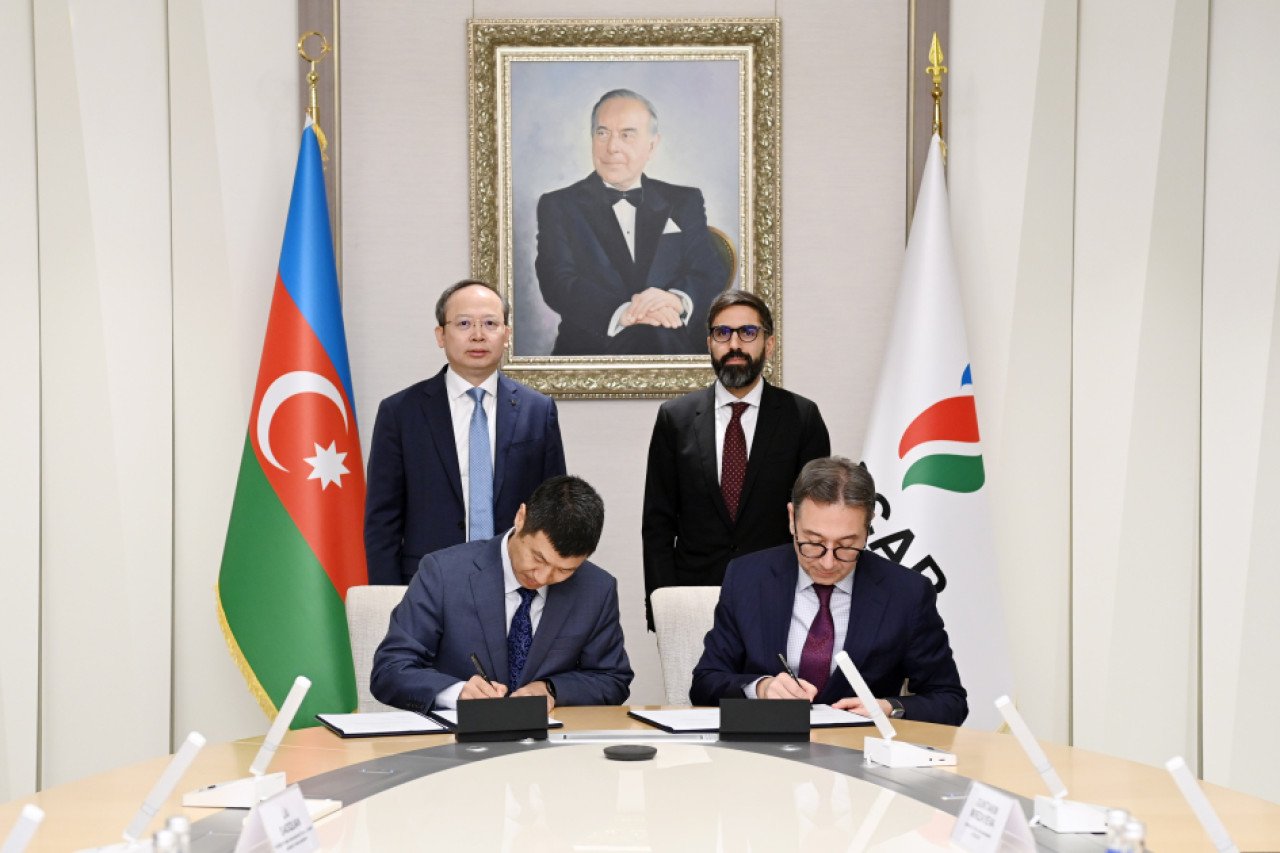
COP29 çərçivəsində “SOCAR Green” və “PowerChina” şirkətləri arasında Anlaşma Memorandumu imzalanıb | Şərq qapısı

Despite its heavy reliance on fossil fuel exports for many years, Azerbaijan has now shifted its long-term energy strategy by steadily switching to renewable energy sources.

Thus, the 29th Conference of the Parties to the UN Framework Convention on Climate Change (COP29) in Baku became a vital platform for Azerbaijan’s main energy giant SOCAR and its affiliate SOCAR Green LLC (established in December 2023) to ink new agreements with countries and companies in the field of green energy, smart technologies and decarbonisation.

Focus on gas

It is noteworthy that SOCAR started supplying North Macedonia with natural gas on November 15, while Azerbaijan was hosting the major climate event on its soil. Considering that natural gas is the cleanest fossil fuel, in contrast to crude oil, Baku did not hesitate to announce the new partnership during COP29.

Categories
Azerbaijani Politics Iran in Caucasus and Beyond Karabakh in the Post-War Period South Caucasus Region

New Azerbaijan-Iran Railway Agreement Grapples With Regional Tensions

News

Executive Summary:

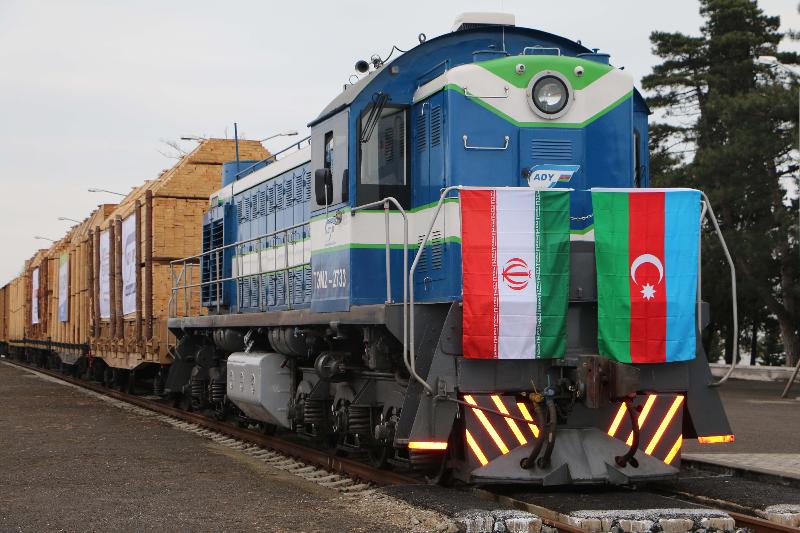
  • In October, Azerbaijani and Iranian officials discussed the Aras Corridor railway project, a strategic alternative to the contested Zangezur Corridor, amid ongoing Azerbaijan-Armenia tensions and diplomatic efforts to enhance regional connectivity following the 2020 Karabakh War.
  • The Aras Corridor strengthens Azerbaijan–Türkiye–Central Asia ties and aligns with Iran’s International North-South Transportation Corridor, enhancing regional connectivity and trade routes toward Russia.
  • Azerbaijan’s focus on the Aras Corridor reflects regional tensions, including opposition to the Zangezur Corridor, Iran-Israel conflicts, and Russia’s war against Ukraine. The project highlights Azerbaijan’s strategy of adapting to navigate shifting alliances and maintain regional goals.

On October 15, Chairman of Azerbaijan Railways Rovshan Rustamov arrived in Tehran to meet his Iranian counterpart Jabbar Ali Zakeri Sardroudi to discuss the construction of a railway line linking Azerbaijan’s East Zangezur region and its Nakhchivan exclave through Iran (News.az, October 15). The meeting came amid intensive diplomatic negotiations between Azerbaijan and Iran regarding the Aras Corridor transit route linking Azerbaijan to Nakhchivan and further to Türkiye via Iran after a period of silence and diplomatic rifts between the two neighbors (see EDM, March 27).

Categories
MENA in Turbulence

Houthi Attacks on Merchant Vessels Force a Reckoning in the Red Sea

Deepening tensions and turbulence have gripped the Middle East, caused by the War on Gaza and the emergent Iran-Israel confrontation. The security situation in the region has deteriorated, enabling other regional state and non-state actors to join the conflict. One of these prominent actors is the Yemen-based Houthi rebels, which have disrupted trade transiting the Red Sea by launching attacks on commercial vessels. Though the Houthis predicate their attacks on merchant vessels as targeting ships headed to Israel, their strikes have been more haphazard than the group’s rhetoric suggests.

Categories
Oil / Natural Gas / Green Energy

Will the renewal of the Serbia-Russia gas deal prolong Moscow’s energy dominance in Europe?

Image

Serbian Deputy Prime Minister Aleksandr Vulin hinted during the Eastern Economic Forum in Russian Vladivostok in September that Moscow and Belgrade need to solve issues related to the gas supply contract set to expire in 2025. Despite Western sanctions, Russia still plays a crucial role in supplying Serbia with natural gas “on time and based on very good conditions”, the Serbian minister said.

Although the continuing Russian gas supplies to Europe pose a serious dilemma within the region, some EU member countries like Hungary, Slovakia, Austria, and non-members like Serbia do not hesitate to maintain energy partnerships with Moscow.

Categories
South Caucasus Region Transit Routes in Eurasia

Azerbaijan Railways releases the first ever public transport sustainability report for a major corporation

Azerbaijan Railways releases the republic's first ever sustainability report for a major corporation

As COP29 approaches, Azerbaijan Railways (ADY) released the first-ever sustainability report by a major state-owned corporation at an event in Baku on October 23.

The company released its “Sustainable Transport for the Future” report on the sustainable achievements of the company CJSC in the fields of environment, social, and management. The event’s main topic was the work done to achieve the decarbonization goals of sustainable transport in Azerbaijan, especially railways, with the application of green innovations and advanced digital solutions, and the steps to be taken in this direction.

Categories
Iran in Caucasus and Beyond MENA in Turbulence

US Supply of Heavy Weapons to the KRG Worries Baghdad

The U.S. supply to Iraqi Kurdistan reflects a desire by Washington to maintain a long-term presence in the area beyond the withdrawal of U.S. forces from central Iraq next year.

Iraqi mass media confirmed recently that the Biden administration had delivered heavy artillery to the Iraqi Kurdistan Regional Government (KRG) despite objections from Iraqi authorities in Baghdad.

The U.S. called the delivery of two dozen 105 mm M119 howitzers to the KRG a “long-planned transfer” meant to build capacity for Kurdish Peshmerga forces. But in Baghdad, there were calls from some to seize the artillery and concern that the new U.S. support could exacerbate already tense relations between Baghdad and Erbil, threatening efforts by Iraqi Prime Minister Muhammad Shia al-Sudani to improve ties with the KRG and preserve good relations with Washington despite the anticipated withdrawal of U.S. troops from central Iraq next year.

Categories
Iran in Caucasus and Beyond MENA in Turbulence

Iran’s New Foreign Minister Tests the Limits of Iran’s Foreign Policy

Iran's president taps nuclear negotiator as foreign minister, woman for  housing post | The Times of Israel

On August 21, the Iranian parliament confirmed Abbas Aragchi, a well-known veteran diplomat, as foreign minister upon the recommendation of the newly-elected president, Masoud Pezeshkian. A product of the foreign policy establishment, Aragchi started his diplomatic career as a political analyst within the Ministry of Foreign Affairs, rising through the ranks with a particular distinction. He gained notoriety in the West as one of the top negotiators of the 2015 Joint Comprehensive Plan of Action (JCPOA), which placed restrictions on Iran’s nuclear program in favor of sanctions relief.

Following domestic unrest in Iran, punctuated by mass riots in 2022, violent terror attacks in major Iranian cities, a shrinking economy, and heavy inflation. When President Ebrahim Raisi died unexpectedly in a helicopter crash in May 2024, Supreme Leader Ali Khamenei allowed reformist lawmaker Masoud Pezeshkian, an ethnic Azerbaijani, to run in presidential elections. When Pezeshkian won the July 5 vote, he became the first reformist leader since Hassan Rouhani left office in 2021.

Categories
South Caucasus Region

Türkiye-Russia Trade Declines Amid Western Sanctions

Recep Tayyip Erdoğan and Vladimir Putin

Executive Summary:

  • Trade between Russia and Türkiye has dropped significantly in 2024 due to Western sanctions, indicating a weakening economic partnership as Russia’s war in Ukraine continues to isolate it from global partners.
  • Ankara is increasingly aligning with Western powers, as evidenced by the postponement of Russian President Vladimir Putin’s visits to Ankara. This is straining Turkish-Russian relations.
  • Türkiye remains a key importer of Russian energy, despite improving ties with the West, with a notable increase in fuel imports and its participation in re-exporting Russian oil products to Europe.
Categories
MENA in Turbulence

Is the Balkan region Israel’s newfound interest?

Israeli President Isaac Herzog (left) with his Serbian counterpart Aleksander Vucic during his first visit to Belgrade. / Predsedništvo Srbije / Dimitrije Goll

Israeli President Isaac Herzog concluded his historic first visit to Albania in September, shortly after his first-ever trip to Serbia, where both sides agreed to deepen bilateral cooperation amid Israel’s extending military campaign against Hamas and Hezbollah in southern Lebanon. Although the recent intensive diplomatic dialogue between Israel and Balkan states is gaining more impetus, it is not a new phenomenon. In the last five years, much has been done to ensure Israel’s expanding diplomatic, security, and economic ties with the Balkans, particularly with Albania and Serbia.

In light of the worsening geopolitical tensions in the Middle East after the Hamas attack on Israel in October 2023 and Israel’s large-scale military campaign in Gaza and southern Lebanon, Tel Aviv sought to build new alliances and partnerships at a critical time. Hence, Israel’s kinship in building security ties with Serbia is essential, given its well-established defense industry in the Balkan region.