Categories
South Caucasus Region

Romania Makes Itself Indispensable to NATO

Photo: A view of a Romanian MLI-84 infantry fighting vehicle and its crew through foreground of tree branches during Dacian Fall 25. NATO forces in Romania demonstrated their ability to expand from a multinational battlegroup to an armoured brigade, quickly absorbing thousands of French Army troops as part of exercise Dacian Fall 25. The drills included troops from Belgium, Bulgaria, France, Germany, Italy, Luxembourg, North Macedonia, Poland, Portugal, Romania, Spain and the United States. It ran from 20 October to 13 November 2025. Credit: NATO via Flickr https://flic.kr/p/2rKW1vB

The new center, which has been operational since January, will operate alongside a similar facility in Rzeszów, Poland, as NATO’s military infrastructure in countries surrounding Ukraine continues to grow.

At the same time, a newly expanded military base at Mihail Kogălniceanu, Romania, will increase the alliance’s presence in the Black Sea, which \has traditionally been dominated by Russia. It will be able to host 10,000 soldiers by 2030, reaffirming Bucharest’s strategic orientation as a committed NATO member.

The expansion of Romania’s defense capabilities comes in the wake of Washington’s new approach to European security, which includes demands that European nations should shoulder a greater share of their own defense, both financially and operationally. In October, the US said it would withdraw around 700 military personnel from Romania, but another 1,000 remain.

Categories
Azerbaijani Politics MENA in Turbulence South Caucasus Region

Azerbaijan hedges as crisis worsens in neighbouring Iran

Azerbaijan-Iran relations: from the past to the future | Ereforms.gov.az

As Iran faces violent anti-governmental protests across major cities, officials across the border in Azerbaijan have refrained from commenting. Yet the unrest raises questions over whether Baku’s long-standing policy of non-interference would survive a potential collapse of the Islamic Republic.

Like Iran’s other near neighbours Armenia, Russia and Turkey, Azerbaijan has adopted a cautious stance, avoiding condemning Tehran’s violent suppression of dissent. This contrasts with the Western countries, whose diplomatic statements are filled with an anti-Iranian regime narrative, providing support to protesters.

Categories
South Caucasus Region

Exporting Power: Türkiye’s Defense Industry and the Politics of Strategic Autonomy

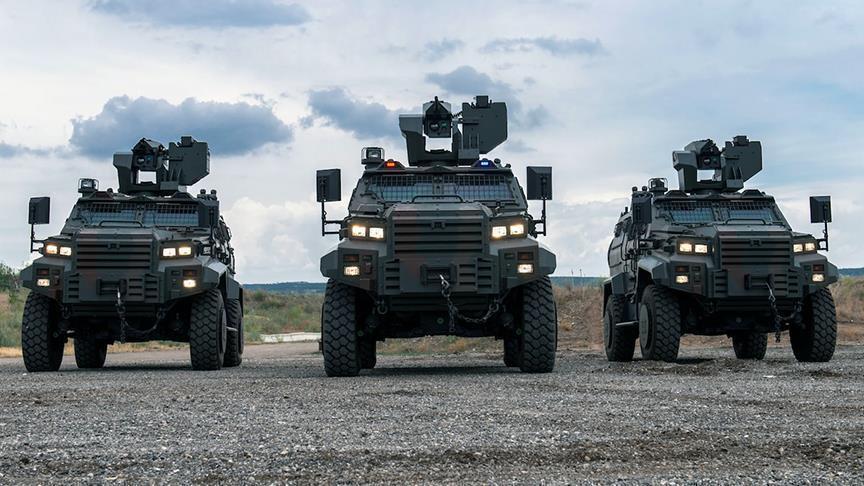
Turkey has increased exports of its defense industry products to Uzbekistan  five times | BLACKSEA CASPIA

Over the last decade, the development of Turkey’s defense industry has become a crucial aspect of its soft power diplomacy in both regional and global politics. The country has made significant efforts to invest heavily in developing its indigenous defense industry, reducing its dependence on imports and becoming a leading defense exporter in global markets.[1] The rapidly changing regional and global geopolitical landscape, particularly after the Arab uprisings, has prompted Ankara to expand the country’s defense industry and reduce its reliance on overseas arms procurement and international supply chains.

Since the ruling AKP government came to power, the country’s indigenous defense industry has undergone a significant transformation, steadily becoming the twelfth-largest arms exporter, according to the Stockholm International Peace Research Institute (SIPRI).[2] Given the regional instability marked by violent uprisings and sectarian conflicts, Türkiye’s pursuit of defense industry development can be understood as a primarily threat-driven strategy. This approach reflects an effort to enhance national defense capabilities and ensure strategic autonomy in response to both external security challenges and internal vulnerabilities. The close alignment with the West during the Cold War era helped Türkiye secure itself and gain access to the U.S. and NATO military-industrial complex and advanced weapons systems, which played a major role in transforming the local defense industry.

Categories
Azerbaijani Politics South Caucasus Region

Russia’s Exclusion from Joint Caspian Drills Shows Regional Shift

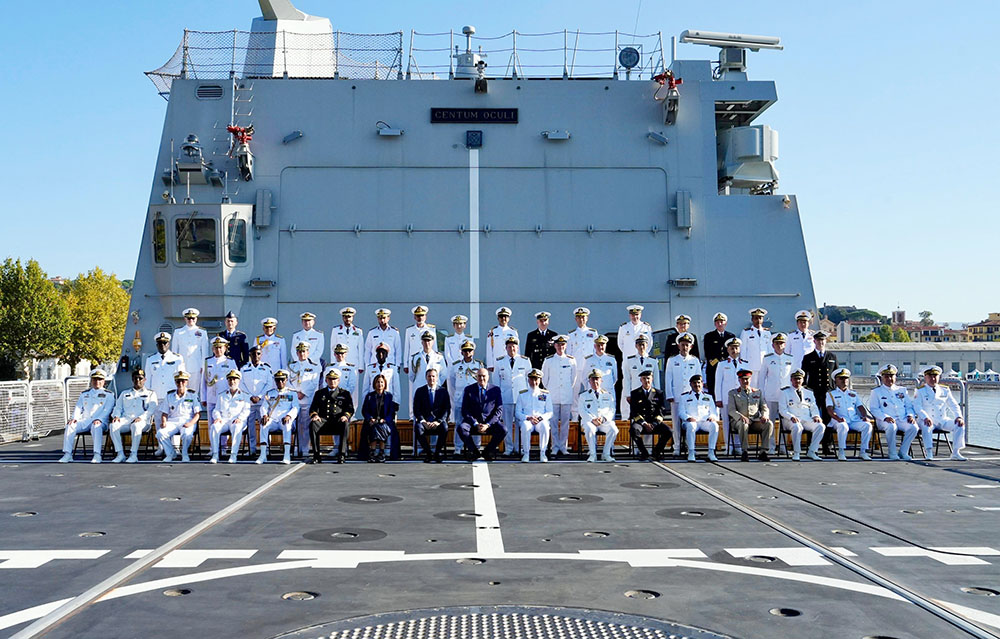
Azerbaijan Navy delegation attends SEAFUTURE 2025 International Exhibition  (PHOTO)

Executive Summary:

  • Russia’s influence in the Caspian Sea littoral has declined since 2020 due to Moscow’s war against Ukraine diminishing Russian resources and international standing, regional conflicts and reordering, and the growing navies of Azerbaijan, Kazakhstan, and Iran.
  • Türkiye has been instrumental in helping Azerbaijan and Kazakhstan modernize their navies, including shipbuilding partnerships and joint exercises, strengthening Ankara’s influence in the Caspian and South Caucasus.
  • Regional states are diversifying their military alliances, conducting joint military drills, and capitalizing on Russia’s declining leverage, while Russia seeks closer ties with Iran to maintain its influence in the Caspian Sea region.

On October 25, Azerbaijan participated in the Nusret-2025 Invitation Exercise, a joint military drill held in the Gulf of Soros in Türkiye. The exercise aimed to strengthen cooperation between the Turkish Naval Forces and the naval forces of friendly and allied countries, such as Azerbaijan (Ministry of Defense of Azerbaijan; News.az, October 25). This is the latest example of Azerbaijan’s partnership with Türkiye in strengthening its naval forces. The Caucasus region, particularly the Caspian littoral, is emerging as a focal point of geopolitical competition amid rising tensions between Russia and the West. The Caspian, often referred to as a “Russian lake” during the Soviet era, has presented new challenges to Russia’s regional dominance since 2022. Until the 2020s, Russia remained the most powerful naval power in the Caspian Sea, despite Kazakhstan, Azerbaijan, and Iran systematically enhancing their naval capabilities over the past three decades (see Strategic Snapshot, August 24).

Categories
South Caucasus Region

Azerbaijan Attempts Pragmatic Diplomacy at SCO Summit

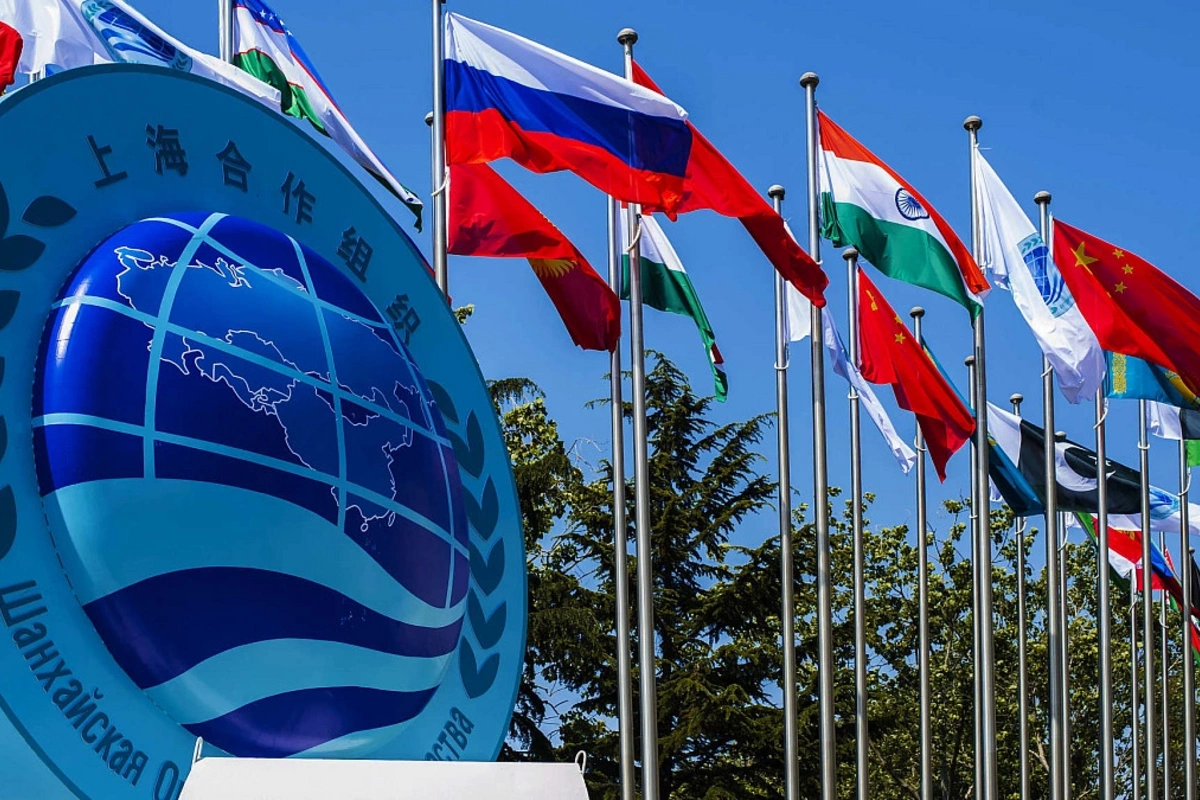
India blocks Azerbaijan's membership in the SCO | Baku.ws News Site -  Latest News and Events

  • Azerbaijani President Ilham Aliyev’s visit to Beijing for the Shanghai Cooperation Organization (SCO) summit on August 31–September 1 emphasizes Baku’s recent push for the formation of a multivector diplomatic position.
  • Baku seeks deeper SCO engagement to boost the Middle Corridor, but India appears to have blocked Azerbaijan’s membership bid, and intra-bloc rivalries—especially India-Pakistan—undercut the SCO’s ambitions.
  • Azerbaijan’s recent initiatives and progress in the development of transport routes have underlined its strategy of balancing relations with regional and global powers through partnerships with platforms such as the SCO.

On August 30, Azerbaijani President Ilham Aliyev arrived in the People’s Republic of China (PRC)  to attend the 25th Meeting of the Council of Heads of State of the Shanghai Cooperation Organization (SCO) in Tianjin (President of Azerbaijan; Azertag, August 30). Azerbaijan holds the status of a “dialogue partner” of the SCO, but is not a full member. Aliyev’s attendance at the PRC-led SCO summit came amid simmering tensions between Azerbaijan and Russia, followed by mutual accusations and bellicose rhetoric of the Russian conservative establishment against Azerbaijan (OC Media, August 12; see EDM July 7, September 9). In the face of Moscow’s open accusations and attempts to pressure Azerbaijan through frequent police raids against the local Azerbaijani diaspora, Baku is actively building alternative partnership formats in the Caucasus, Central Asia, and beyond (see EDM, April 23, 24, May 1, 7, July 17, September 10).

Categories
Azerbaijani Politics Oil / Natural Gas / Green Energy Russia in Caucasus South Caucasus Region

Russia — Ukraine’s Accidental Matchmaker

Photo: Russia's President Vladimir Putin and Azerbaijan's President Ilham Aliyev leave after a state reception at the Gulustan Palace in Baku, Azerbaijan August 19, 2024. Credit: Sputnik/Mikhail Tereshchenko/Pool via REUTERS

Russian drones attacked an oil depot in Odesa in Ukraine on August 17. That’s not unusual, but that night’s target was notable in one important sense — the Kremlin struck high-profile infrastructure owned by SOCAR, Azerbaijan’s state oil company.

This was no accident. Russia had attacked the same SOCAR facility in Ukraine on August 8. Taken together with a series of other events, it has become clear that Putin’s men are sending a message. That comes at some risk to themselves and potential benefits for Ukraine.

These weren’t the first or even the most serious Russian acts of hostility against the energy-rich South Caucasian nation.  On Christmas Day, Russian missile batteries shot down a scheduled Azerbaijan Airways plane, killing 38 people. The incident caused uproar, not least because while the missile firing may have resulted from mistaken identity, Russian air controllers refused the badly damaged aircraft permission to land.

Categories
Iran in Caucasus and Beyond MENA in Turbulence

After Israel’s wars, Iran struggles to regain regional influence

Top Iranian Adviser Visits Lebanon for High-Stakes War Negotiations -  Newsweek

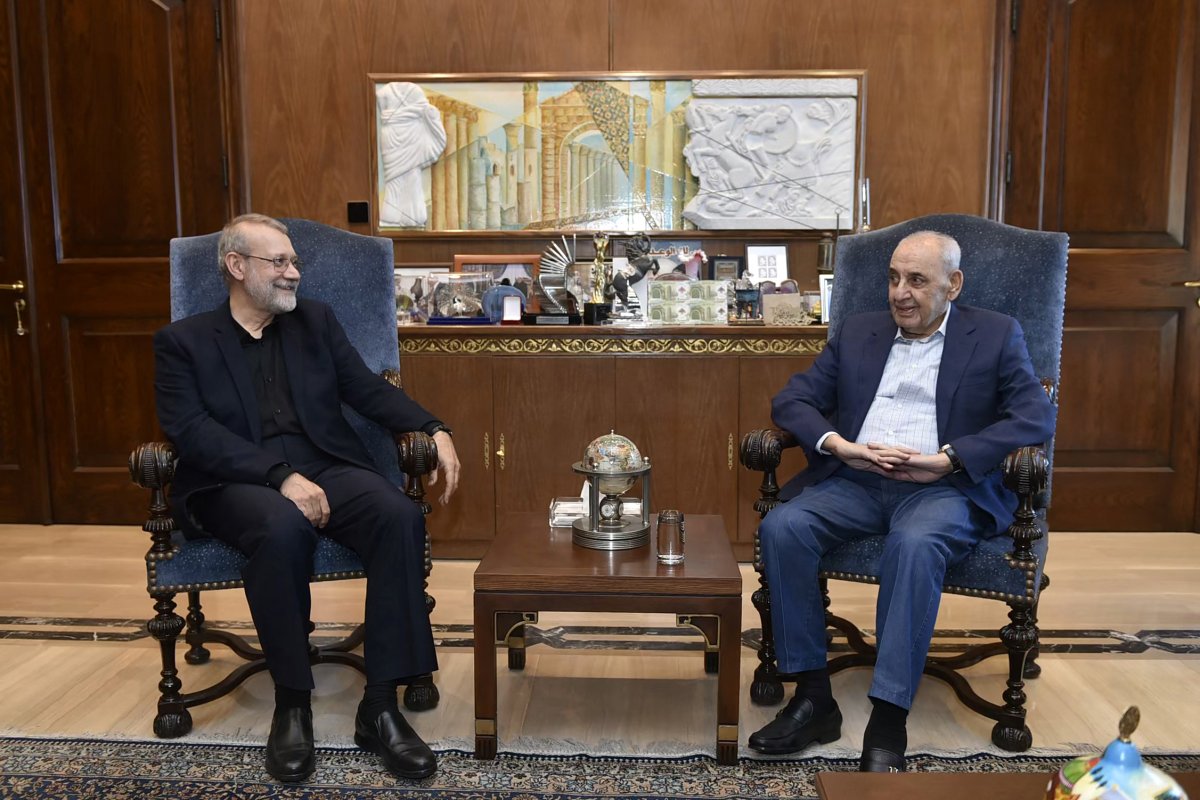
In mid-August, Ali Larijani, Secretary of Iran’s Supreme National Security Council, visited both Lebanon and Iraq as part of Tehran’s attempt to bolster its diminished influence in the Middle East following the 12-day war with Israel in June.

The trip was also viewed as an effort to project power and revive Tehran’s regional network of proxy militias, including Hezbollah, which Israeli military operations have severely weakened over the past two years. Larijani, who is one of the most trusted political figures of the Iranian Supreme Leader Ayatollah Khamenei, visited Beirut on 13 August, at a time when the Lebanese state is moving ahead with plans to disarm Hezbollah by the end of the year and implement a ceasefire with Israel.

Although Hezbollah sustained colossal losses within its top leadership during Israel’s war, the Iranian-backed group is reluctant to lay down its arms and become a part of the transition. Last week, Iran’s Foreign Minister Abbas Araghchi said that “we support any decision the group makes, but we do not intervene”.

Categories
Azerbaijani Politics Iran in Caucasus and Beyond Karabakh in the Post-War Period South Caucasus Region

The Armenia-Azerbaijan Accord: A Catastrophe for Iran?

On August 8, Azerbaijani President Ilham Aliyev and Armenian Prime Minister Nikol Pashinyan gathered in Washington, D.C. to sign a historic U.S.-brokered peace accord in the presence of President Donald Trump. What was not included in the ink of the accord was any reference to the new geopolitical order in the South Caucasus that it cemented by capitalizing on the waning influence of Russia and Iran.  One of the key elements of the new deal includes the creation of a highly profitable strategic trade corridor that passes through both countries, making cross-border trade after decades of violent conflict. The route will run through the southern territories of Azerbaijan and Armenia, giving the former a direct land route with Turkey through its Nakhchivan exclave.

Categories
Azerbaijani Politics Iran in Caucasus and Beyond MENA in Turbulence South Caucasus Region

Israel War Erodes Iran’s Relations with Azerbaijan

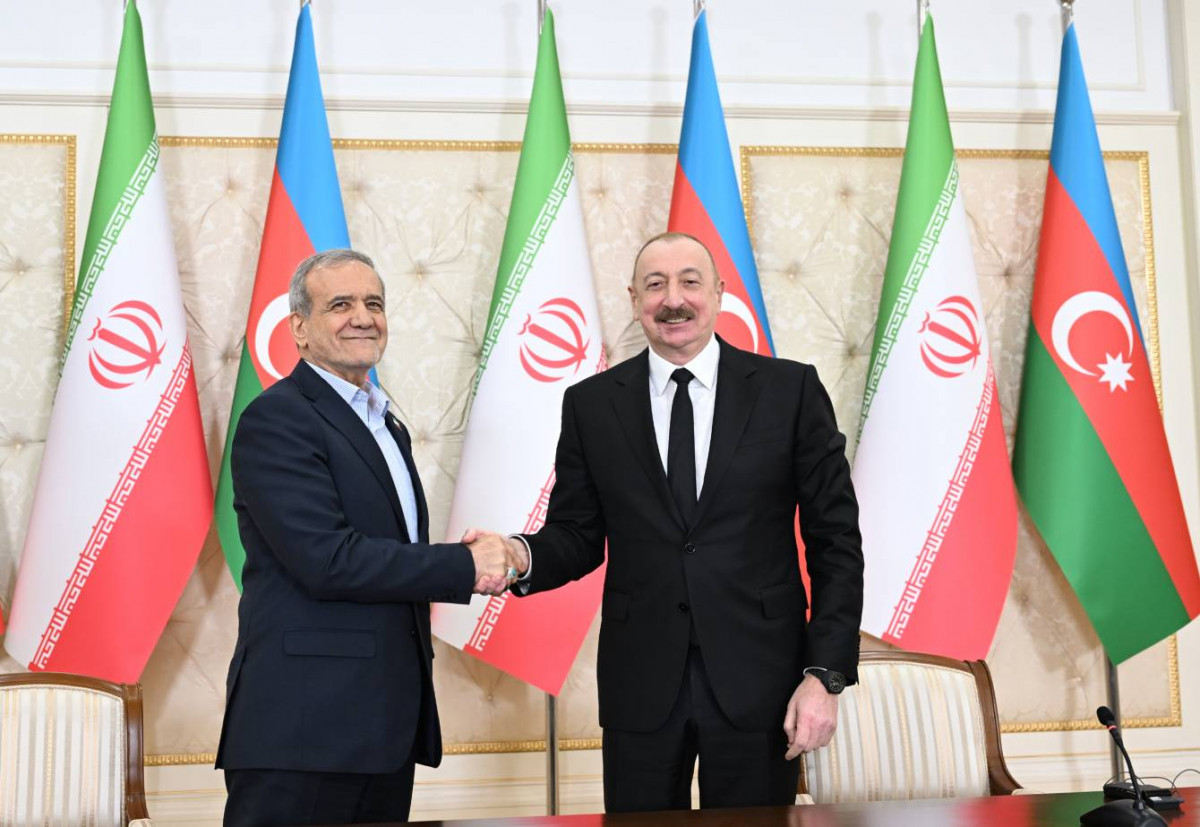
President Ilham Aliyev, President Masoud Pezeshkian hold phone talk
Iranian officials probe Israel’s alleged use of Azerbaijani airspace to hit Iranian targets

The 12-day Israel-Iran war revealed new vulnerabilities in the Islamic Republic and increased tensions between Iran and its neighbor, Azerbaijan.

In the aftermath of the strategic setback to Iranian nuclear and military facilities, Iran’s conservative political and security establishment began shifting focus toward perceived “close enemies” said to be complicit in the Israeli attacks. Among the primary targets of this narrative has been Iran’s northern neighbor, Azerbaijan, which Iranian state-run media and channels affiliated with the Islamic Revolutionary Guard Corps (IRGC) accused of providing “intelligence support to Israel” during the strikes on nuclear, military, and civilian sites.

Categories
Azerbaijani Politics Central Asia I China I Russia

Kazakhstan Aims to Modernize Military Through Multivector Diplomacy

Azerbaijan, Kazakhstan to hold joint naval drills ‘Caspian Wind-2025’ in Aktau
Publication: Eurasia Daily Monitor Volume: 22 Issue:

Executive Summary:

  • In response to shifting regional dynamics primarily driven by Russia’s war against Ukraine, Kazakhstan is reshaping its security posture by reducing military dependence on Moscow and prioritizing self-reliance, regional partnerships, and defense modernization.
  • Astana is focusing on its role as a “middle power,” allowing Kazakhstan to exert greater regional and global influence through integration into multilateral organizations, expanded participation in international initiatives, and diversified defense imports.
  • Kazakhstan has pursued diverse international military collaborations, particularly through joint exercises, weapons co-production, and strategic coordination with Türkiye and Azerbaijan, enabling it to adopt a more independent defense strategy.

Kazakhstan has recently been making steps to improve its defense capabilities. In April 2025, the Kazakh Ministry of Defense confirmed that a legislative framework was established to regulate the Defense Industry Development Fund, which was created in December 2023 (Prime Minister of Kazakhstan, April 14; Inform.kz, April 16). The new defense fund aims to acquire and manufacture domestically crucial military hardware, such as artillery ammunition, weapons systems, and combat modules.