Categories
Oil / Natural Gas / Green Energy

Amid global energy crisis Balkan states reach out to energy-rich Azerbaijan

Amid global energy crisis Balkan states reach out to energy-rich Azerbaijan

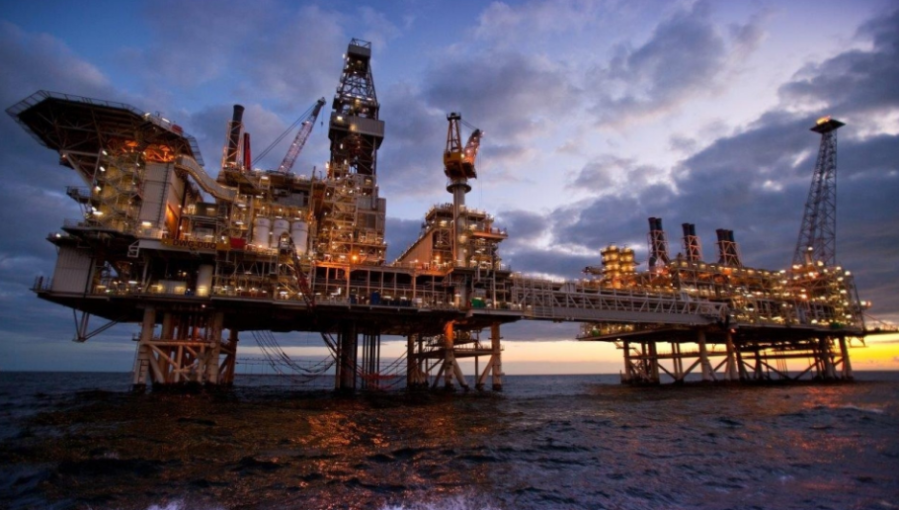
With the deepening energy crisis in the West triggered by Russia’s intervention in Ukraine, more European countries, mainly Eastern European and Balkan countries, including Bulgaria and Serbia, are eyeing alternative suppliers for additional natural gas volumes. The security cataclysms in Europe in the light of the war have pushed European countries to seek partners such as Azerbaijan.

Since 2022, Azerbaijan has held several high-level meetings with EU officials regarding exporting additional gas volumes to Europe. It is noteworthy that non-EU countries like Serbia are also keen on deepening energy partnerships with Azerbaijan. Serbia’s willingness to acquire more Azeri gas depends on the construction progress of the EU-supported Serbia-Bulgaria gas interconnector – a 171 km natural gas interconnector that will connect Nis (Serbia) and Sofia (Bulgaria), thus supporting regional energy security. According to reports, the interconnector may become operational in early 2023, giving Serbia and Bulgaria a non-Russian gas supply option. Obviously, Serbia is heavily dependent on Russian oil and gas, which have been disrupted following the Ukraine war and the imposition of sanctions on Moscow by the European Union, which Serbia is seeking to join.

Categories
Azerbaijani Politics South Caucasus Region

Azerbaijan remaking its military in Turkey’s image | EURASIANET

Turkey and Azerbaijan joined air force drills. File photo - Sputnik International, 1920, 28.07.2021

On October 5, 2020, when the full-scale war between Azerbaijani and Armenian armed forces had just started in and around Nagorno-Karabakh, President Ilham Aliyev was already talking about military reform. In an interview with Turkish state-run broadcaster TRT, Aliyev said that his intention was to remake the Azerbaijani military “based on the Turkish model but on a smaller scale.”

That reform had been underway for several years as Azerbaijan sought to move away from a Soviet model of the armed forces – featuring a heavy use of conscripts and large quantities of infantry and armor units – toward a more NATO-style professional, mobile, high-tech force. As Turkey was Azerbaijan’s closest ally, it was naturally the NATO military Baku sought to emulate.

Turkey’s heavy military support to Azerbaijan in the war against Armenia solidified that orientation. As Aliyev put it in the interview: “Turkey’s moral support and the Turkish defense industry products at our disposal strengthen us, and the whole world can see that. The Turkish Army is the second strongest army in NATO today, and no one can confront it.”

Categories
Iran in Caucasus and Beyond

How “Spy Games” Between Iran and Israel Could Enflame Regional Tensions

In 2020, Iran’s counter-intelligence agencies were challenged by the assassination of Mohsen Fakhrizadeh, the country’s top physicist and the leader of its nuclear program. Iranian officials have described the assassination as an attempt to sabotage Iran’s nuclear energy ambitions. It was initially thought that Fakhrizadeh had been killed in an assault on his car by gunmen using automatic firearms and explosives, but it later emerged that the Iranian scientist had been assassinated by means of a remote-controlled machine gun. Iranian authorities have traditionally blamed similar assassinations on the Forqa Group and the Mojahedin-e-Khalq, the two major anti-regime armed groups; instead, Tehran implicated Mossad, Israel’s intelligence service, in Fakhrizadeh’s killing, publicly admitting to Israel’s ability to strike deep within Iran for perhaps the first time.

Categories
Central Asia I China I Russia MENA in Turbulence Transit Routes in Eurasia

COMMENT: Why replenished ties between Uzbekistan and Turkey suit both Tashkent and Ankara

New Stage in Turkey-Uzbekistan Strategic Partnership – ERI

For both Uzbekistan and Turkey, progress in developing a strategic relationship with elements of trade, investment, and defence cooperation comes at an opportune time. Amid the ongoing momentous geopolitical developments, Tashkent needs to diversify its political outreach to maintain a multivector foreign policy in order to avoid falling under the sway of a particular regional actor. Ankara, meanwhile, wants relationships that revitalize its pan-Turkic agenda across Eurasia.

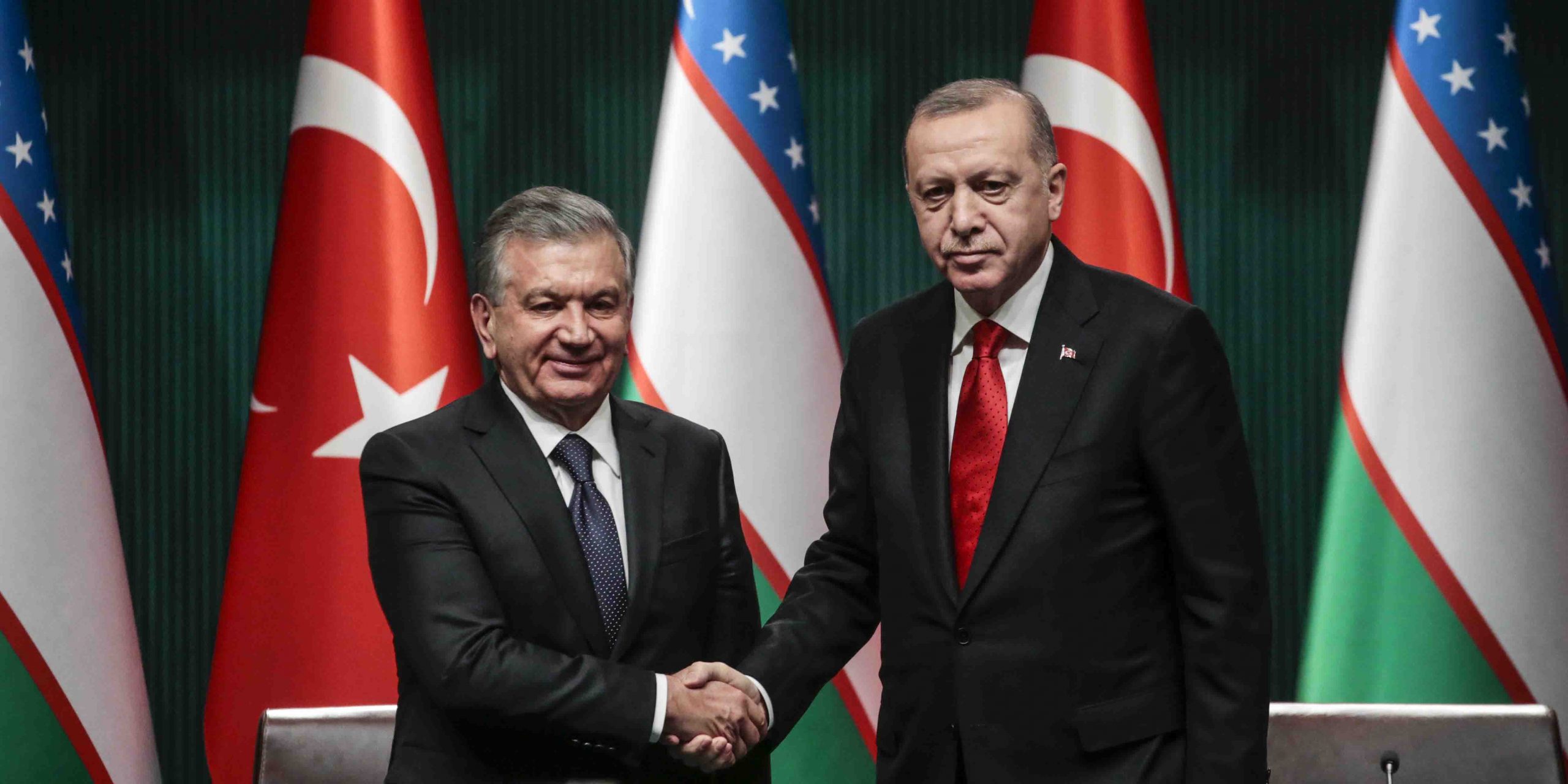
On March 29, President of Turkey Recep Tayyip Erdogan paid an official visit to Uzbekistan at the invitation of his counterpart President Shavkat Mirziyoyev. The strategic partnership was top of the agenda. Although relations between Turkey and Uzbekistan remained stalled during the rule of late Uzbek leader Islam Karimov until 2016, his successor Mirziyoyev has very much brought Turkey into the picture under the multivector approach. For Turkey, the development of ties with Uzbekistan somewhat uneasily took some steps forward just as Ankara was attempting to moderate peace talks between Ukraine and Russia.

Categories
Iran in Caucasus and Beyond

Iran’s “Game of Drones” in the Middle East [Gulf International Forum]

The further development of Iran’s drone program in recent years allowed it to produce a number of new classes of drones, such as the Shahid, Qasef, Mohajer, Samad, Ababeel, and, most recently, the Kaman, which is modeled on the U.S.-made MQ-1 Predator and advanced MQ-9 Reaper.

Amid mounting domestic unrest and ongoing diplomatic standoffs with regional states, Iran has devoted a significant and increasing amount of national resources toward upgrading its national drone program. On May 17, the Iranian government officially inaugurated its first overseas drone factory in Dushanbe, Tajikistan; the facility manufactures the indigenous Ababil-2, a multipurpose drone model with reconnaissance, combat, and suicide capabilities. The Ababil-2 boasts a maximum range of 200 kilometers and can sustain roughly 90 minutes of flight time. The new drone factory will help Iran to improve relations with Tajikistan after a period of lingering diplomatic tension, and General Mohammad Bagheri described its inauguration as a turning point in bilateral military cooperation between the two countries.

Categories
MENA in Turbulence Oil / Natural Gas / Green Energy

Algeria Makes for a Risky Partner to Help Solve Europe’s Energy Crisis

Italy signs deal with Algeria to increase gas imports | News | Al Jazeera

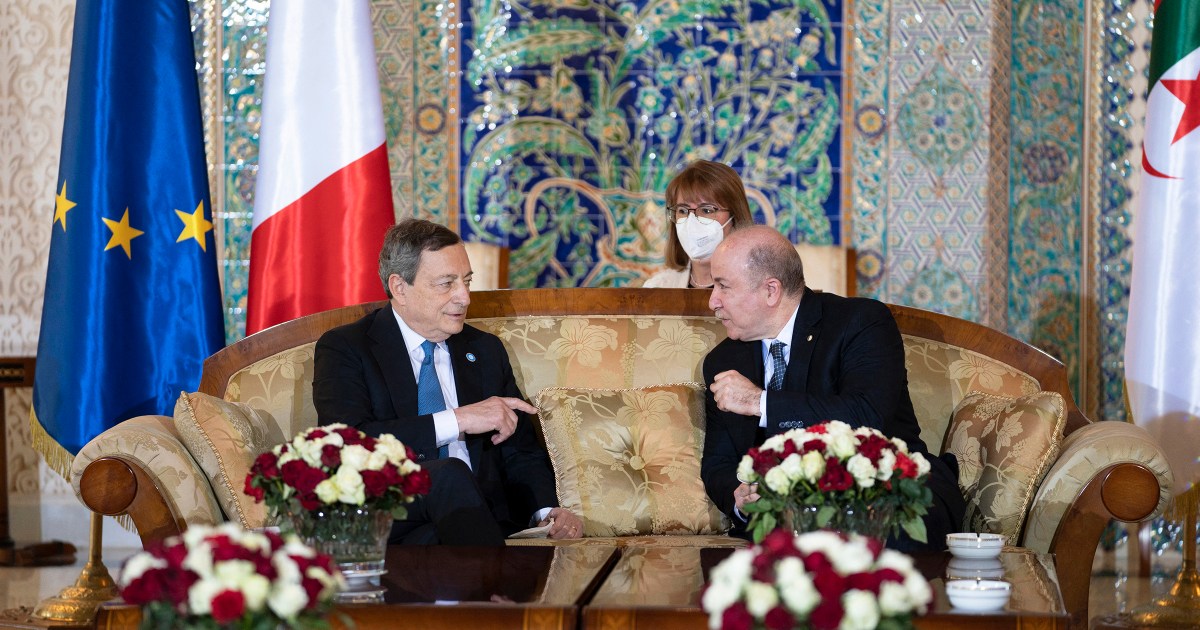
The war in Ukraine has exacerbated Europe’s energy crisis, leaving the European Union desperately seeking alternative sources of supply to reduce its dependence on Russian fossil fuels. Among the states in the Middle East, North Africa and Central Asia the EU has turned to in efforts to diversify its energy supplies, Algeria has been identified as a promising source of additional supplies of natural gas. But diplomatic obstacles and production limitations, as well as Algiers’ commercial links to Moscow, mean that expectations management are in order when it comes to Algeria being a cure for Europe’s energy woes.

Among the other countries that have been identified as potential alternative suppliers, including Qatar and Libya, most would not able to replace Russian natural gas exports to Europe anytime soon due to technical obstacles. Germany is in talks with Qatar for additional liquefied natural gas, or LNG, exports, but those discussions have reportedly hit a snag. Azerbaijan has also agreed to increase deliveries through available pipelines linking its fields to European markets, but there are limits to the amount of extra production it can divert.

Categories
Oil / Natural Gas / Green Energy Russia in Caucasus Transit Routes in Eurasia

How Will the Ukraine Crisis Shape the World Energy Market? [Politics Today]

Ukraine war: Can Russia's promise of fewer attacks be trusted? | Russia-Ukraine  war News | Al Jazeera

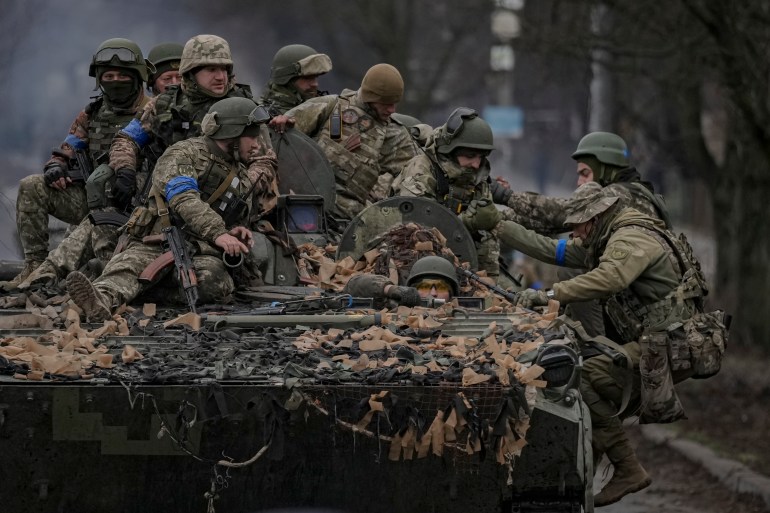
The Russian military aggression against Ukraine launched almost two months ago has clearly signaled a change in the traditional world order and triggered the unprecedented reaction of the Western coalition led by the U.S. The ongoing conflict between Russia and Ukraine has left the global energy market uncertain, threatening to cause severe energy shortages and oil prices exceeding $110 per barrel.

Since the Russian intervention in Ukraine kicked off, numerous sanction packages have been imposed on Russia, hitting mostly financial institutes and state-owned companies. This resulted in Western countries’ consolidation, and the collective refusal of Russia-related transactions and import of Russian natural gas, oil, and coal.

Whereas the U.S. and UK-led Western coalition gathered to support Ukraine politically, economically, and military/technically, some EU countries are at loggerheads over demands for an immediate blockade on Russian oil imports, joining the international financial sanctions, and condemning Moscow’s actions locally.

Categories
MENA in Turbulence Oil / Natural Gas / Green Energy

Could the Israel-Turkey Gas Pipeline End Europe’s Dependence on Russia? [Inside Arabia]

Could the Israel-Turkey Gas Pipeline End Europe’s Dependence on Russia?

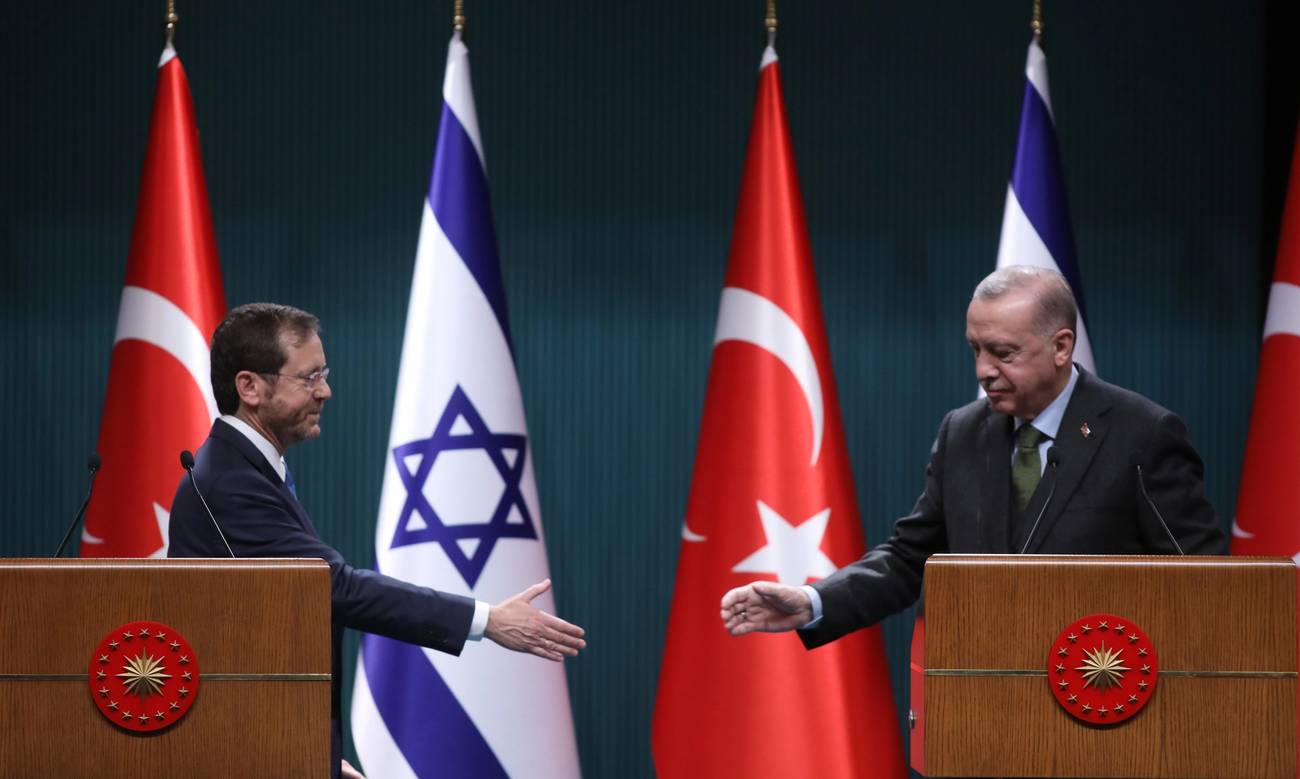
The prospect of Israel and Tukey normalizing relations paves the way for profitable cooperation in a wide array of fields, including energy. Israeli President Isaac Herzog’s visit to Turkey in March instantly renewed the discussions regarding the Turkey-Israel gas pipeline project amid a colossal security cataclysm in Europe stemming from Russia’s invasion of Ukraine. While Europe is facing unprecedented energy security challenges and desperately looking for alternative and reliable suppliers, the countries are looking to the Turkey-Israeli gas pipeline as Europe’s alternative to Russian energy supplies.

President Recep Tayyip Erdogan’s earlier statement that “gas cooperation is one of the most important steps we [Turkey and Israel] can take together for bilateral ties” should not come as a surprise. Erdogan also said “he was ready to send top ministers to Israel to revive the pipeline idea that has hung in the air for years.”

Categories
Azerbaijani Politics Karabakh in the Post-War Period South Caucasus Region

Different interpretations of the 10 November declaration lead to days of tension between Armenia and Azerbaijan [Karabakhspace.eu]

2020 Nagorno-Karabakh ceasefire agreement - Wikipedia

Different interpretations of the 10 November 2020 trilateral declaration which ended the 44 day Karabakh war resulted in an open sharp exchange between the Azerbaijani Ministry of Defence and its Russian counterpart. “The Azerbaijani leadership is not in the mood to consider any concessions when it comes to the country’s territorial integrity”, writes Fuad Shahbazov in this op-ed for KarabakhSpace.eu.

More than a year after the signing of the 10 November ceasefire agreement between Azerbaijan and Armenia tensions in the Karabakh region again flared up in the last days, causing another round of war of words between Azerbaijan and Russia. The current discontent between Baku and Moscow seems more significant compared to August of 2021 when official Baku openly accused the Russian peace contingent in Karabakh of inaction while elements of the Armenian Armed Forces were transferred to this region.

Categories
Iran in Caucasus and Beyond MENA in Turbulence

Iran is the Catalyst Behind the UAE-Turkey-Israel Geopolitical Axis [Inside Arabia]

Yavuz Ozden/dia images via Getty Images

Facing new security challenges in the Gulf region, the United Arab Emirates pushed for the normalization of ties with two other major regional powers – Israel and Turkey. The trilateral rapprochement could help the UAE reduce its national security risks stemming from Iran and its proxy forces.

Turkish President Recep Tayyip Erdogan paid an official visit to the United Arab Emirates (UAE) on February 14, for the first time since 2013, when Erdogan was still Prime Minister. Erdogan and his delegation’s visit were greeted with a 21-gun salute and a massive aerial show in Abu Dhabi.

The visit attracted much international media attention, as it was Erdogan’s first state visit to the UAE as President. This was of significance considering the deterioration of UAE-Turkey relations in the aftermath of the 2016 Turkish coup attempt. Tensions between the two countries were also considerably heightened during and in the aftermath of the 2011 Arab Spring revolutionary protests, with the two countries adopting opposing foreign policies.

The rapprochement of the two countries came at an uneasy time given the escalating strains between Iran and Israel, the renewed hostilities between the Houthis and the Saudi-UAE-led coalition in Yemen, and the deepening economic crisis in Turkey.