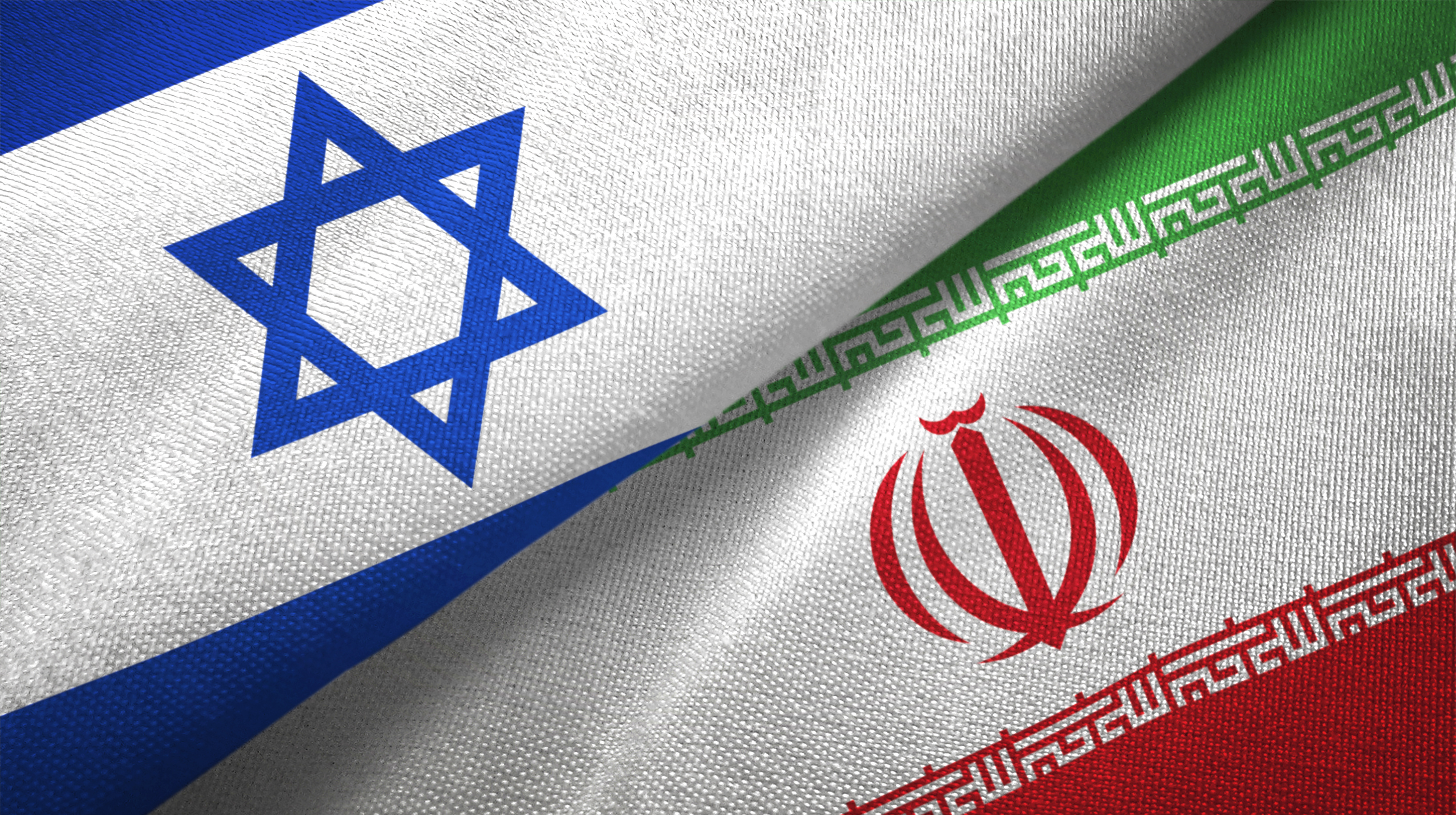
As tensions deepen between the United States-Israel alliance and Iran and the odds of a military strike against Tehran increase, both nations appear intent on expanding their relations with Azerbaijan—adding a key force multiplier to the conflict.
 Fuad's Briefs
As tensions deepen between the United States-Israel alliance and Iran and the odds of a military strike against Tehran increase, both nations appear intent on expanding their relations with Azerbaijan—adding a key force multiplier to the conflict.
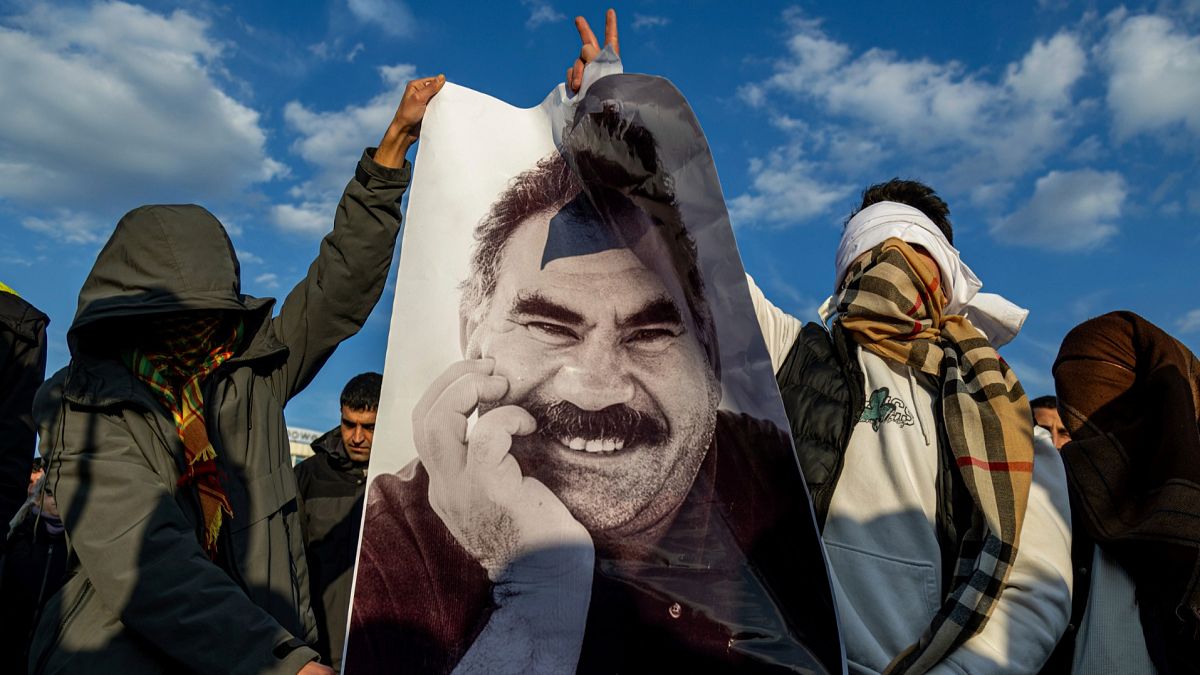
Turkey’s Interior Ministry conducted large-scale raids in 51 cities, including the Kurdish-majority city of Diyarbakir in the southeast, on Feb. 18, arresting 282 people for alleged ties with the militant Kurdistan Workers’ Party (PKK). The arrests stirred heated debate within Turkish society, constituting renewed pressure on the group but also sending mixed signals amid a new bid by the government of President Recep Tayyip Erdogan to resolve the decades-long insurgency by the PKK and strike a peace deal that could put an end to one of the most violent conflicts in the region. The attempt at a rapprochement is the first sustained effort since the two sides tried – but failed – to reconcile in 2014. Just yesterday, the PKK’s imprisoned founder and longtime leader, Abdullah Ocalan, issued an unprecedented call from prison saying, “all groups must lay down their arms and the PKK must dissolve itself.”
While Ocalan’s call on his followers was indeed a historical move and likely will influence Kurdish militant groups across the Middle East, it is still arguable whether his appeal will result in the massive surrender of the PKK and its Syrian affiliations. For example, Mazlum Kobane, the leader of Syrian Democratic Forces (SDF) in northeastern Syria, has said that “Ocalan’s call on disarmament is not related to us.”

The December 2024 ousting of Bashar al-Assad marked a pivotal moment in Middle Eastern geopolitics, dramatically shifting the regional balance of power. For Iran, the downfall of one of its most steadfast allies represents a significant blow to its influence in Syria and across the broader Levant. While this moment will have immediate and far-reaching consequences, Iran’s loss of Syria also underscores the weakening of Tehran’s soft and hard power in the region. Since the bloody Syrian Civil War began, Iran has used Syria to boost its so-called Axis of Resistance, capitalizing on the power vacuum in the region to flood money, men, and material to its proxies. Indeed, the Iranian-Syrian alliance was not merely geopolitical but also ideological, grounded in shared resistance against Western and Israeli influence in the region.
However, repercussions from the Israel-Gaza war have dealt a heavy blow to Lebanese Hezbollah and by extension the Assad regime, effectively dismantling this axis. Iran’s access to the Mediterranean has been severely restricted, and its ability to threaten Israel via Hezbollah is now in jeopardy. With Syria in disarray, Tehran’s ambitions to dominate the volatile region look increasingly fragile.

Over the past several days, the main Syrian opposition force, Hayat Tahrir-al Sham (HTS), has carried out a lightning-fast offensive, pushing Syrian government troops out of the country’s second-largest city, Aleppo, and moving on to Hama.
The surprise attack exposed the weakness of the regime of Bashar al-Assad, which had survived a 2011-2016 civil war with the help of Iran and Russia. With little to no resistance from the government forces, HTS – an offshoot of al-Qaeda – and affiliated groups were able to seize control over Aleppo within a day and Hama shortly afterward.

Deepening tensions and turbulence have gripped the Middle East, caused by the War on Gaza and the emergent Iran-Israel confrontation. The security situation in the region has deteriorated, enabling other regional state and non-state actors to join the conflict. One of these prominent actors is the Yemen-based Houthi rebels, which have disrupted trade transiting the Red Sea by launching attacks on commercial vessels. Though the Houthis predicate their attacks on merchant vessels as targeting ships headed to Israel, their strikes have been more haphazard than the group’s rhetoric suggests.

Iraqi mass media confirmed recently that the Biden administration had delivered heavy artillery to the Iraqi Kurdistan Regional Government (KRG) despite objections from Iraqi authorities in Baghdad.
The U.S. called the delivery of two dozen 105 mm M119 howitzers to the KRG a “long-planned transfer” meant to build capacity for Kurdish Peshmerga forces. But in Baghdad, there were calls from some to seize the artillery and concern that the new U.S. support could exacerbate already tense relations between Baghdad and Erbil, threatening efforts by Iraqi Prime Minister Muhammad Shia al-Sudani to improve ties with the KRG and preserve good relations with Washington despite the anticipated withdrawal of U.S. troops from central Iraq next year.

On August 21, the Iranian parliament confirmed Abbas Aragchi, a well-known veteran diplomat, as foreign minister upon the recommendation of the newly-elected president, Masoud Pezeshkian. A product of the foreign policy establishment, Aragchi started his diplomatic career as a political analyst within the Ministry of Foreign Affairs, rising through the ranks with a particular distinction. He gained notoriety in the West as one of the top negotiators of the 2015 Joint Comprehensive Plan of Action (JCPOA), which placed restrictions on Iran’s nuclear program in favor of sanctions relief.
Following domestic unrest in Iran, punctuated by mass riots in 2022, violent terror attacks in major Iranian cities, a shrinking economy, and heavy inflation. When President Ebrahim Raisi died unexpectedly in a helicopter crash in May 2024, Supreme Leader Ali Khamenei allowed reformist lawmaker Masoud Pezeshkian, an ethnic Azerbaijani, to run in presidential elections. When Pezeshkian won the July 5 vote, he became the first reformist leader since Hassan Rouhani left office in 2021.

Israeli President Isaac Herzog concluded his historic first visit to Albania in September, shortly after his first-ever trip to Serbia, where both sides agreed to deepen bilateral cooperation amid Israel’s extending military campaign against Hamas and Hezbollah in southern Lebanon. Although the recent intensive diplomatic dialogue between Israel and Balkan states is gaining more impetus, it is not a new phenomenon. In the last five years, much has been done to ensure Israel’s expanding diplomatic, security, and economic ties with the Balkans, particularly with Albania and Serbia.
In light of the worsening geopolitical tensions in the Middle East after the Hamas attack on Israel in October 2023 and Israel’s large-scale military campaign in Gaza and southern Lebanon, Tel Aviv sought to build new alliances and partnerships at a critical time. Hence, Israel’s kinship in building security ties with Serbia is essential, given its well-established defense industry in the Balkan region.
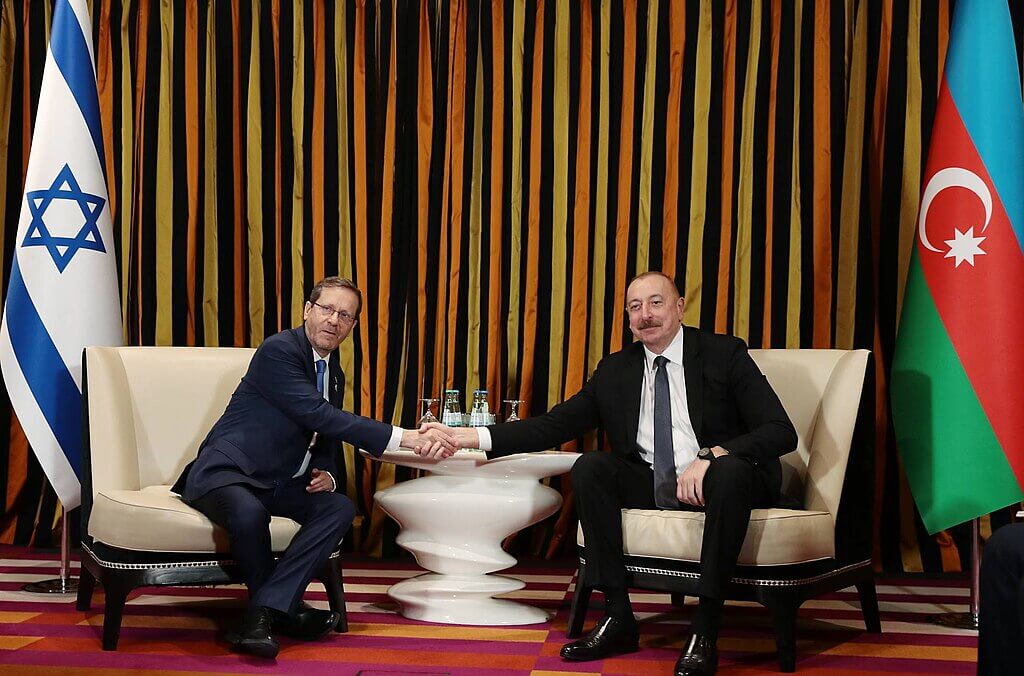
Azerbaijan has built strong partnerships with Israel in energy and defense for the last two decades despite also maintaining ties with Turkey and Iran
The impact of the geopolitical turmoil in the Middle East stemming from the ongoing Israel–Hamas war extends far beyond the region.
Since Hamas’s brutal October 7 terror attack on southern Israel, Israeli forces have conducted large-scale military operations in Gaza to try to destroy Hamas and armed radicals affiliated with the militant Palestinian group. Although many countries in Europe and Asia voiced support for Israel at least initially, others have tried to remain neutral, while countries such as Iran, Russia, Turkey, Ireland, and Spain have blamed Israel for the excessive use of force in Gaza and disregard of civilian lives.
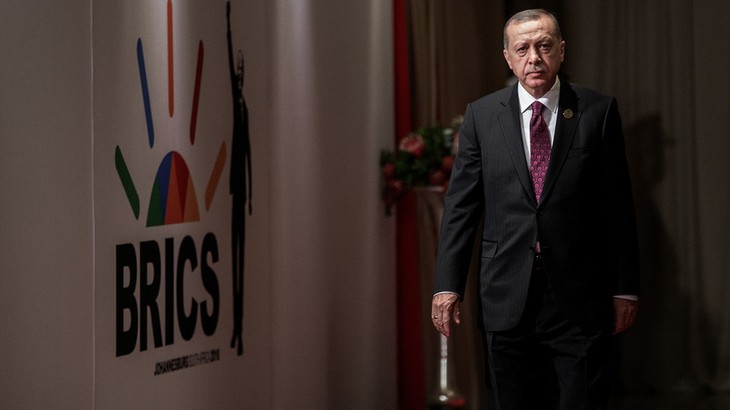
On June 11, Turkish Foreign Minister Hakan Fidan attended a session of the BRICS group (a loose political-economic grouping originally consisting of Brazil, Russia, India, China, and South Africa) in Moscow. While there, he met with Russian President Vladimir Putin, Foreign Minister Sergei Lavrov, and Russian Security Council Secretary Sergei Shoigu (Turkish Foreign Ministry, June 11). During the face-to-face meeting with Putin, Fidan discussed bilateral economic and political relations, focusing on the geopolitical turmoil in the Middle East caused by the war in Gaza (Al-Monitor, June 16). Putin vowed to “fully support” Turkish membership in BRICS and build stronger ties to facilitate further economic cooperation.