Categories
Azerbaijani Politics Russia in Caucasus South Caucasus Region

Azerbaijan-Armenia border dispute – could the conflict re-escalate?

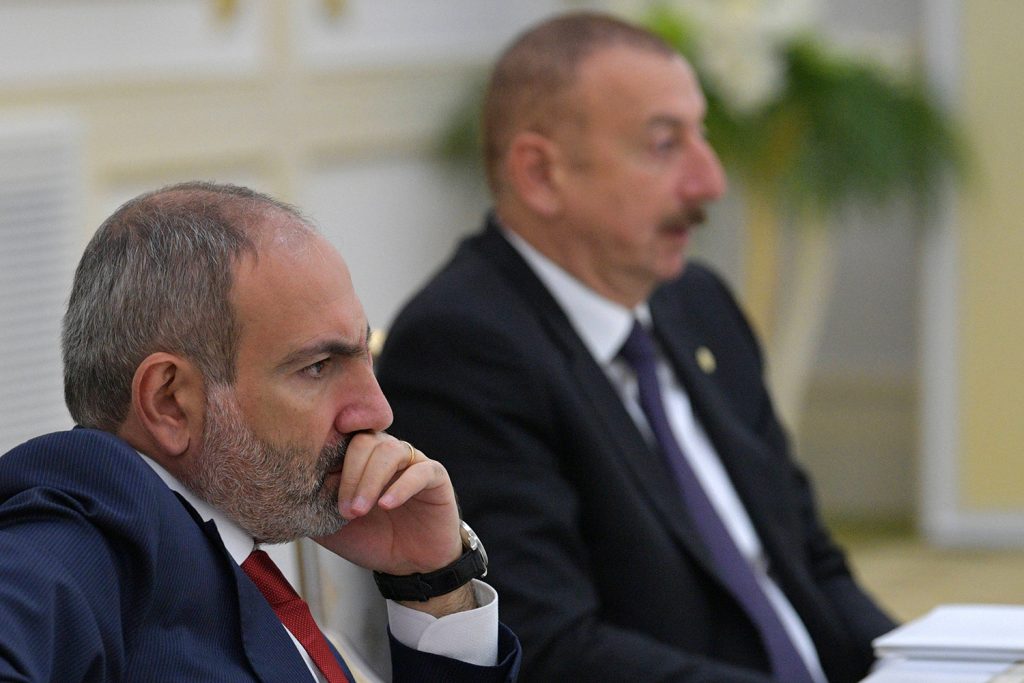
Armenia's Prime Minister Nikol Pashinyan and Azerbaijan's President Ilham Aliyev attend a meeting of heads of the Commonwealth of Independent States (CIS) in Ashgabat, Turkmenistan October 11, 2019. Sputnik/Alexei Druzhinin)
Armenia’s Prime Minister Nikol Pashinyan and Azerbaijan’s President Ilham Aliyev attend a meeting of heads of the Commonwealth of Independent States (CIS) in Ashgabat, Turkmenistan October 11, 2019. Sputnik/Alexei Druzhinin)

One week from the start of the dispute on the Armenia-Azerbaijan border, the situation remains without a resolution. In this opinion piece for KarabakhSpace.eu, Fuad Shahbazov looks at what is driving Azerbaijani actions on the ground and in the diplomatic arena, and the possibility of escalation.

Half a year after the Russian-brokered ceasefire agreement was signed between Azerbaijan and Armenia ending the 44-day war in Karabakh, peace in the complex region is not on the horizon. A new stage of discontent and harsh statements came last week after Azerbaijani Armed Forces reportedly crossed the border with Armenia in the Syunik province and advanced around 3 kilometres by Sev Lake. Yerevan dubbed this action as an explicit provocation and an attempt to occupy Armenian territory, whereas Baku denied the accusations, stating that Azerbaijani border guards established a military control point at the heights around the lake without advancing into Armenian territories. A day later, another official statement issued by the Ministry of Foreign Affairs of Azerbaijan said that there is no reason for panic as border demarcation/delimitation process is a complicated process.

Categories
Azerbaijani Politics Karabakh in the Post-War Period Russia in Caucasus

Azerbaijan Feels Pressure to Join Moscow-Dominated Eurasian Economic Union


Photo credit: MIKHAIL KLIMENTIEV/AFP/Getty Images
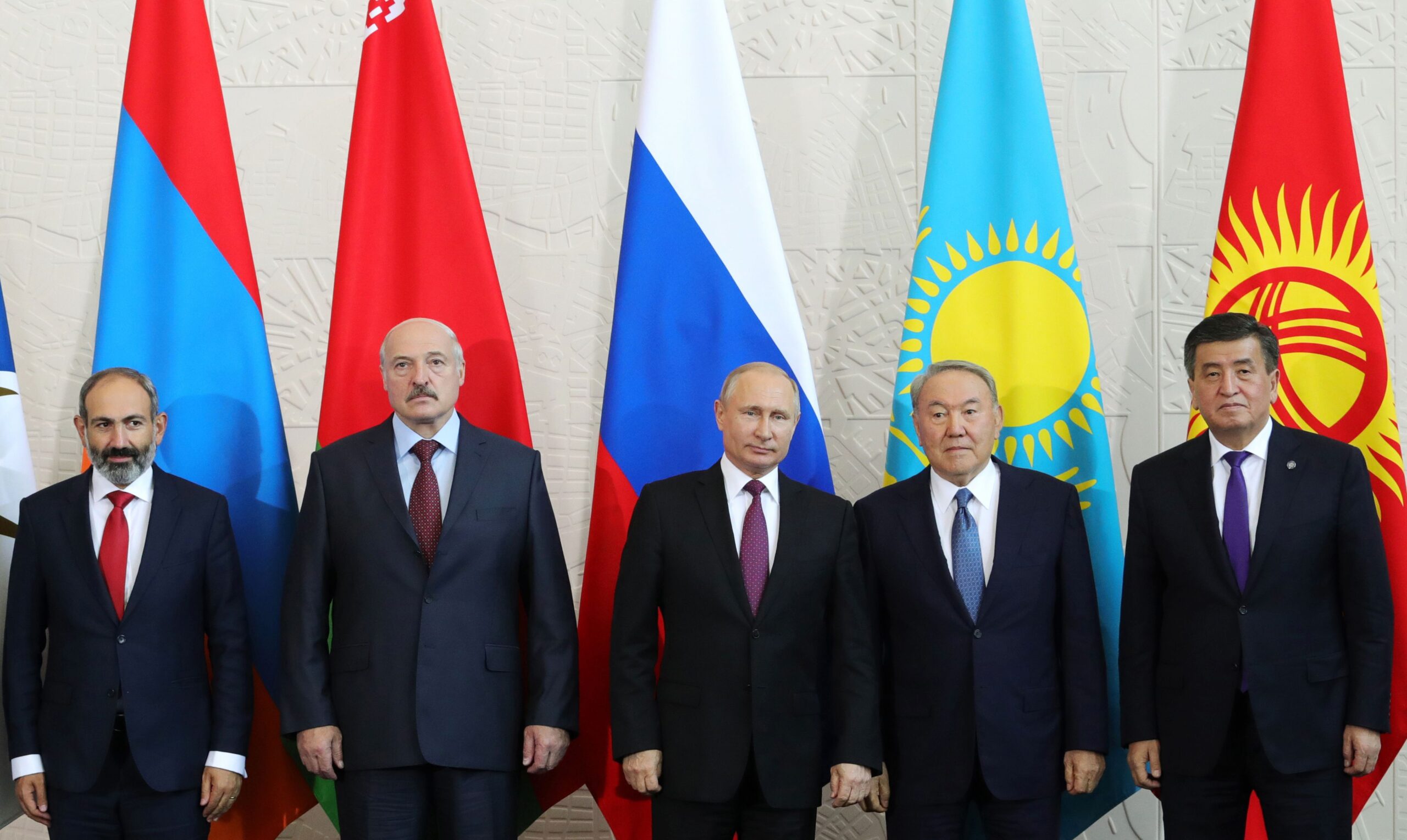
EAEU member states’ leaders pose for a picture before a meeting of the Supreme Eurasian Economic Council in Sochi on May 14, 2018. (Photo by Mikhail KLIMENTIEV

Publication: Eurasia Daily Monitor Volume: 18 Issue: 68

The next meeting of the Intergovernmental Council of the Moscow-led Eurasian Economic Union (EEU) will be held in the central Russian city of Kazan, on April 29–30 (TASS, March 17). A key agenda item for the EEU member states may reportedly be to discuss the possibility of bestowing observer status on Azerbaijan and, at a minimum, to allow its delegation to take part in this and future meetings, if officials from Yerevan approve. For Russia, this would be an important first step toward Baku’s eventual full membership in the regionalist bloc (Central.asia-news.com, April 19; Turan, April 24). However, from the point of view of Armenia, several important issues will need to be addressed before it would agree to Azerbaijani attendance at this week’s EEU gathering.

Categories
Azerbaijani Politics Karabakh in the Post-War Period Oil / Natural Gas / Green Energy South Caucasus Region

The Second Karabakh War and Caspian Energy

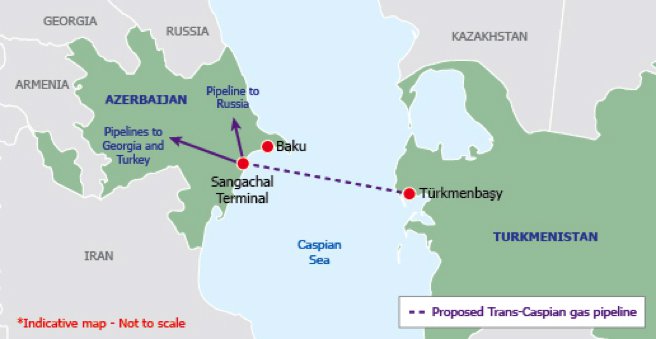
Trans-Caspian Pipeline (Photo-Credit: IENE)

On November 10, the second war in Nagorno-Karabakh ended with a Russia-brokered ceasefire agreement signed between Azerbaijan and Armenia. While the 44-day war caused severe damages to frontline settlements and civilian casualties on both sides, frequent missile attacks carried out by Armenia towards Azerbaijani cities and infrastructure beyond the frontline raised concerns not only in Baku but also in the EU regarding the security of vitally important energy infrastructure. The possibility of damages to energy infrastructure, particularly the Baku-Tbilisi-Ceyhan oil pipeline and the Trans-Anatolian Pipeline, would explicitly put the role of these pipelines in European energy security under question.

BACKGROUND: The Tovuz/Tavush incidents on the border between Armenia and Azerbaijan in July 2020 became a prelude to the second war between Baku and Yerevan in the Nagorno-Karabakh region. On September 27, 2020, fighting escalated beyond the established “meeting point” (Line of Contact) with the involvement of a significant number of military personnel, artillery units, and long-range missiles, threatening the geopolitical stability in the Black Sea-Caspian region.

Categories
Azerbaijani Politics Karabakh in the Post-War Period South Caucasus Region Transit Routes in Eurasia

Searching for the right formula for South Caucasus regional co-operation

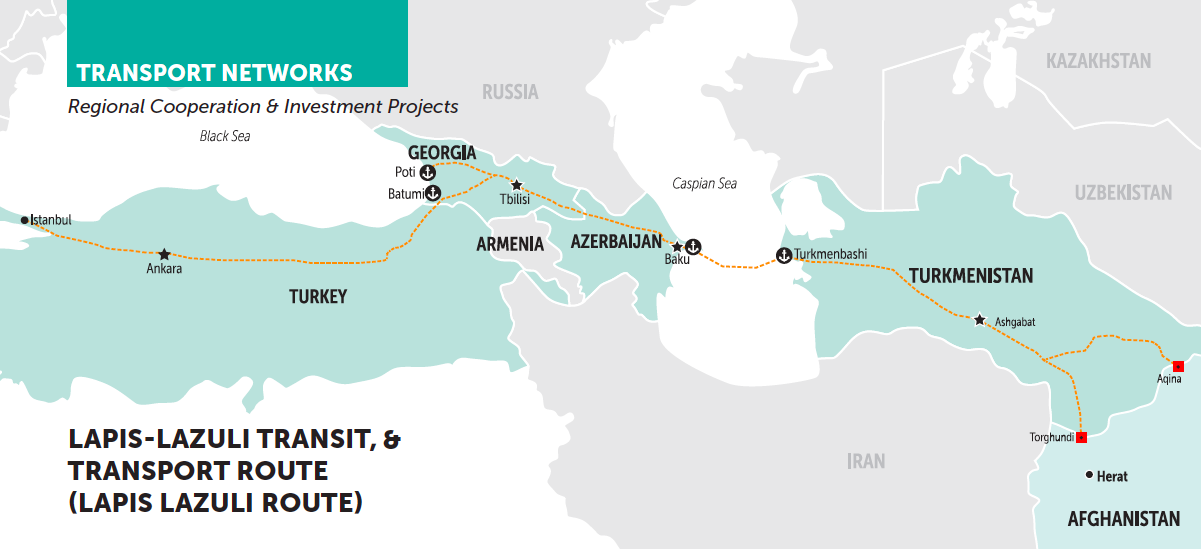
President Erdogan’s initiative for a 3 + 3 regional co-operation format in the South Caucasus offers the possibility of opening up the region through an extensive network of land corridors. Not everyone has welcomed the initiative, but the prospect of turning a fragile region into a beacon of stability after a long period of instability and violence is a worthy aspiration, argues Fuad Shahbazov in this op-ed for KarabakhSpace.eu.

The second Karabakh war has shifted the geopolitical and geo-economic realities in the South Caucasus region, particularly heightening the possibility of competition over the region’s transport corridors. The Moscow-brokered ceasefire agreement signed on 10 November brings with it the possibility of opening a number of transit routes, which have been closed for almost 30 years. In the aftermath of the Armenian forces’ devastating defeat in the 44-day war, the idea of regional co-operation becomes increasingly important.

Categories
Azerbaijani Politics South Caucasus Region

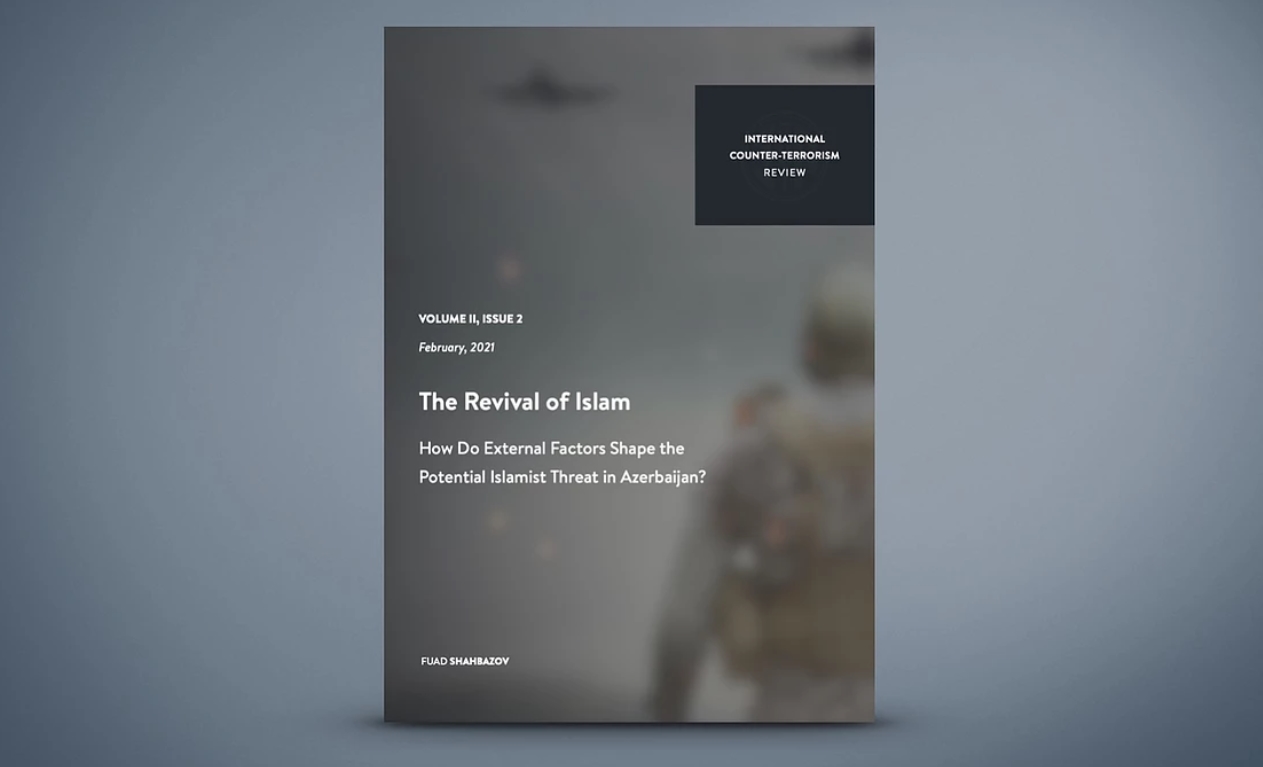
The Revival of Islam: How Do External Factors Shape the Potential Islamist Threat in Azerbaijan?

International Counter-Terrorism Review (ICTR)

Abstract

Considerable scholarly work on the post-Soviet region has focused on the various regional conflicts and security challenges, but rarely on the roots of the growing Islamism factor as a new source of threat. Following the demise of the Soviet Union, with its forcibly imposed atheist agenda, the majority of Muslim countries in Central Asia and the North Caucasus witnessed growing Islamic sentiments that led to a long-term, violent Islamic insurgency in the North Caucasus and, to some extent, in Central Asia. However, unlike other Muslim countries in the post-Soviet space, Islam plays a minimal role in Azerbaijan. 

The country has maintained its unique secular model mainly due to the firm “secular nationalism” ideas put forward by local intellectuals since the 19th century. Nevertheless, it is necessary to understand the historical evolution process of Islamic thought in Azerbaijan, underline the role of certain external actors in promoting radical Islamic ideology, and understand how they pose an existential threat to national security and identity.

Categories
Azerbaijani Politics South Caucasus Region

Why is Azerbaijan trying to rekindle Israeli-Turkish ties?

The recent normalization deals between Israel and the United Arab Emirates (UAE), Bahrain, Morocco, and Sudan signify substantial changes in the Middle East.

The new agreements were signed following substantive negotiations on several security-related issues, including Iran and Turkey’s growing influence.

However, unlike their Arab counterparts, both Ankara and Tehran denounced the Abraham Accords, labeling them as a betrayal of the Palestinian cause and a “dagger in the back of Muslims.”

Nevertheless, media reports in December 2020 revealed that Turkey and Israel had established a secret negotiation channel to prepare a roadmap to further bilateral relations.

The fact that Tel Aviv and Ankara’s reconciliation process emerged just weeks before newly elected US President Joe Biden was to assume office suggests that Ankara was keen to send a positive signal and prevent any possible political isolation under the new administration.

The ongoing saga related to Turkey’s purchase of the Russian S-400 missile system, together with Ankara’s increasing political and military influence in Libya, Syria, and more recently in the South Caucasus region, where Turkey openly supported Azerbaijan during the Nagorno-Karabakh war, suggest that the new Biden administration could take new steps, possibly including sanctions, against Turkey.

The 44-day war resulted in a victory for Azerbaijan, with the country using both Israeli and Turkish-made weaponry, particularly combat drones, which proved to be a gamechanger on the battlefield. Nearly all Israeli military supplies to Azerbaijan during the war came via Turkey’s territory, with both Israel and Turkey playing critical roles in Baku’s victory.

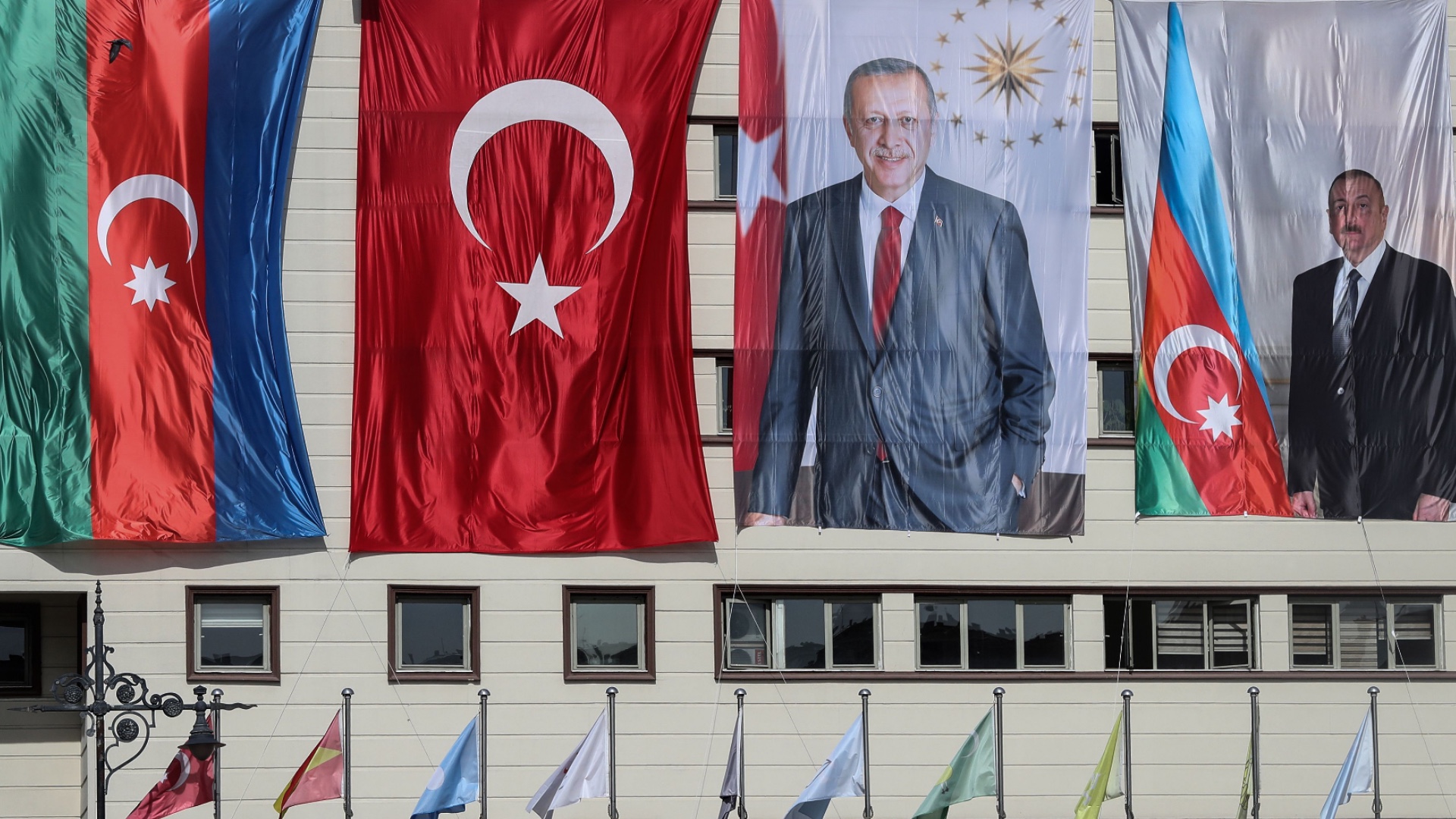
However, rocky relations between Israel and Turkey had put this bilateral strategic cooperation in the South Caucasus under strain. Taking this into consideration, the Azerbaijani government offered its assistance to mediate between Ankara and Tel Aviv to reconcile two of the major powers in the Middle East. Following the ceasefire agreement signed on 10 November between Azerbaijan, Armenia and Russia, President Ilham Aliyev initiated talks between President Recep Tayyip Erdogan and the Israeli government.

There are several reasons why Turkey would be optimistic about Azerbaijan’s mediation in repairing ties with Israel. Amid growing economic difficulties, any rapprochement could avoid further regional isolation at a time when rivals such as the UAE, Egypt, and to a lesser extent Saudi Arabia, have attempted to undermine Turkey’s growing military hegemony across the Levant, Maghreb and the Horn of Africa.

As for Israel, the country has focused its Caucasus policy on Azerbaijan due to its proximity to Iran – it’s main geopolitical foe – and natural resources, as Azerbaijan is one of the leading exporters of crude oil to Israel.

Warming ties between Israel and Turkey is of particular interest for Baku, especially given the emergence of a new geopolitical order in the South Caucasus after the Nagorno-Karabakh war. The deployment of Russian peacekeeping troops in the region, a Turkish-Russian joint monitoring center in Aghdam, and Iran’s maneuvers for a greater role in the post-conflict region required a new and compelling ‘deterrence factor’ for Azerbaijan.

Of greater concern for Moscow and Tehran is the possibility that formalised Turkey-Israel cooperation will give Azerbaijan additional leverage against any ‘foreign interference.’ Moreover, Baku would also seek the Biden administration’s support for any rapprochement. At the same time, Turkey is keen to reset its relations with the White House, which could well be possible through a fruitful dialogue with Israel.

Clearly, Iran and Russia will be watching the rapprochement between Ankara and Tel Aviv, and Azerbaijan’s active involvement, very closely. However, Tehran is in no rush to put neighbouring Azerbaijan – an important trade partner – in a dilemma, as it does not want to make another ‘enemy’ around its immediate borders amid deteriorated relations with the Gulf monarchies and harsh economic sanctions imposed on it.

Erdogan seeks to ease diplomatic tensions with Israel and has even proposed an agreement on the countries’ shared exclusive economic zones (EEZs) in the Mediterranean Sea, authored by his close confidant admiral Cihat Yayci. If successful, the new agreement will bring the two states’ maritime borders even closer, leaving Greek Cyprus in the lurch.

The agreement also envisages transferring the Yishai-Aphrodite gas field, the source of dispute between Israel and Cyprus, to Israeli hands. However, at this stage, it is unlikely that Israel will choose this option as a part of the reconciliation process with Turkey, as it would put Israeli-Greek-Cypriot relations at risk.

Turkey and Israel’s reconciliation process is something that could affect many actors in the region. Yet some crucial nuances suggest that the path to readjustment will be thorny, largely due to bellicose anti-Israel rhetoric in the past, Turkey’s attempts at regionalizing the current conflict, and the recent normalization process between Israel and Arab states.

Azerbaijan will therefore need to overcome any rhetorical stumbling blocks to bring its partners together. In this regard, Azerbaijan’s balanced approach to all critical actors in the region and its deep strategic partnership with Israel and Turkey make it a reliable mediator in this dispute.

The New Arab

Fuad Shahbazov is a Baku-based policy analyst covering regional security, defense, and religious extremism. His work regularly appears on Jamestown Foundation, CACI Analyst, The Diplomat, and other outlets. 

Follow him on Twitter: @fuadshahbazov.

Categories
Azerbaijani Politics

RFE/Liberty: Azerbaijan Celebrates ‘Victory,’ Armenia In Crisis After Nagorno-Karabakh Deal

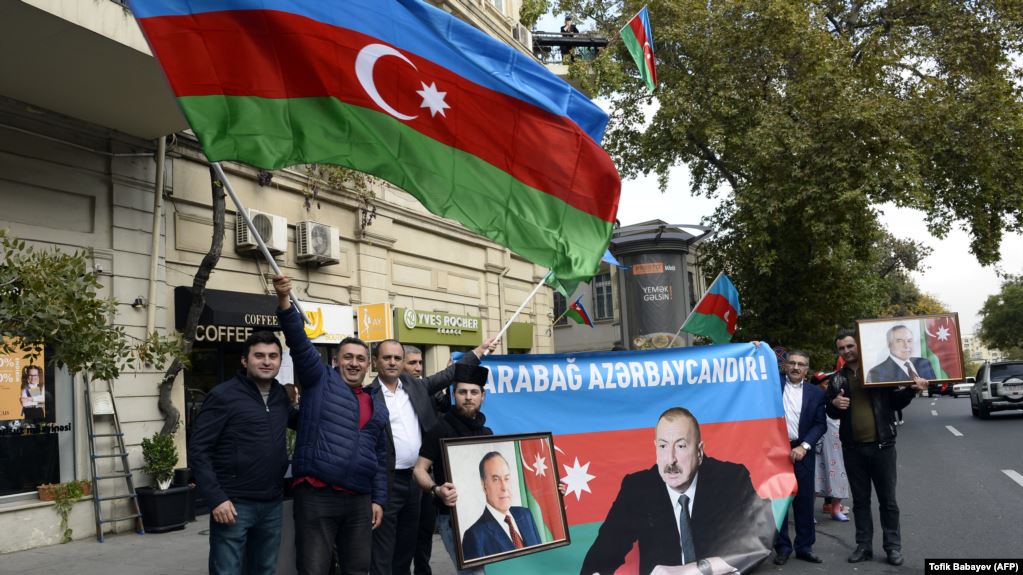
People wave the national flag and hold portraits of Azerbaijani President Ilham Aliyev and his father and predecessor Heydar as they celebrate in the streets of Baku on November 10.

Still euphoric over the capture of a vital city from Armenian forces, Azerbaijanis celebrated on the streets of Baku after a Russian-brokered deal was signed late on November 9 aimed at ending the war over the breakaway region of Nagorno-Karabakh.

Meanwhile, Yerevan, the Armenian capital, was plunged into a political crisis over the truce. Angry crowds stormed the Armenian parliament and ransacked government buildings after Prime Minister Nikol Pashinian announced the deal on his Facebook page. As demonstrators also broke into Pashinian’s official residence, there was speculation the Armenian leader would be toppled and that the truce, along with the huge battlefield losses in and around Nagorno-Karabakh, could bring pro-Moscow Armenian nationalists back into power.

Categories
Azerbaijani Politics South Caucasus Region

Tactical Reasons Behind Military Breakthrough in Karabakh Conflict

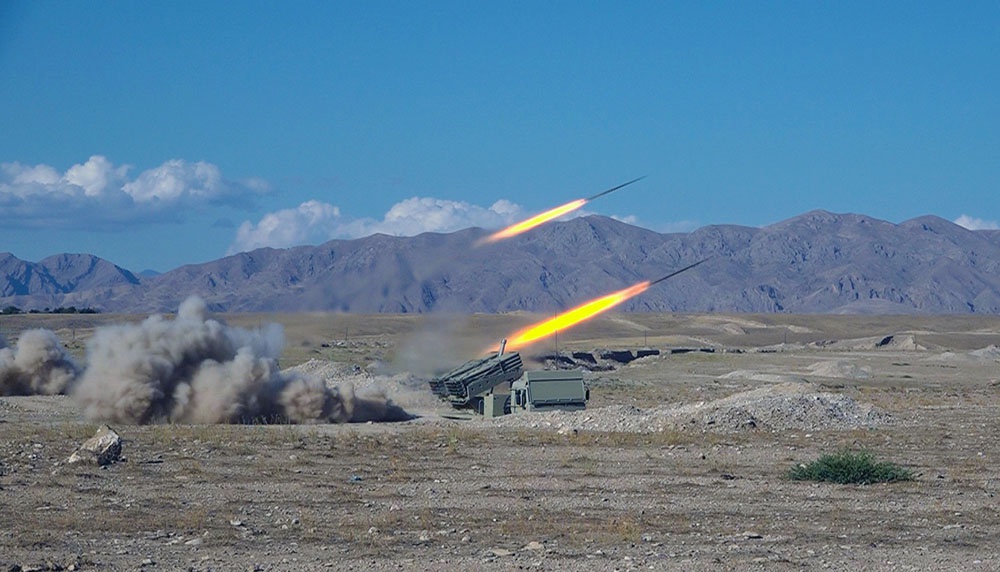
A photo from the live-fire drills of the Azerbaijani Armed Forces' artillery units, July 2, 2020 / Ministry of Defense of Azerbaijan
A photo from the live-fire drills of the Azerbaijani Armed Forces’ artillery units, July 2, 2020 / Ministry of Defense of Azerbaijan

Publication: Eurasia Daily Monitor Volume: 17 Issue: 155

Azerbaijan and Armenia have been locked in fierce fighting in Karabakh since September 27. Unlike in most previous clashes over this Armenian-occupied Azerbaijani territory, the present conflict has involved heavy and sophisticated weaponry wielded by both sides, but especially Azerbaijan’s Armed Forces. And while the ongoing violence is essentially a conventional war fought by two professional armies, the presence of new generation, hi-tech weaponry has sharply increased its destructive potential.

Videos released by the Ministry of Defense of Azerbaijan since the conflict began suggest that the Azerbaijani military has all along had the upper hand on the battlefield thanks to the employment of Israeli- and Turkish-produced unmanned aerial vehicles (UAV), long-range missiles, and air-defense systems.

Categories
Azerbaijani Politics South Caucasus Region

Trends and Factors Contributing to the July Border Clashes Between Azerbaijan and Armenia

Azerbaijani soldiers. July 18, 2020. Photo: AFP Forum via Anadolu Agency/Resul Rehimov

Publication: Eurasia Daily Monitor Volume: 17 Issue: 105

On July 12, the Azerbaijani border region of Tovuz and the Tavush region on the Armenian side became the new epicenter of clashes between the armed forces of the two states, with the involvement of heavy artillery and unmanned aerial drones (BBC News–Azerbaijani service, July 12). The intensive exchanges of fire resulted in the deaths of over a dozen military personnel and the destruction of local infrastructure on both sides. On July 14, Azerbaijan’s Ministry of Defense notably confirmed the deaths of Major General Polad Hashimov and Colonel Ilgar Mirzayev as a result of artillery shelling by Armenian military units (APA, July 14). Such high-level losses provoked unprecedented and spontaneous mass protests in Baku, with approximately 30,000 people flooding Azadlig (Freedom) Square and the parliament building with demands on the authorities to take revenge on Armenia and immediately begin military mobilization (Anadolu Agency, July 15). This unsanctioned mass rally was the largest in many years and succeeded in pushing the government to take a number of measures, including kicking off a voluntary recruitment process (Oxu.az, July 16).

Categories
Azerbaijani Politics Iran in Caucasus and Beyond MENA in Turbulence

US-Iran escalation and its implications for the South Caucasus

Photo by Azerbaijani Presidency/Handout/Anadolu Agency/Getty Images

Over the past several weeks geopolitical experts have been talking a lot about what the surprise U.S. drone attack on Iranian Gen. Qassem Soleimani, head of the Islamic Revolutionary Guard Corps (IRGC) – Quds Force, on Jan. 3 means for the Middle East and relations between the major powers. What has received considerably less attention, however, is what Soleimani’s killing means for the South Caucasus, a region whose small size belies its strategic importance.

Located at the crossroads of Europe, the Middle East, and Asia, the South Caucasus is a major energy supplier and an increasingly important arena for competition between regional powers, like Turkey and Iran, and great powers, like the U.S. and Russia.

Washington believed that taking out Soleimani would restore the leverage it had lost to Iran and Russia’s growing role in the region. Although U.S. sanctions have hurt Iran’s economy, sparking anti-government demonstrations, Russia, China, much of Europe, and even many American political leaders have railed against the Soleimani strike.