Tensions between Azerbaijan and Iran have grown rather raw recently in the wake of Baku’s inauguration of its first-ever embassy in Israel. Of course, diplomatic relations between the neighbours have steadily become more and more inflamed and embittered for several years now, with Iran concerned at the declining influence in the South Caucasus it has suffered since the second Karabakh war between Azerbaijan, urged on by Turkey, and Armenia in late 2020. And with the normalisation of diplomatic ties between Tehran and Baku unlikely in the near future, the big question remains unanswered: Is it possible that the tensions could escalate into a large-scale regional conflict?
Russia’s invasion of Ukraine, launched in early 2022, has fundamentally changed the international security architecture that had existed for many years, but it has also caused global political and economic cataclysms. Although Russian forces made significant gains thanks to heavy artillery fire, including missile strikes on cities all over Ukraine in the first weeks of combat, Ukrainian defenders quickly rebuffed attempts by consolidating its military power, exercising diplomatic connections, and launching counterattacks at Russian positions.
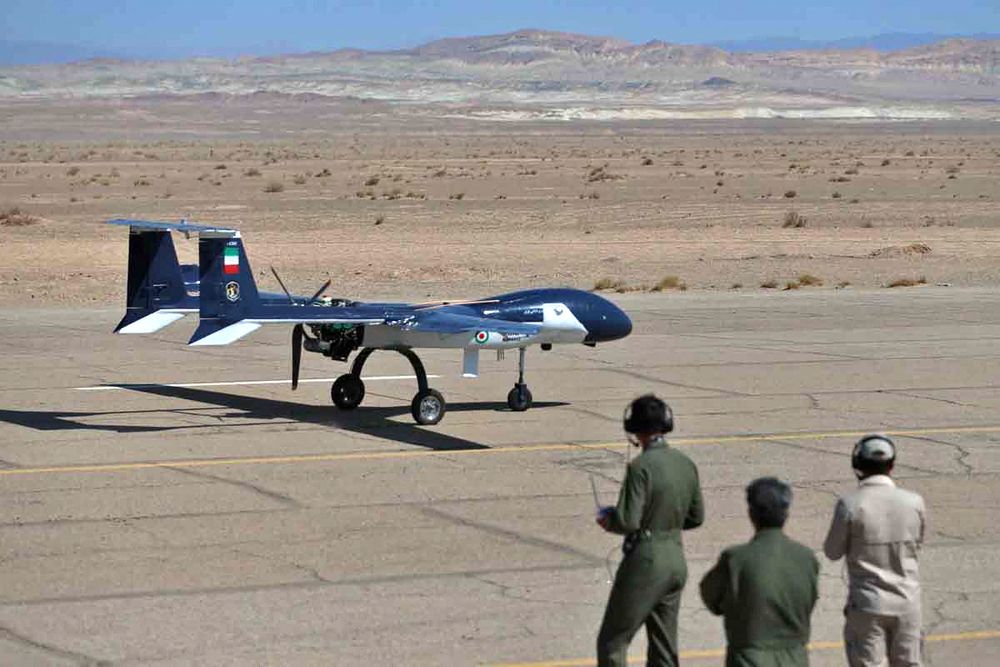
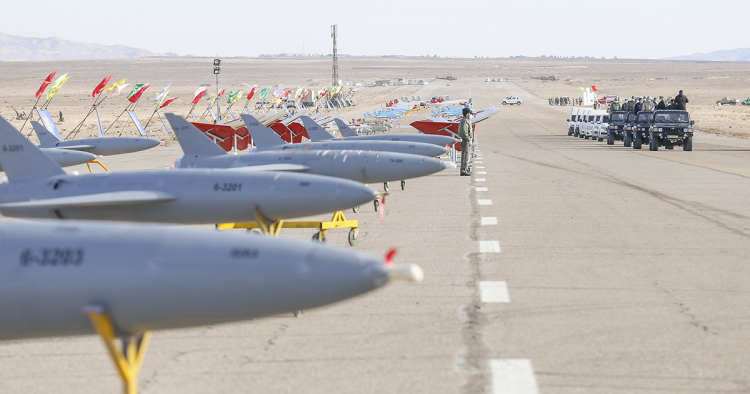
The failures of continuous artillery and missile strikes in the following months prompted Russia to make some changes in its military tactics. As a result, Russia was forced to seek help from its traditional allies, China and Iran, through unofficial channels.[1] Although China has refrained from overtly providing military support to Russia in order not to further complicate relations with Western countries, particularly with the United States, Iran began supplying locally produced long-range attack (suicide) drones to Russia. The effective use of Iranian-made Shahed and Mohajer drones by the Russian army to conduct attacks against Ukraine’s critical civilian infrastructure in the first days has revived interest in the Iranian drone industry internationally and has brought to light the real threat of Iran’s long-standing national drone program to security across the Middle East region.[2]
Over the past 18 months, tensions have gradually continued to escalate between Azerbaijan and Iran. Ties have been strained by a combination of diplomatic spats and military drills along their border. Azerbaijan perceives Iran as posturing dangerously towards its southern regions, while Tehran is threatened by Baku drawing closer to the Islamic Republic’s regional rivals—particularly Israel. Absent a change in these dynamics, relations could further deteriorate, with tensions boiling over.
The recent war of words between Azerbaijan and Armenia, and the developments of the last several weeks, have demonstrated that both sides are far from inking a peace deal, which was promised by the end of 2022. Although both states vowed to intensify joint efforts on the final peace treaty in October 2022 on the sidelines of the Prague summit, little has been done since. On the contrary, the failure to hold peace negotiations has been magnified by Russian President Vladimir Putin’s controversial statements regarding Moscow’s non-recognition of Azerbaijan’s sovereignty over Karabakh, which have immensely increased the risks of renewed hostilities between Baku and Yerevan (JAM-news, October 28). Although Russia maintains the role of “key mediator” on the Karabakh issue, Azerbaijan now openly demonstrates its discontent over Moscow’s role in the peace process, particularly after the merely symbolic meeting in Sochi on October 3 (Apa.az, November 28).
The ongoing mass protests in Iran, which have steadily grown more violent over the past two months, risk escalating regional tensions with neighboring states. Although all major Iranian cities have experienced clashes between demonstrators and security forces, the level of violence demonstrated by the Iranian security forces in Baluchestan, Khuzestan, and Kurdistan provinces appeared to be more significant than in other cities without large ethnic minority groups. The Iranian regime’s harsh stance toward Baluchis, Kurds, Arabs, and Azerbaijanis comes as part of a broader conflict between the Iranian government and ethnic minorities seeking better treatment or greater autonomy; Tehran has attempted to subdue its restive Kurdistan region in particular, both through direct military action and by attacking the neighboring Kurdistan region of Iraq.
As Russia’s military invasion in Ukraine enters its eighth month, Moscow is steadily losing strategic superiority as Ukraine retakes lost territory through its tremendously successful counterattacks. Russia’s defeat along the Kharkiv-Lyman front and its retreat in Kherson, compounded by the difficulties of implementing its partial mobilization order, have diminished Moscow’s optimism regarding the war’s outcome. To rectify Russia’s increasingly weak strategic position and depleted weapons stockpiles, Moscow has turned to its long-term partners—namely China, Iran, and North Korea—to meet its needs for combat drones, modern artillery pieces, and ammunition.
Implausible Deniability
In July, the White House claimed that Iran was preparing to supply Russia with hundreds of weapons-capable drones for use in Ukraine. According to U.S. National Security Advisor Jake Sullivan, “information further indicates that Iran is preparing to train Russian forces to use these UAVs, with initial training sessions slated to begin as soon as early July.” These allegations caused an uproar in Ukraine and the West, though Tehran categorically denied the charge. American reports were confirmed in late-September, when Ukrainian forces shot down Iranian combat drones in the eastern Dnipropetrovsk region, the southern city of Odesa, and the nearby Pivdennyi port. The Ukrainian Defense Ministry identified the downed aerial vehicles as Shahid-136 unmanned kamikaze drones and Mohajer-6 drones, which can carry missiles or perform reconnaissance missions.
In 2020, Iran’s counter-intelligence agencies were challenged by the assassination of Mohsen Fakhrizadeh, the country’s top physicist and the leader of its nuclear program. Iranian officials have described the assassination as an attempt to sabotage Iran’s nuclear energy ambitions. It was initially thought that Fakhrizadeh had been killed in an assault on his car by gunmen using automatic firearms and explosives, but it later emerged that the Iranian scientist had been assassinated by means of a remote-controlled machine gun. Iranian authorities have traditionally blamed similar assassinations on the Forqa Group and the Mojahedin-e-Khalq, the two major anti-regime armed groups; instead, Tehran implicated Mossad, Israel’s intelligence service, in Fakhrizadeh’s killing, publicly admitting to Israel’s ability to strike deep within Iran for perhaps the first time.
The further development of Iran’s drone program in recent years allowed it to produce a number of new classes of drones, such as the Shahid, Qasef, Mohajer, Samad, Ababeel, and, most recently, the Kaman, which is modeled on the U.S.-made MQ-1 Predator and advanced MQ-9 Reaper.
Amid mounting domestic unrest and ongoing diplomatic standoffs with regional states, Iran has devoted a significant and increasing amount of national resources toward upgrading its national drone program. On May 17, the Iranian government officially inaugurated its first overseas drone factory in Dushanbe, Tajikistan; the facility manufactures the indigenous Ababil-2, a multipurpose drone model with reconnaissance, combat, and suicide capabilities. The Ababil-2 boasts a maximum range of 200 kilometers and can sustain roughly 90 minutes of flight time. The new drone factory will help Iran to improve relations with Tajikistan after a period of lingering diplomatic tension, and General Mohammad Bagheri described its inauguration as a turning point in bilateral military cooperation between the two countries.
Facing new security challenges in the Gulf region, the United Arab Emirates pushed for the normalization of ties with two other major regional powers – Israel and Turkey. The trilateral rapprochement could help the UAE reduce its national security risks stemming from Iran and its proxy forces.
Turkish President Recep Tayyip Erdogan paid an official visit to the United Arab Emirates (UAE) on February 14, for the first time since 2013, when Erdogan was still Prime Minister. Erdogan and his delegation’s visit were greeted with a 21-gun salute and a massive aerial show in Abu Dhabi.
The visit attracted much international media attention, as it was Erdogan’s first state visit to the UAE as President. This was of significance considering the deterioration of UAE-Turkey relations in the aftermath of the 2016 Turkish coup attempt. Tensions between the two countries were also considerably heightened during and in the aftermath of the 2011 Arab Spring revolutionary protests, with the two countries adopting opposing foreign policies.
The rapprochement of the two countries came at an uneasy time given the escalating strains between Iran and Israel, the renewed hostilities between the Houthis and the Saudi-UAE-led coalition in Yemen, and the deepening economic crisis in Turkey.
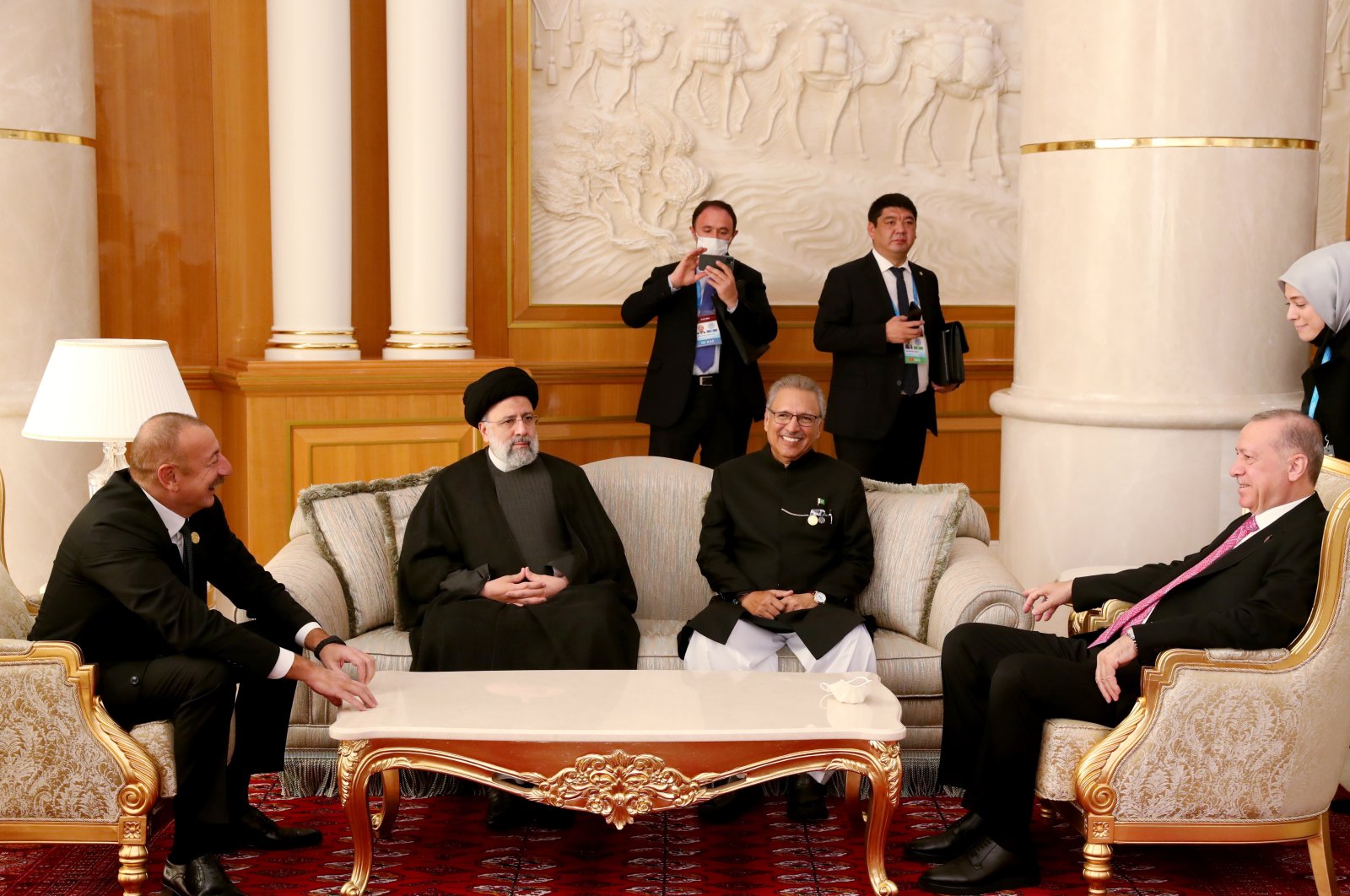
On October 6, 2021, Russia’s Minister of Foreign Affairs Sergei Lavrov met his Iranian counterpart Hossein Amir Abdollahian in Moscow to discuss regional security and economic cooperation, and to address important concerns regarding the crisis in the South Caucasus. During the joint press conference, Lavrov repeatedly highlighted the idea of a “3+3 cooperation format” including the three South Caucasus states – Armenia, Azerbaijan, and Georgia – plus their three large neighbors, Russia, Turkey, and Iran, to focus on unlocking economic and transport communications in the region. The first meeting within the format took place in Moscow on December 2021; however, Georgia refused to take part. Moreover, recent tensions in the region between Armenia and Azerbaijan as well as Azerbaijan and Iran suggest that the proposed format will not generate visible positive outcomes.
BACKGROUND: After the second Karabakh war, Turkey revealed its intention to establish a 3+3 cooperation format in the South Caucasus, including Azerbaijan, Armenia and Georgia along with Turkey, Russia and Iran, with the intention to boost intraregional economic cooperation and new transit links. The initiative was received positively by Russia and Iran, much less so by Georgia and Armenia given the security situation of these countries. For Armenia, participation in the format along with Azerbaijan in the aftermath of the large-scale conflict seems challenging, as Yerevan has avoided agreements on any land trade corridors with Azerbaijan as long as disagreements over borders remain unsettled. In the case of Georgia, Russia’s participation in the format spells a danger of negative repercussions.

_01_Cropped.jpg)