Categories
MENA in Turbulence Russia in Caucasus

Will the Syrian Kurds strike a deal with Moscow?

Photo Credit: Anadolu Agency

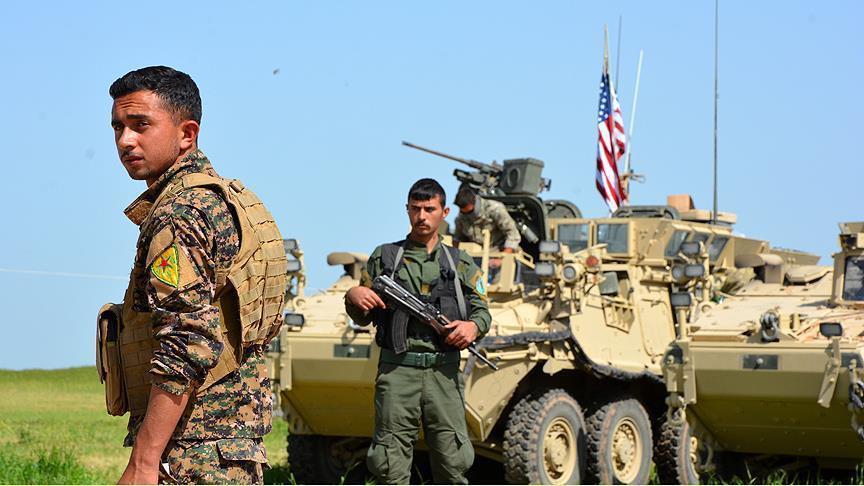
President Donald Trump’s announcement at the end of 2018 that he would withdraw U.S. troops from Syria came as a surprise to all parties involved, sparking particular concern among America’s Syrian Kurdish allies. The move followed President Trump’s declaration of victory over ISIS after a four-year military campaign fighting alongside Syrian Kurdish forces. This sudden and unexpected decision has been widely criticized not only by allies but also those inside the White House, with many analysts arguing that the U.S. withdrawal will expose the Syrian Kurds to an attack by Turkey.

The news caught the Pentagon and local Syrian allies off-guard and ultimately led to the resignation of several senior U.S. officials, including Jim Mattis, the defense secretary, and Brett McGurk, the president’s special envoy to the coalition to defeat ISIS. According to McGurk’s resignation letter, the immediate withdrawal of U.S. troops would be dangerous and lead to a risk of resurgence among the remnants of ISIS in Syria.
Categories
Azerbaijani Politics Russia in Caucasus South Caucasus Region

What Would Membership in the CSTO Mean for Azerbaijan and the South Caucasus?

Photo Credit: Russia Business Today

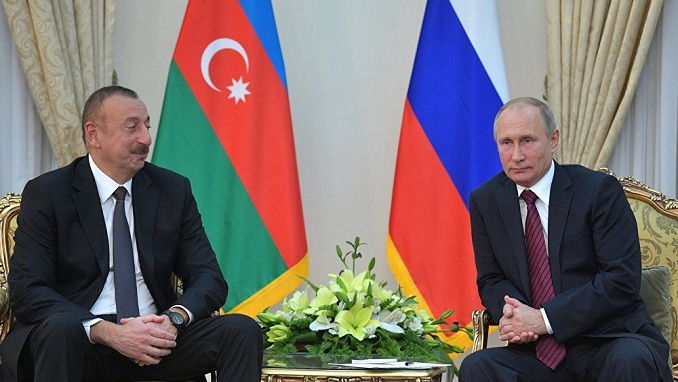
On August 16, the Azerbaijani MP and head of the Azerbaijan-Russia interparliamentary group Ali Huseynli told local media that “It would be advisable to consider Azerbaijan’s participation in the Collective Security Treaty Organization” (CSTO). The sensational statement triggered a public discussion on Azerbaijan’s possible membership in the Russia-led CSTO and its consequences for the region. While some state officials described this prospect as a logical extension of Baku’s cooperation with Moscow, others strictly opposed the idea, stating that it would pose dangerous challenges to the country.

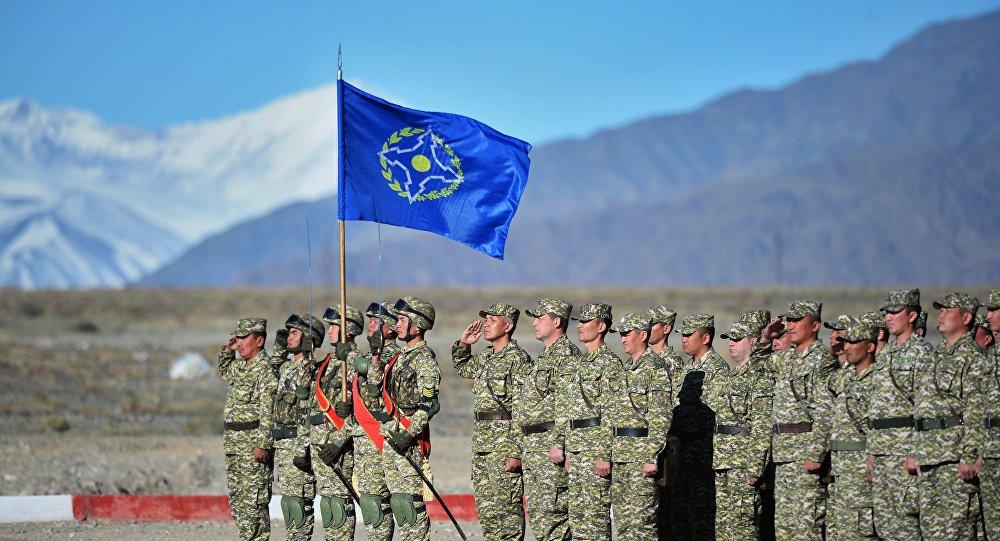
BACKGROUND: Russia’s various political and military initiatives have constituted important tools for regaining influence across Eurasia. However, the Russian-led regional groupings, including the CSTO, are inconvenient alliances. The CSTO unites a number of former Soviet republics including Armenia, Kazakhstan, Tajikistan, Kyrgyzstan, and Belarus (and previously Azerbaijan and Uzbekistan) under the umbrella of defense cooperation against internal and external threats such as international terrorism, drug trafficking and organized crime. Whereas Russia has sought to exert leverage in the former Soviet republics via the CSTO, the organization has not become a powerful tool in this respect. In order to boost the CSTO’s role, Moscow seeks additional members including Azerbaijan, with its economic potential and rich hydrocarbon resources.

Categories
Azerbaijani Politics Russia in Caucasus South Caucasus Region

Azerbaijan in the CSTO: An Unlikely Prospect

Publication: Eurasia Daily Monitor Volume: 15 Issue: 125

In an interview, last month (August 16) with the media outlet Azeri Daily, Azerbaijani member of parliament and the head of the Azerbaijan-Russia inter-parliamentary group, Ali Huseynli, suggested that considering the changed geopolitical conditions in the South Caucasus, “it would be possible [he later also used the word ‘advisable’] to consider Azerbaijan’s participation in the CSTO [Collective Security Treaty Organization]” (Azeri Daily, August 16). His sensational statement triggered a heated public discussion domestically and abroad about Azerbaijan potentially joining the Russian-led military bloc.

The Collective Security Treaty Organization—or “Eurasian NATO [North Atlantic Treaty Organization]” as it has sometimes been referred to in the West—brings together a number of former Soviet republics, including Russia, Armenia, Kazakhstan, Tajikistan, Kyrgyzstan, and Belarus (formerly also Azerbaijan, Georgia and Uzbekistan). The military bloc purportedly strives to develop closer intra-regional defense cooperation against internal and external threats like international terrorism, drug trafficking, organized crime and similar threats. However, the organization also serves to maintain Russia’s political-military influence over the post-Soviet space (Janusz Bugajski and Margarita Assenova, Eurasian Disunion: Russia’s Vulnerable Flanks, The Jamestown Foundation, 2016).