Categories
Azerbaijani Politics Russia in Caucasus South Caucasus Region

Azerbaijan in the CSTO: An Unlikely Prospect

Publication: Eurasia Daily Monitor Volume: 15 Issue: 125

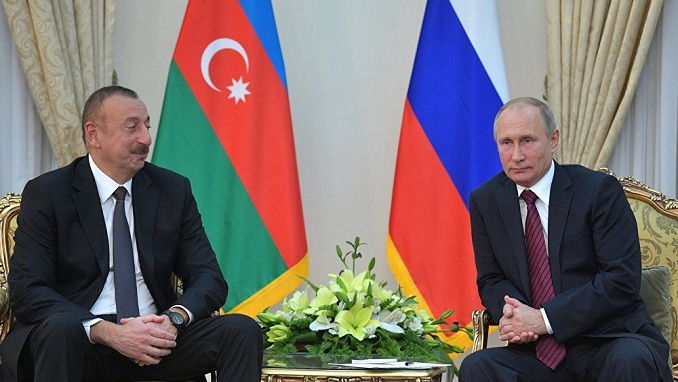
In an interview, last month (August 16) with the media outlet Azeri Daily, Azerbaijani member of parliament and the head of the Azerbaijan-Russia inter-parliamentary group, Ali Huseynli, suggested that considering the changed geopolitical conditions in the South Caucasus, “it would be possible [he later also used the word ‘advisable’] to consider Azerbaijan’s participation in the CSTO [Collective Security Treaty Organization]” (Azeri Daily, August 16). His sensational statement triggered a heated public discussion domestically and abroad about Azerbaijan potentially joining the Russian-led military bloc.

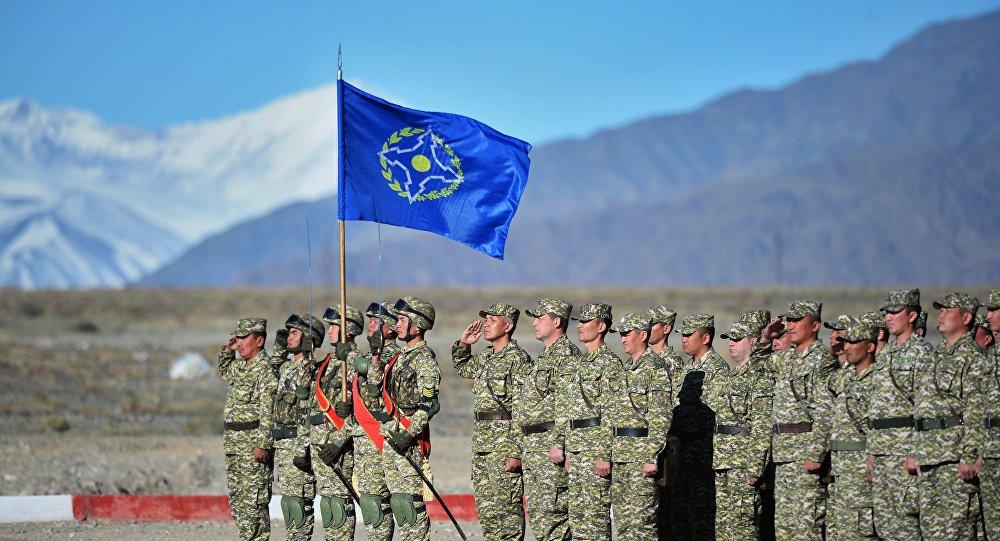
The Collective Security Treaty Organization—or “Eurasian NATO [North Atlantic Treaty Organization]” as it has sometimes been referred to in the West—brings together a number of former Soviet republics, including Russia, Armenia, Kazakhstan, Tajikistan, Kyrgyzstan, and Belarus (formerly also Azerbaijan, Georgia and Uzbekistan). The military bloc purportedly strives to develop closer intra-regional defense cooperation against internal and external threats like international terrorism, drug trafficking, organized crime and similar threats. However, the organization also serves to maintain Russia’s political-military influence over the post-Soviet space (Janusz Bugajski and Margarita Assenova, Eurasian Disunion: Russia’s Vulnerable Flanks, The Jamestown Foundation, 2016).

Categories
Azerbaijani Politics Oil / Natural Gas / Green Energy

Ionian-Adriatic Pipeline: A Priority Gas Transit Project for Azerbaijan and the Western Balkans

Publication: Eurasia Daily Monitor Volume: 15 Issue: 119

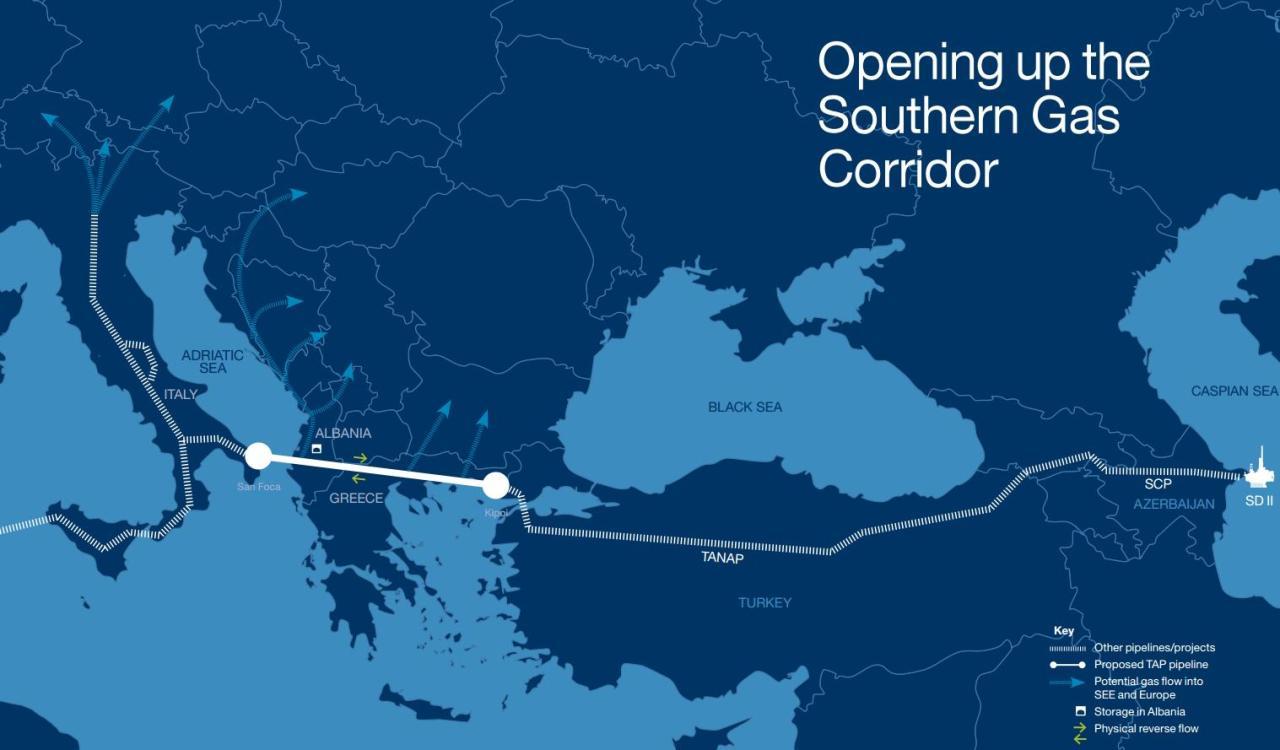
The Azerbaijani State Oil Company (SOCAR) announced, on July 27, the formation of a new corporate entity that will oversee the future development of the Ionian-Adriatic Pipeline (IAP) project. The proposed pipeline is designed to deliver Azerbaijani natural gas to Europe—namely to the Balkan region. According to Murad Heydarov, the head of the subsidiary SOCAR Balkan, the announced firm will be set up by the end of this year (AzerNews, Trend, July 27). Although, SOCAR is not a stakeholder in the IAP project, it acts as a technical consultant and manages the future design of the pipeline between the Albanian cities of Fier and Vlora. This project will represent the first time that SOCAR will undertake engineering services in the Western Balkans.

Categories
Azerbaijani Politics Oil / Natural Gas / Green Energy South Caucasus Region

New Southern Gas Corridor Project Will Intensify the Regional Pipeline Race

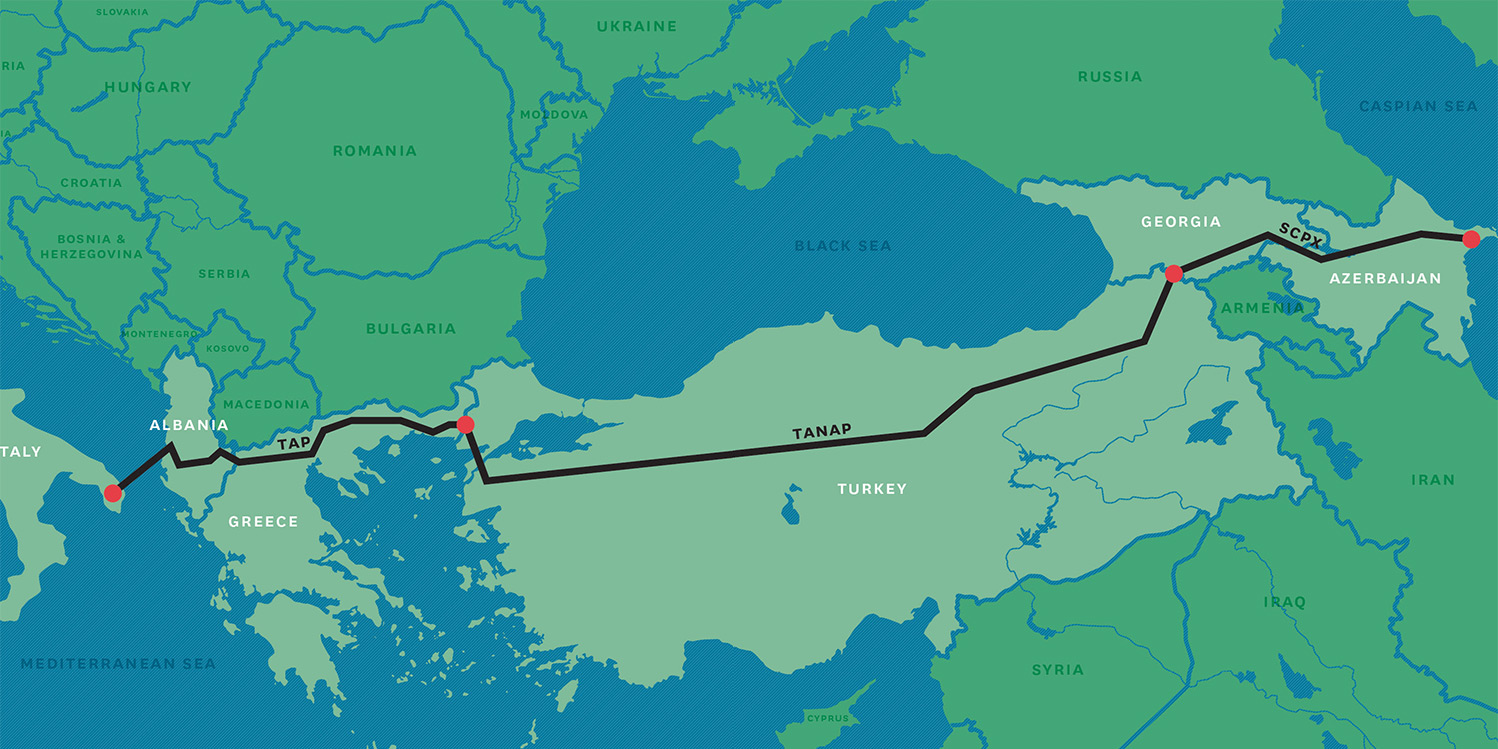
Southern Gas Corridor Route

On May 29, Azerbaijan’s President Ilham Aliyev officially inaugurated the first phase of the long-awaited flagship project Southern Gas Corridor (SGC), through which Caspian natural gas from the Shah-Deniz II field will be transported to Europe. The new project consists of several pipeline networks that pass through Georgia and Turkey (via the Trans-Anatolian Pipeline, TANAP) and further through Greece, Albania and Italy (via the Trans-Adriatic Pipeline, TAP). As Shah Deniz Stage 2 is implemented, gas production will increase from 9 to 25 billion cubic meters (bcm) per year.

BACKGROUND: A decade ago, the European Commission issued its Energy and Solidarity Action Plan, which set a clear target to help Eastern European countries boost and diversify their gas imports. The Southern Gas Corridor project is the backbone of this strategy to decrease Europe’s dependency on gas imports from Russia substantially. This has been a growing concern for policymakers ever since a conflict between Gazprom and the Ukrainian government interrupted supplies in the winter of 2006.

Categories
Azerbaijani Politics Oil / Natural Gas / Green Energy

Southern Gas Corridor Project Opening New Long-Term Opportunities for Europe

Publication: Eurasia Daily Monitor Volume: 15 Issue: 88

Azerbaijan’s President Ilham Aliyev, on May 29, officially inaugurated the first phase of his country’s long-awaited flagship Southern Gas Corridor (SGC) project, through which Caspian-basin natural gas (from the offshore Shah-Deniz field) will be transported to Europe (Azernews, May 29). The new project consists of several linked pipelines that pass through Azerbaijan and Georgia (via the South Caucasus Pipeline Expansion, or SCPX), Turkey (via the Trans-Anatolian Pipeline, TANAP), and further through Greece, Albania, and into Italy (via the Trans-Adriatic Pipeline, TAP). In the initial operational phase of the SGC, 6 billion cubic meters (bcm) of natural gas will annually be transported via Turkey to Europe, and those volumes will be increased to 10 bcm after 2020. Reportedly, the volumes will be expanded to 31 bcm after 2026, if additional gas compressor stations are constructed.

Categories
Central Asia I China I Russia South Caucasus Region Transit Routes in Eurasia

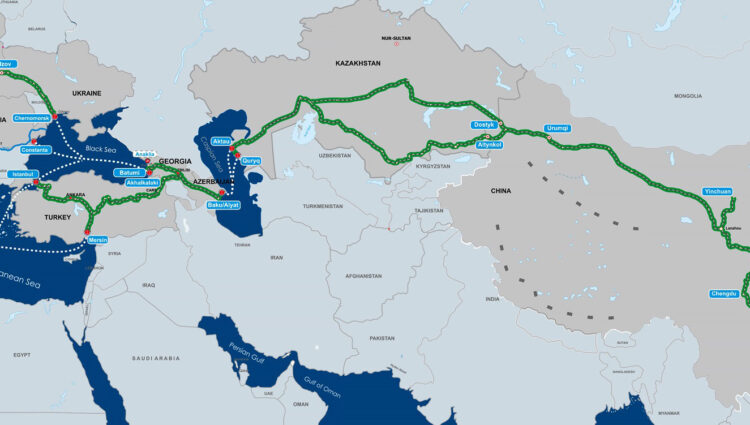
China to Europe By Way of Azerbaijan’s Trans-Caspian Gateway

On February 6, the Azerbaijan-China Business forum held in Beijing gathered together a number of state officials including Minister of Economy Shahin Mustafayev, the Chairman of the Export and Investment Promotion Fund of Azerbaijan (AZPROMO), as well as officials from the Ministry of Commerce of China and the Chinese Council of Propaganda of International Trade. The business forum was reportedly devoted to the Trans-Caspian Transit Corridor as part of China-led ambitious Belt and Road Initiative.

The Trans-Caspian International Transport Route, a corridor of 6,500 km links Asia with Europe and passes through countries including Azerbaijan, Georgia, Kazakhstan, and Turkey. A flagship project of the corridor, the Baku-Tbilisi-Kars (BTK) Railway, was inaugurated in October in 2017. The railway connects Azerbaijan, Georgia, and Turkey, establishing a freight and passenger link between Europe and China. During the inauguration ceremony President Ilham Aliyev stated that “Baku-Tbilisi-Kars will connect not only countries, but continents as well.” Thus, the BTK project is undoubtedly has enormous importance to the competitiveness of the Trans-Caspian corridor.

Categories
Azerbaijani Politics South Caucasus Region

Azerbaijan to Boost Arms Exports in 2018

Publication: Eurasia Daily Monitor Volume: 15 Issue: 8

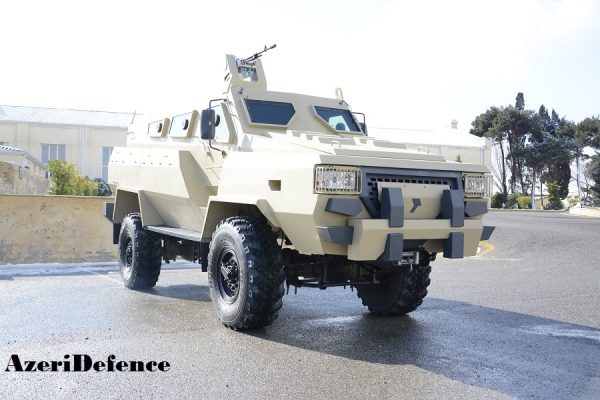
The Minister of Defense Industry of Azerbaijan Yavar Jamalov held a press conference, on December 17, to discuss the outcomes of 2017 for the country’s defense industry sector. The minister pointed out that this past year, two additional military-production factories were built in Azerbaijan. Thus, the total number of defense-manufacturing facilities in the country is now 58 (Trend, December 17, 2017). Moreover, these new factories were fully equipped with modern machinery developed by leading Western defense contractors. The Ministry of Defense Industry plans to launch two more new factories, which will be able to produce four kinds of modern artillery shells, mortars, and armor for military vehicles. Moreover, new military labs will be developed to produce blasting powder, trinitrotoluene (TNT) and hexogen (RDX) chemical compounds (Azerbaijan-news.az, December 17, 2017).

Categories
Azerbaijani Politics Pax Caucasia South Caucasus Region

Baku-Tbilisi-Kars Railway to Become Central Asia’s Gateway to Europe

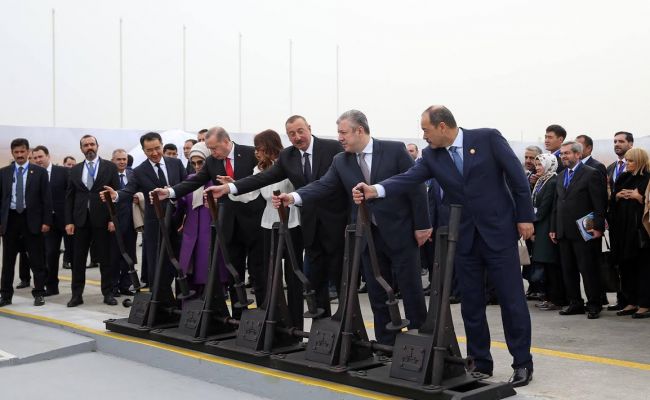
Photo Credit: EADily Agency

On October 30, 2017, Azerbaijan’s President Ilham Aliyev, along with Turkey’s President Recep Tayyip Erdogan, Georgia’s Prime-minister Giorgi Kvirikashvili, Kazakhstan’s Prime Minister Bakytzhan Sagintayev, and Uzbekistan’s Prime Minister Abdulla Aripov attended the opening ceremony of the long-delayed Baku-Tbilisi-Kars (BTK) railway. “The opening of the railway is of historic and strategic significance,” Aliyev said at the ceremony in the Caspian port city of Alat, south of Baku, to mark the departure of the first trains. In fact, the opening of the new railway provides an alternative route to existing rail services carrying goods from Asia to Europe.

BACKGROUND: The BTK railway, totaling 826 kilometers in length, is intended to complete a transport corridor linking Azerbaijan to Turkey (and thereby linking Central Asia and China to Europe) by rail. The railway is constructed on the basis of a Georgian-Azerbaijani-Turkish intergovernmental agreement. At the initial stage, it will have a capacity of one million passengers and 6.5 million tons of cargo per year, projected to reach 17 million tons of cargo per year by 2023. Starting in Baku, the trains will stop in Tbilisi, pass through gauge-changing facilities in Akhalkalaki, and terminate in north-east Turkey.

Categories
Azerbaijani Politics South Caucasus Region

Response to Regional Challenges: Why Strategic Partnership of Azerbaijan and Pakistan is Important?

Caucasus International Vol. 7 • No: 2 • Winter 2017

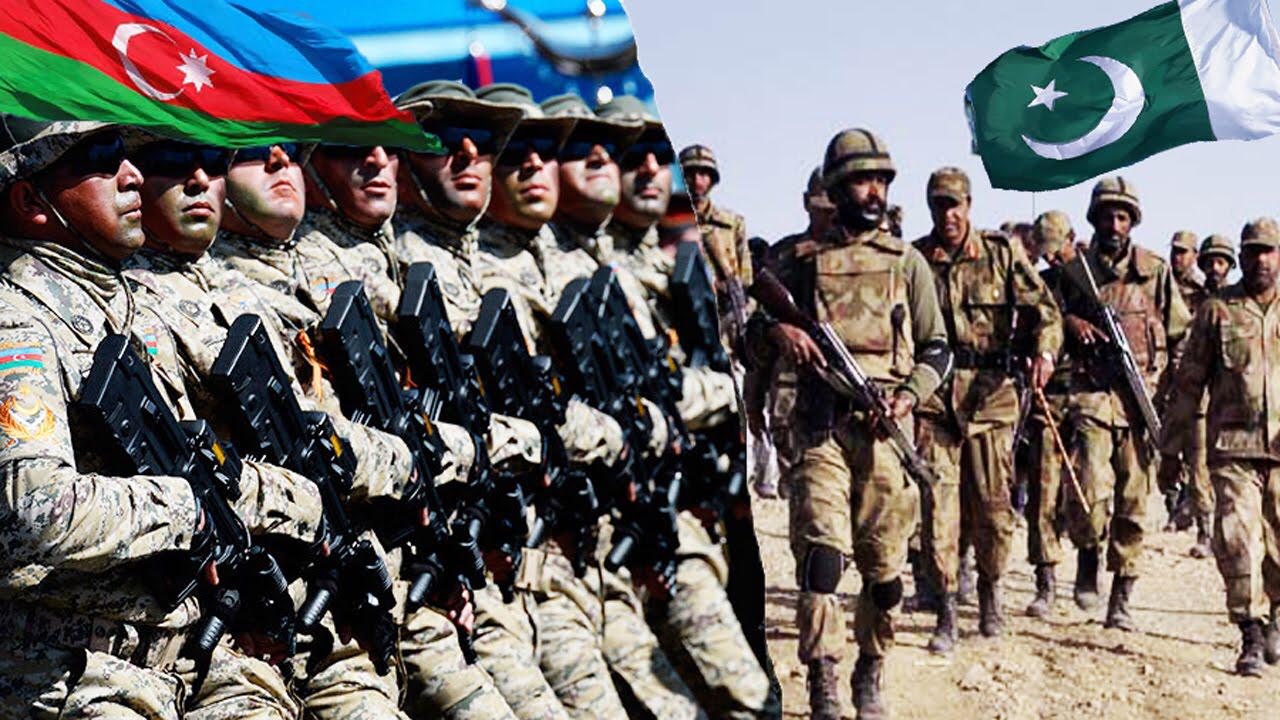
This article examines the degree of awareness at the grassroots level in Azerbaijan and Pakistan regarding the growing bilateral strategic cooperation. During the last several years, relations between Baku and Islamabad have expanded rapidly to the level of a strategic partnership encompassing various fields such as military, humanitarian issues, diplomatic, and cultural issues. Building strategic partnerships with countries in the region and beyond has always been a guiding principle of Azerbaijan’s foreign policy strategy. The common religious background of both countries also plays a significant role in strengthening bilateral ties. Pakistan’s explicit support of Azerbaijan in the international diplomatic arena, in particular in regard to the resolution process of the most complex and dangerous conflict in the South Caucasus –the Nagorno-Karabakh conflict is among those significant factors. The article traces the key moments in Azerbaijani – Pakistan relations and outlines the achievements, prospects, and potential for strengthening economic and security ties.

Keywords: Azerbaijan – Pakistan, Nagorno-Karabakh conflict, Kashmir conflict, Military Partnership, South Caucasus


Categories
Pax Caucasia South Caucasus Region

Azerbaijan-Turkey-Georgia: A Geopolitical Axis or an Accidental Alliance?

Publication: Eurasia Daily Monitor Volume: 14 Issue: 75

The Georgian coastal city of Batumi hosted, on May 23, a trilateral meeting of the defense ministers of Azerbaijan, Turkey and Georgia (Azertac, May 23). This trilateral cooperation format was inaugurated in 2012, during a ministerial meeting in Trabzon, Turkey. As expected, a new military memorandum was signed during the Batumi meeting: the three sides pledged to boost military ties as well as increase cooperation in the fields of military education and military medicine, counterterrorism (including the protection of pipelines and railways), and joint large-scale military exercises (APA, May 23). “Our cooperation in the field of defense contributes to strengthening security, peace and economic development,” Azerbaijani Defense Minister Zakir Hasanov told reporters in Batumi (Azertac, May 23).

Categories
Central Asia I China I Russia Pax Caucasia

Will the Baku–Tbilisi–Kars Railway Become Uzbekistan’s New Connection to Europe?

Publication: Eurasia Daily Monitor Volume: 14 Issue: 130

On September 27, the head of Azerbaijani Railways Company, Javid Gurbanov, along with his Georgian and Turkish counterparts, Mamuka Bakhtadze and Ahmad Arslan, respectively, attended the first test run by a passenger train along a section of the Baku–Tbilisi–Kars (BTK) railway, from the Georgian capital to Akhalkalaki (in the country’s southwest). After the test train reached the final destination, Gurbanov declared that the BTK railroad is likely ready to begin regular operation (AzVision, September 27). Hence, the minister of foreign affairs of Azerbaijan, Elmar Mammadyarov, during a joint press conference with Georgian Foreign Minister Mikheil Janelidze, in Tbilisi, stated that the official opening ceremony of the BTK will be held on October 30 of this year (Apsny.ge, October 10).