Categories
Azerbaijani Politics Iran in Caucasus and Beyond South Caucasus Region

The South-West Transport Corridor Project and the Geopolitical Reshaping of the South Caucasus

Publication: Eurasia Daily Monitor Volume: 14 Issue: 93

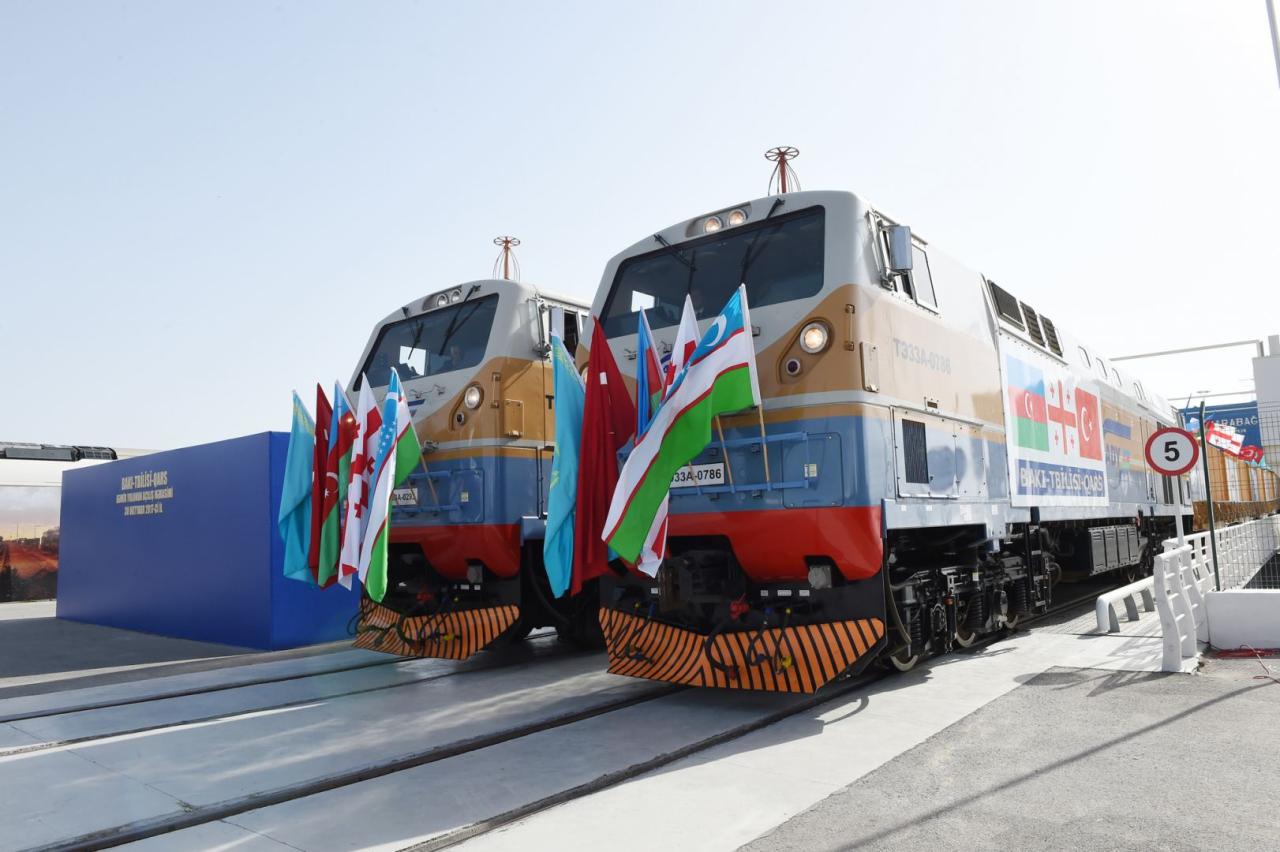
Baku hosted the first joint gathering of the heads of the railway administrations of Iran, Azerbaijan, Georgia, Ukraine and Poland, on June 19. The meeting was dedicated to the newly-launched “South-West Transport Corridor,” which links into the broader Trans-Caspian International Route project launched in 2016. The event concluded with the signing of a new joint protocol that envisages expanding cooperation opportunities along the so-called “South-West” route (Iran–Azerbaijan–Georgia–by ferry across the Black Sea–Ukraine–Poland) in order to optimize cargo transportation and increase transit capacity. Reportedly, the next joint meeting of the working group will be held in Odesa in September 2017 (Trend, June 19).

Categories
Azerbaijani Politics South Caucasus Region

Azerbaijan: From a Country with Soviet-Era Industry to a Weapons Exporter

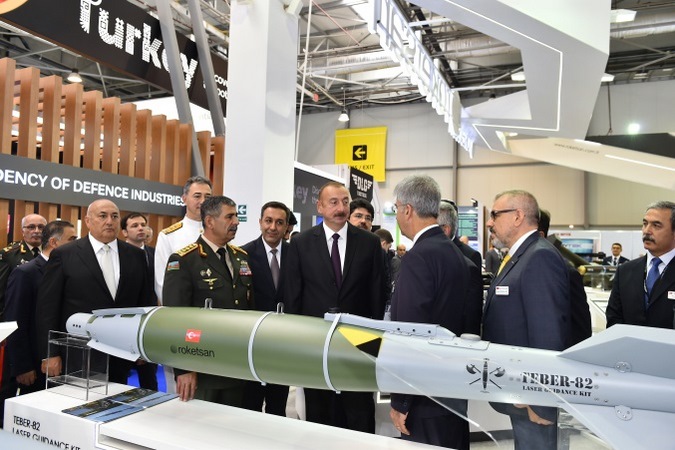
Since the 2000s, Azerbaijan has significantly improved its defense industry to the point where it now exports locally produced weapons to countries like Russia and the US. A large part of the country’s military development could be attributed to Israel.

Since regaining its independence in 1991, Azerbaijan set a target to increase the capability of its Armed Forces. Being a former Soviet country with an outdated industry, Azerbaijan has significantly developed and diversified its military industry since the end of the first Nagorno-Karabakh war. Throughout these years, Azerbaijan has done a lot to acquire international experience in the military industry.

Categories
Azerbaijani Politics South Caucasus Region Transit Routes in Eurasia

Baku-Beijing Relations and China’s Growing Interest in the South Caucasus

Publication: Eurasia Daily Monitor Volume: 14 Issue: 51

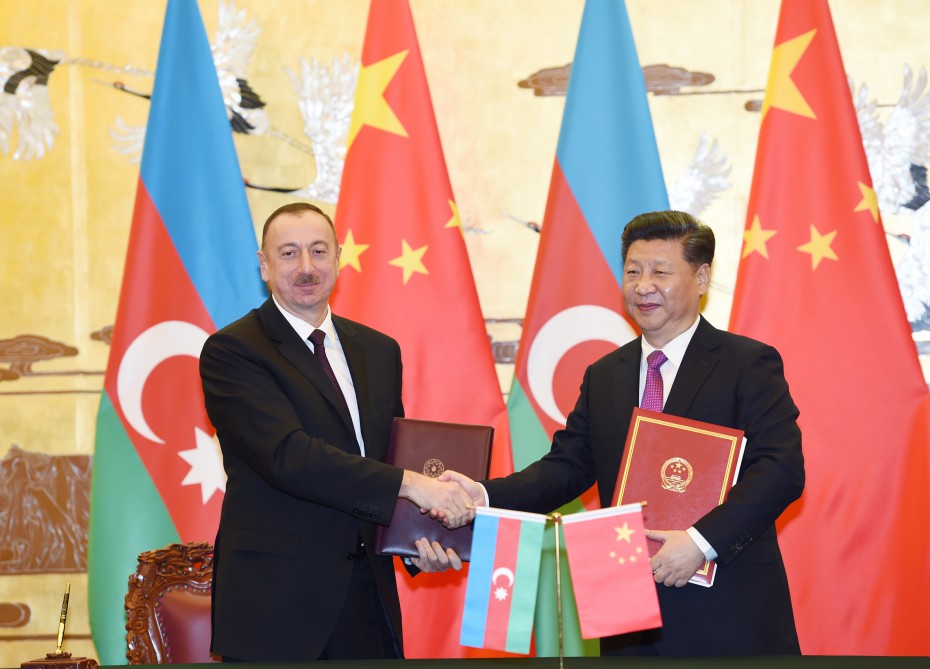
This past January, Azerbaijani President Ilham Aliyev attended a session on “The Silk Road Effect” at the 2017 World Economic Forum in Davos, alongside Georgian Prime Minister Giorgi Kvirikashvili (President.az, January 19). Presumably, the intention of both leaders was to promote the importance of the new China-led “Silk Road Economic Belt” project and its role in the future development of the economy and infrastructure in the South Caucasus. As a source of and as a transit corridor for strategic global resources such as oil and natural gas, as well as the intersection of important transportation routes between the East and West as well as the North and South, the South Caucasus holds great geostrategic importance. While a relatively low priority for China during the early 2000s, more recently the South Caucasus has become an area of great interest as an extension of the highly ambitious Chinese Silk Road project, which aims to connect Europe and East Asia via new roads and railways across the Eurasian landmass. But China’s real connection with the region will likely come when the Baku–Tbilisi–Kars (BTK) railway is finally completed. The railroad and its connection to Chinese Silk Road transit corridors further east will facilitate China’s ability to ship goods westward across the South Caucasus isthmus and, more generally, boost trade opportunities in the region. The agreement for the railway connection was signed in 2005, during President Aliyev’s first visit to Beijing.

Categories
Karabakh in the Post-War Period South Caucasus Region

Karabakh: Diplomatic Attention Needed to Address Growing Risks

A recent flare-up of hostilities in Nagorno-Karabakh highlights a growing risk of renewed, full-fledged warfare between Armenia and Azerbaijan.

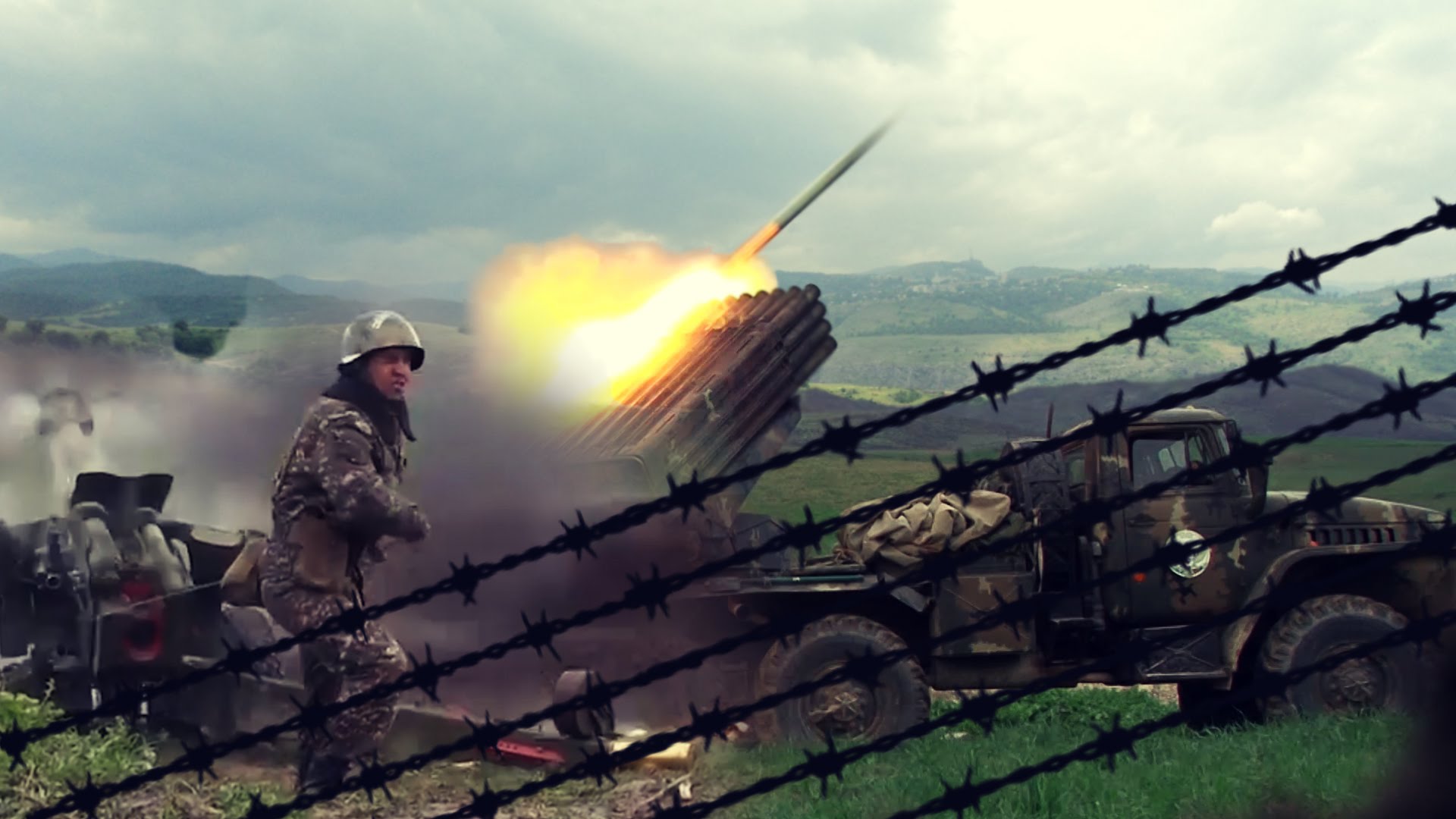
On February 25, clashes between Armenian and Azerbaijani forces marked the most intense fighting since early April of 2016, when several hundred soldiers on both sides were killed. According to Azerbaijan’s Defense Ministry, the February clashes were caused by Armenian troops, allied with the region’s separatist forces, who attempted an incursion in the Khojavand-Fizuli sector of the Karabakh frontline, known as the line of contact. Five Azerbaijani soldiers were killed, including a major and a senior lieutenant, and ongoing skirmishes made it difficult to collect their bodies from the neutral zone; it took two days for the Azerbaijani side to retrieve them.

Categories
Azerbaijani Politics

The case of Lapshin: How it will affect Azerbaijan – Israel partnership?

Alexander Lapshin in Baku (Photo Credit: RIA Novosti)

On the 8th of February of 2017, a plane carrying Russian travel-blogger Alexander Lapshin landed at Baku International Airport. Alexander Lapshin, who was detained in Belarus a month ago at the request of Azerbaijan, is charged with violating the country’s legislation by illegally visiting the occupied Nagorno-Karabakh region.

Reportedly, Alexander Lapshin, who illegally traveled to Nagorno-Karabakh region in 2011, and 2012, presented Azerbaijan’s Nagorno-Karabakh as an “independent state” on his social media account and supported the “independence” of the unrecognized regime. The Supreme Court of Belarus on Tuesday upheld a government decision to extradite the blogger to Azerbaijan, which raised a huge outrage in Armenian mass media.

Categories
South Caucasus Region

Is the Iran – Armenia railway project an illusion?

The construction of a railroad connecting Armenia with Iran was first promised by Armenian President Serzh Sargsyan in an address to the National Assembly (parliament) in October 2008. Financing the construction, however, was a problematic issue: while Iranian officials confirmed the commitment to build a link connecting Iran’s existing railroad network to the Armenian border, a considerably larger investment would be required to carry out the construction on the Armenian side. The estimated cost of building the Armenian section of the railroad is about $3.2 billion, which does not include the costs of land acquisition and customs duties on equipment. The project’s entire cost is on a level comparable to Armenia’s annual budget.  Clearly, the lack of financial resources, as well as, necessary political willpower, also can be seen as a reason behind the non-implementation of the project.

The situation was about to change in 2015 when China repeatedly expressed its interest in the financing of the construction of the Iran – Armenia railway. Currently, Yerevan seeks deeper economic cooperation with China in various fields. Therefore, Armenia actively discusses the possibility of Chinese sponsorship of the Iran – Armenia railway project. However, nearly all official statements of Chinese and Armenian officials regarding the future of the project remained on the paper.

Categories
Azerbaijani Politics South Caucasus Region

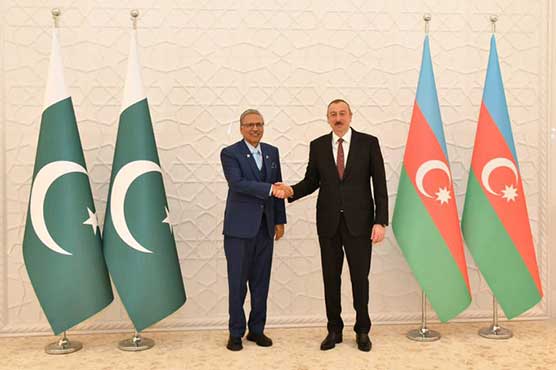
Azerbaijan’s Growing Military Cooperation With Pakistan

Azerbaijan and Pakistan have a unique political relationship that has surpassed territorial boundaries and geographical distances. Pakistan was among the first states to recognize Azerbaijan’s independence following the 1991 Soviet collapse. Today, Pakistan is the only country that has not established diplomatic relations with Baku’s main foe, Armenia. The bilateral strategic cooperation between these two countries embraces the economic, cultural, political, and especially defense fields. Taking into account their close ties, the current level of military cooperation between Azerbaijan and Pakistan needs to be emphasized. While Azerbaijan’s defense industry has strategic relations with various countries, Baku has been seeking ways of expanding military cooperation with Pakistan in particular over the last years.

Categories
Pax Caucasia South Caucasus Region

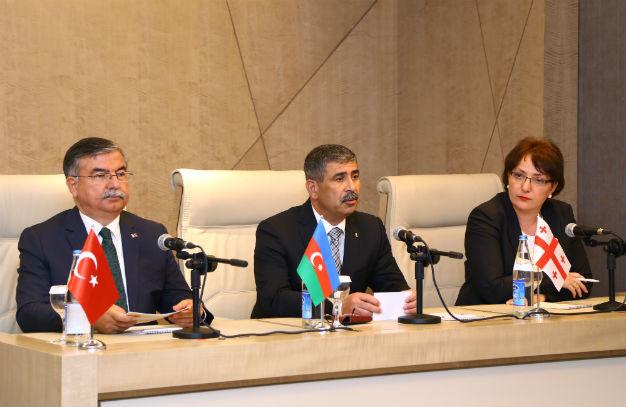
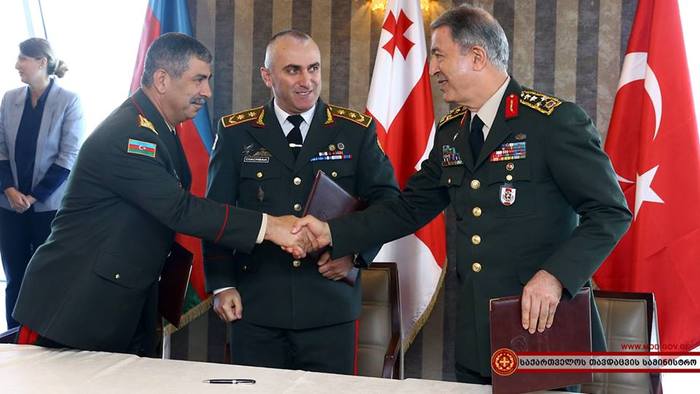
Why does Azerbaijan, Turkey, and Georgia strengthen military cooperation?

Agenda.ge
Agenda.ge

On 5th of May, following a private trilateral meeting in Qabala city, Azerbaijani Defence Minister, Colonel-General Zakir Hasanov, Georgian Defence Minister Tinatin Khidasheli, and Turkish National Defence Minister Ismet Yilmaz agreed to hold joint military exercises on enhancing the combat readiness of the three countries armed forces in order to achieve the further development of trilateral cooperation on regional security. Simultaneously, the trilateral military activities, which arose huge concerns in neighboring Armenia, were mainly targeted to improve trilateral coordination on the protection of oil, and natural gas pipelines, railway projects, and the upcoming New Silk Road project. The minister of defense Zakir Hasanov mentioned that new military a memorandum would occur very soon. According to him, the memorandum, which is being prepared, will be the legal base of cooperation and allow trilateral activities to enter a new stage.  Although the debates regarding the new memorandum have been delayed,  Ms. Khidasheli notes that the trilateral memorandum will be signed in the upcoming ministerial meeting in Batumi, in August of 2016.

Categories
Iran in Caucasus and Beyond

How Iranian Oil Would Change the South Caucasus?

After more than a decade of negotiations, the economic sanctions against Iran were lifted in January. Iran, P5+1 countries, and the European Union agreed on the adoption of a Joint Comprehensive Plan of Action (JCPOA). The JCPOA limited the Islamic Republic’s nuclear program as a quid-pro-quo for a return to the oil market. Iran’s return to global oil markets would mean a new challenge both for Europe and the South Caucasus. This paper will examine the political and economic implications of the lifting of sanctions for the South Caucasus region.

Published by BILGESAM; NO:1292; February 5, 2015